
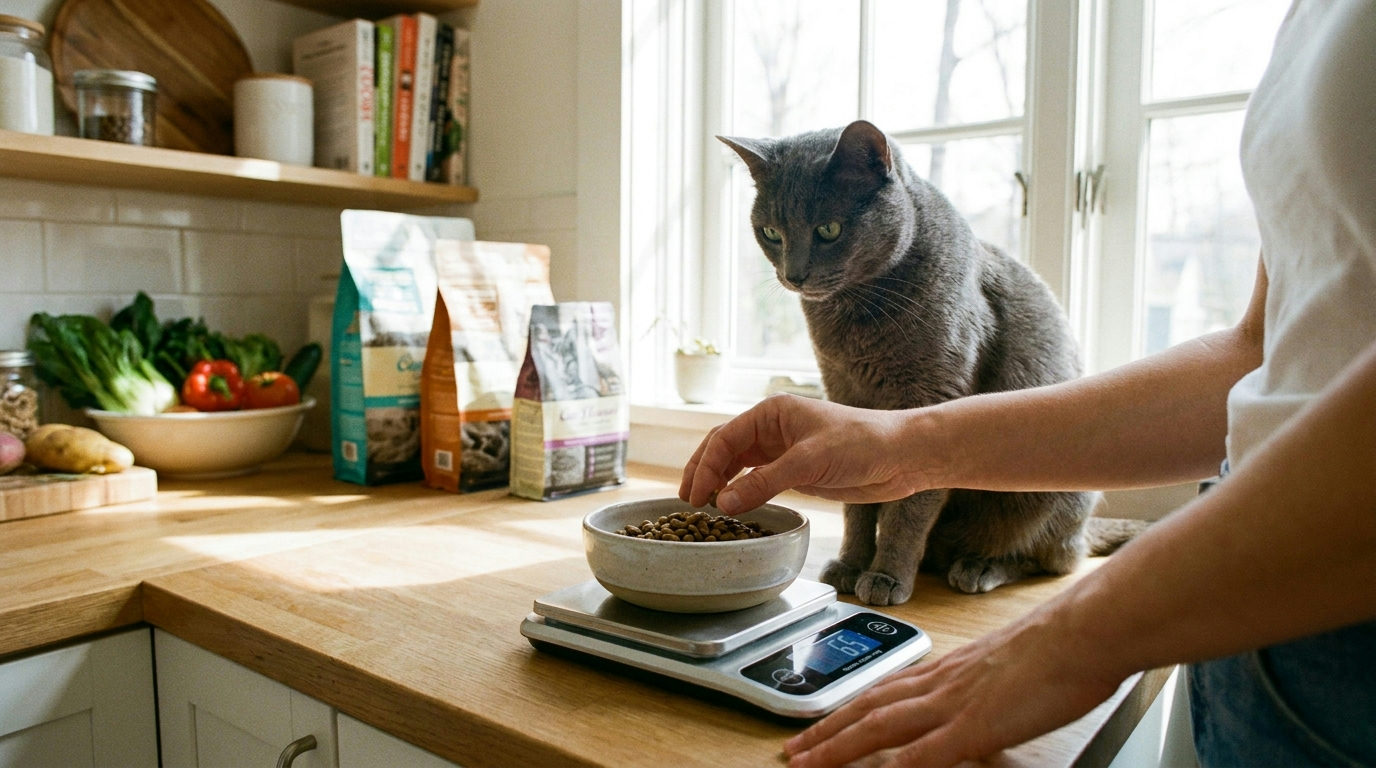
Knowing how much to feed a cat is one of the most common questions owners ask. Too little food can leave a cat underweight. Too much, on the other hand, can lead to extra pounds. This guide shows you how to find the right amount for your cat.
Disclosure: Cat Nutrition Guide may earn a commission from qualifying purchases made through links on this page, at no extra cost to you.
Why Portion Size Matters
Cats are small, so a few extra calories each day add up quickly. For example, an extra handful of kibble every day can lead to steady weight gain over a year. Because extra weight may affect joints and overall health, portions deserve attention.
At the same time, underfeeding carries risks too. Cats that eat too little for a few days can run into serious problems. Therefore, the goal is steady, balanced intake rather than strict restriction.
How Much to Feed a Cat Each Day
There is no single number that fits every cat. However, a common starting point for a healthy, average-sized adult indoor cat is roughly 20 calories per pound of ideal body weight per day. Treat this as a rough estimate only.
Several factors change that estimate:
- Age: Kittens need more calories, while many seniors need fewer.
- Activity: Active outdoor cats often burn more energy than indoor cats.
- Neutering: Spayed or neutered cats usually need fewer calories.
- Body condition: A cat that needs to gain or lose weight needs a tailored plan.
Your vet can give you a daily calorie target based on your cat’s ideal weight.
Reading the Feeding Chart on the Package
Most cat food bags and cans include a feeding chart. These charts are helpful, yet they are only a starting point. They often assume an active cat, so many indoor cats need less.
Also, check the calorie content, usually listed as kcal per cup or per can. With that number, you can match the food to your cat’s calorie target. Our guide to understanding cat food labels explains where to find it.
Mixing Wet and Dry Food
Many owners feed both wet and dry food. That works well, but you need to split the calories between them. For instance, if half the daily calories come from wet food, the dry portion should drop by half.
Wet food is lower in calories per gram because it holds more water. As a result, a can may look like a lot while supplying fewer calories than you expect. See our comparison of dry vs wet cat food for more.
How Much to Feed a Cat by Body Condition
The scale tells part of the story. A body condition score tells the rest. Vets often use a nine-point scale, where four to five is considered ideal. The WSAVA nutrition toolkit includes a body condition chart you can use at home.
At a healthy score, you can feel the ribs without pressing hard. You should also see a waist from above. If your cat looks round or you cannot feel the ribs, portions may need trimming. For help, read our cat weight loss diet guide.
Tips for Measuring Portions
- Use a kitchen scale instead of a scoop for better accuracy.
- Split the daily amount into two or more meals.
- Count treats as part of the daily total.
- Weigh your cat every few weeks and adjust as needed.
In addition, a regular routine can help. Our article on the cat feeding schedule covers meal timing.
Final Thoughts on How Much to Feed a Cat
In short, how much to feed a cat depends on age, activity, body condition, and the food itself. Start with the label, measure carefully, and check your cat’s shape often. Above all, ask your vet for a calorie target, since every cat is unique.
This article is for general information only and is not a substitute for advice from a licensed veterinarian. Always consult your vet about your cat’s specific needs.


