
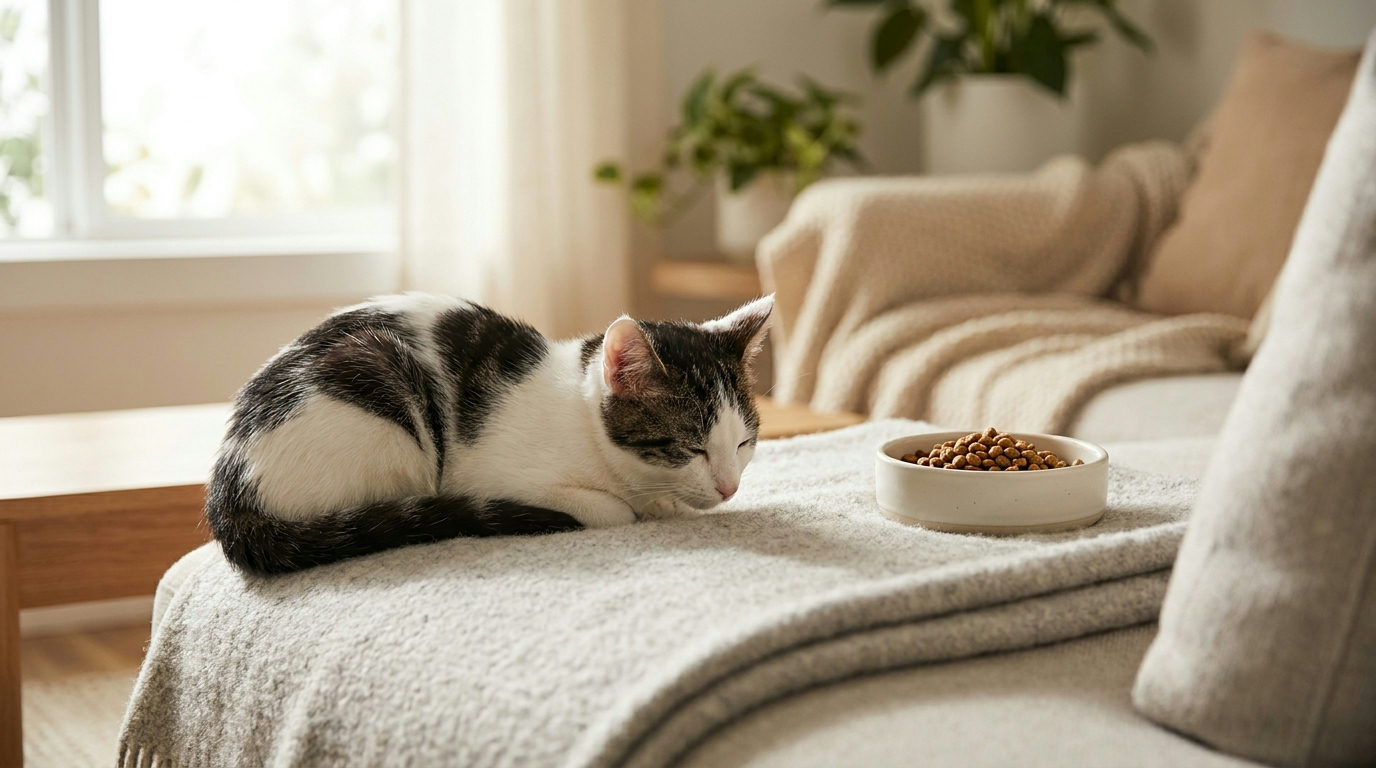
Feeding cats after neutering takes a little more thought than most owners expect. In the first day or two, the focus is gentle recovery. After that, the bigger long-term issue appears: many cats need fewer calories once they’re spayed or neutered, yet their appetite may stay the same or even go up. This guide covers both stages, so you can help your cat heal well and stay at a healthy weight for years to come.
Disclosure: Cat Nutrition Guide may earn a commission from qualifying purchases made through links on this page, at no extra cost to you.
Part 1: The First 24 to 48 Hours
Your vet’s discharge instructions always come first. Every clinic and every cat is a little different, so if anything here differs from what your vet told you, follow your vet.
That said, here is what the first day or two often looks like.
The evening after surgery
Anesthesia can leave cats groggy and a bit queasy. For that reason, clinics often suggest waiting until your cat is fully alert, walking steadily, and settled at home before offering food.
- Offer a smaller-than-usual portion, in whatever amount your vet suggests.
- Use the cat’s usual food. This is not the time to try something new.
- Put fresh water within easy reach.
- If your cat vomits, remove the food and follow your vet’s instructions on when to try again.
The next day
Many cats are back to eating normally fairly quickly. You can usually return to regular meals when your vet says it’s fine. Keep the food and water bowls close to a quiet resting spot, since your cat may not want to jump or walk far.
Red flags after surgery
Call your vet or an emergency clinic if you notice any of the following:
- No interest in food within the time frame your vet gave you
- Repeated vomiting
- Extreme lethargy or trouble standing
- Swelling, discharge, bleeding, or an open incision
- Straining to urinate or not urinating
- Pale gums or breathing that seems labored
The VCA Animal Hospitals pet care library explains that cats who go without food for several days can be at risk of a serious liver condition called hepatic lipidosis. So, a cat that won’t eat is always worth a call.
Part 2: Feeding Cats After Neutering, Long Term
Once the incision has healed, the more important change starts. The WSAVA Global Nutrition Guidelines list neutering among the factors linked to a higher risk of weight gain in cats. Changes after surgery may lower energy needs and, at the same time, may increase appetite.
In practice, that means a cat who eats exactly what it ate before surgery may slowly gain weight. The change is often gradual, so owners may not notice until their cat is heavier months later.
Why small amounts matter
Cats are small. Consequently, a few extra kibbles or a daily treat can be a meaningful share of their total calories. Over many months, a small daily surplus can add up to real weight gain.
VCA’s pet care resources describe excess weight in cats as linked to a higher risk of health problems, including diabetes and joint discomfort. Keeping a healthy weight may help support your cat’s comfort and mobility as they age.
How to Adjust Portions When Feeding Cats After Neutering
There isn’t a single correct reduction for every cat. Age, activity level, breed, and the food itself all play a part. Instead of guessing, use a simple process.
- Ask your vet for a starting calorie target. Your vet can estimate one based on your cat’s ideal weight, not just the current weight.
- Check the food’s calorie content. Most labels list calories per cup or per can. Two foods that look similar can differ quite a bit.
- Measure every meal. A kitchen scale is more accurate than a scoop. See our guide to measuring cat food portions for practical tips.
- Count treats. Ask your vet how many treats fit within the daily target, and subtract them from meals.
- Weigh and reassess every few weeks. Adjust portions slowly based on what the scale and body condition show.
A worked example
Imagine a young cat who was free-fed dry food before surgery. After neutering, the owner switches to measured meals based on a target from the vet. Each month, the owner weighs the cat at home and checks body condition.
If the cat is slowly gaining, the owner trims portions a little. If the cat is getting too lean, they add a little back. The point isn’t a fixed number. Instead, it’s a feedback loop that keeps the cat on track.
Watching Body Condition
The scale is useful, but body condition tells you even more. WSAVA offers body condition score charts that vets commonly use. Here’s a simplified version of what to feel and look for.
| Check | Healthy | Too heavy |
|---|---|---|
| Ribs | Easy to feel with a light fat covering | Hard to feel under a thick layer |
| Waist (from above) | Visible behind the ribs | Absent or bulging outward |
| Belly (from the side) | Small tuck, minimal pouch | Rounded, sagging fat pad |
Ask your vet to show you how to score your cat at your next visit. Once you know what “ideal” feels like on your own cat, monthly checks take less than a minute.
What About Kittens Neutered Young?
Many cats are spayed or neutered while they’re still growing. In that case, they still need a growth or all-life-stages food until your vet says it’s time to switch. Cutting calories too hard in a growing kitten isn’t the goal.
Instead, focus on measured meals and regular weigh-ins rather than free-feeding. Your vet can tell you when to transition to adult food. For more on growth stages, see our guide to kitten growth nutrients.
Do Neutered Cats Need a Special Food?
Some foods are marketed for spayed or neutered cats. They are often lower in calories or higher in fiber, which may help some cats feel full on fewer calories. However, they aren’t required. Many cats do well on their regular complete and balanced food, as long as portions are adjusted.
If you do switch, transition gradually over several days by mixing increasing amounts of the new food with the old. Also recheck portion sizes, since calorie content often differs.
Simple Habits That Help
These everyday habits make feeding cats after neutering much easier to manage:
- Swap free-feeding for two or more measured meals a day.
- Use puzzle feeders or scatter feeding to slow eating and add activity.
- Schedule short play sessions, such as wand toys, once or twice a day.
- Make sure everyone in the home knows the treat rules.
- Feed multiple cats separately if one steals food.
The VCA library also has more practical articles on weight management and post-surgery care.
Questions to Ask Your Vet
- When can my cat eat after surgery, and how much?
- How long can my cat go without eating before I should call?
- What is my cat’s ideal weight and daily calorie target?
- How many treats fit within that target?
- When should my kitten switch to adult food?
- How often should I weigh my cat at home?
- What body condition score should I aim for?
The Bottom Line
Feeding cats after neutering happens in two stages. First, offer small, gentle meals while your cat recovers, and call your vet if they won’t eat or seem unwell. Then, for the long term, expect energy needs may drop and plan for it with measured meals, counted treats, and regular body condition checks. Small, steady adjustments are far easier than trying to fix weight gain later.
This article is for general information only and is not veterinary advice. It is not a substitute for advice from a licensed veterinarian who knows your cat.


