
Feeding your cat may seem simple at first. However, many owners accidentally overfeed or underfeed their pets without realizing it. Because cats often act hungry even after eating, it becomes easy to rely on guessing instead of accurate serving sizes. Over time, that habit can lead to weight gain, poor digestion, or low energy levels. That is why learning how to measure cat food portions correctly matters more than many people think.
When you measure cat food portions carefully, you create a healthier feeding routine that supports your cat’s long-term wellness. In addition, proper portions help maintain an ideal weight, improve nutrient balance, and reduce unnecessary snacking. While every cat has different needs, accurate measurements provide a reliable starting point that removes confusion from daily feeding.
Many cat owners fill bowls based on appearance alone. Unfortunately, dry kibble can look deceptively small, and even a little extra food each day adds up quickly. Moreover, cats that live indoors often burn fewer calories than outdoor cats, so guessing portions can easily result in overfeeding. Fortunately, there are simple methods that make portion control much easier and more accurate.
Why Portion Control Matters for Cats
Cats thrive on consistency. Their digestive systems and metabolism respond well to predictable meal schedules and balanced nutrition. Therefore, portion control plays an important role in maintaining healthy body condition and energy levels.
Obesity remains one of the most common health issues in household cats. Excess weight can increase the risk of diabetes, joint problems, heart strain, and grooming difficulties. Even a few extra pounds may affect a cat’s mobility and comfort. Because of this, veterinarians often recommend closely monitoring meal sizes instead of free-feeding throughout the day.
On the other hand, underfeeding can create problems as well. Cats that do not receive enough calories may lose muscle mass, become lethargic, or develop nutritional deficiencies. Therefore, balanced feeding is the goal rather than simply reducing food intake.
Once you begin to measure cat food portions properly, you gain better control over your pet’s nutrition. Additionally, you can monitor changes more effectively if your cat’s weight fluctuates. Small adjustments become easier when you already know the exact amount your cat eats daily.
Another benefit involves reducing food waste. Many owners unknowingly pour more kibble than necessary into bowls. Consequently, leftover food becomes stale or gets discarded later. Accurate measuring keeps meals fresher while helping you save money over time.
Understanding Your Cat’s Daily Food Needs
Before creating a feeding routine, it helps to understand what influences portion sizes. Cats do not all require the same amount of food. Several factors determine how much they should eat each day.
Age is one of the biggest influences. Kittens usually require more calories because they are growing rapidly. Adult cats typically need balanced maintenance portions, while senior cats may need adjusted servings depending on their activity level and metabolism.
Weight also matters greatly. A larger cat naturally requires more calories than a smaller one. However, body condition is more important than size alone. For example, an overweight cat may need controlled portions even if it appears naturally large.
Activity level changes calorie requirements as well. Indoor cats often spend more time resting, so they usually need fewer calories. Meanwhile, active outdoor cats may burn significantly more energy throughout the day.
Health conditions can also affect feeding needs. Cats with diabetes, kidney disease, or digestive issues may require special diets and carefully measured meals. Therefore, it is always helpful to consult a veterinarian if your cat has medical concerns.
Food type makes a difference too. Dry food tends to be more calorie-dense than wet food. As a result, small scoops of kibble may contain more calories than larger portions of canned food. Reading the feeding guidelines on packaging provides a helpful starting point, although those recommendations often need adjustment based on your individual cat.
When owners measure cat food portions consistently, they can better identify whether their cat is eating too much or too little. That awareness creates a stronger foundation for healthy feeding habits.
Tools That Make Measuring Easier
Many people rely on random cups or scoops from kitchen drawers. Unfortunately, those tools are often inaccurate. Using proper measuring equipment improves consistency and removes uncertainty from feeding time.
A standard measuring cup is one of the easiest tools to use. Dry food bags often recommend serving sizes in cups, so using an actual measuring cup prevents overpouring. However, even measuring cups can vary slightly depending on how tightly kibble is packed.
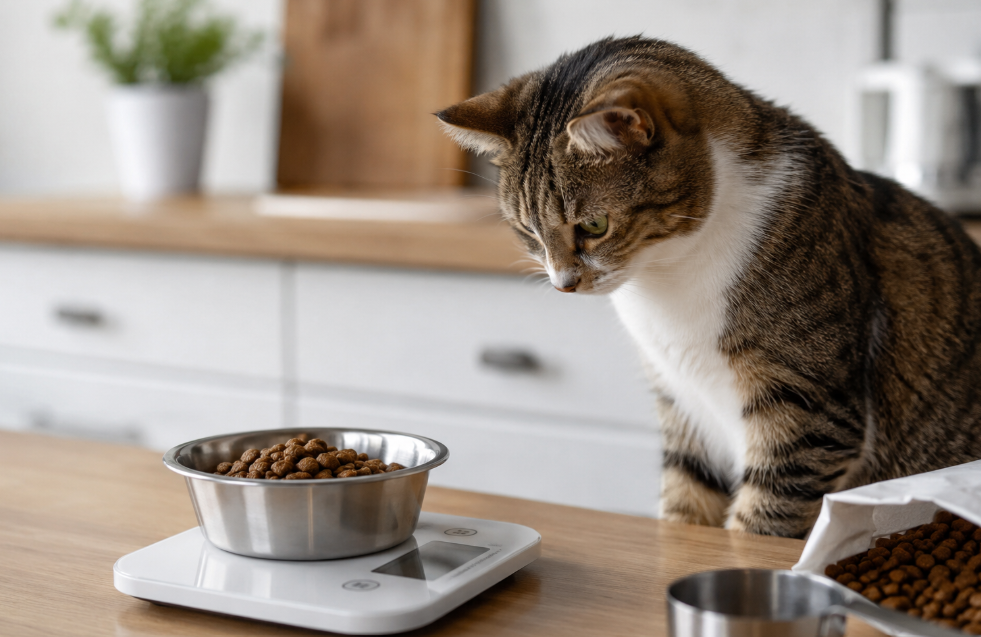
Digital kitchen scales offer even greater accuracy. These scales allow you to weigh food in grams or ounces, which is especially helpful for cats on strict diets. Veterinarians frequently recommend scales for weight management plans because they provide precise measurements every time.
Automatic feeders can also support portion control. Many modern feeders dispense exact amounts at scheduled intervals throughout the day. As a result, owners maintain consistency even when they are busy or away from home.
Food journals help as well. Writing down meal amounts creates a clearer picture of your cat’s daily intake. In addition, tracking portions helps identify patterns if weight changes occur later.
Using proper tools may feel unnecessary at first. Yet once you start to measure cat food portions with consistency, feeding becomes far less stressful and much more reliable.
How to Portion Dry and Wet Cat Food Correctly
Dry and wet foods require slightly different measuring approaches. Understanding those differences can improve feeding accuracy and nutrition balance.
Dry food is concentrated and calorie-dense. Because of that, small measurement errors can quickly add hundreds of extra calories each week. Always level the measuring cup instead of creating overflowing scoops. Furthermore, avoid estimating by eye, especially if you frequently refill bowls.
Many owners leave dry food available all day. Although free-feeding feels convenient, it often encourages overeating. Scheduled meals usually work better because they allow you to monitor appetite and calorie intake more carefully.
Wet food requires different handling because it contains higher moisture levels. Most canned food labels display calorie counts per can or serving. Therefore, dividing cans accurately becomes important if your cat only needs partial servings.
Some owners combine wet and dry food together. This approach can work well, but you must calculate total calories carefully. Otherwise, the combined portions may exceed your cat’s daily requirements without you noticing.
Transitioning gradually between food types is also important. Sudden dietary changes sometimes upset digestion. Therefore, introduce adjustments slowly over several days while monitoring appetite and stool quality.
If you regularly measure cat food portions for both wet and dry meals, it becomes much easier to maintain balanced feeding without overcomplicating the process.
Signs Your Cat May Need Portion Adjustments
Even with careful measuring, portion needs may change over time. Therefore, monitoring your cat’s condition regularly remains important.
Weight gain is one obvious sign of overfeeding. However, subtle clues often appear earlier. For example, reduced activity, difficulty grooming, or decreased jumping ability may indicate excess weight before major changes become visible.
Body shape provides useful information too. You should usually feel your cat’s ribs without pressing hard, although they should not appear overly prominent. Additionally, your cat should have a slight waistline when viewed from above.
Frequent begging does not always mean hunger. Many cats associate humans with food and develop habits around mealtime. Therefore, avoid increasing portions automatically whenever your cat asks for food.
Meanwhile, rapid weight loss, low energy, or constant hunger may indicate underfeeding or medical issues. In those cases, veterinary guidance becomes especially important.
Seasonal changes sometimes affect appetite as well. Indoor cats may become less active during colder months, while outdoor cats may burn more energy in certain seasons. Consequently, occasional portion adjustments are normal.
Once owners consistently measure cat food portions, they can make small corrections more confidently instead of relying on guesswork.
Creating a Healthy Feeding Routine
Cats appreciate predictable schedules. Regular feeding times reduce stress and help maintain stable digestion. Therefore, building a structured routine often improves overall eating habits.
Most adult cats do well with two measured meals per day. Some cats prefer smaller portions spread across multiple meals, especially if they tend to eat too quickly. Automatic feeders can support these schedules effectively.
Avoid leaving excessive treats available throughout the day. Treat calories count toward total intake and can quickly disrupt balanced nutrition. Instead, use treats sparingly and include them in your daily calorie calculations.
Fresh water should always remain accessible. Hydration supports digestion, kidney health, and overall wellness. Wet food can also increase moisture intake naturally, which benefits many cats.
Feeding areas should remain calm and consistent. Cats often prefer quiet spaces away from loud noises or busy foot traffic. Therefore, choosing a stable feeding location can encourage healthier eating behavior.
Routine monitoring matters too. Weigh your cat periodically and observe energy levels, coat condition, and appetite patterns. These small observations help determine whether portion sizes still fit your cat’s needs.
When you continue to measure cat food portions as part of a daily routine, feeding becomes less emotional and more health-focused. That consistency creates better long-term results for both cats and owners.
Common Portion Control Mistakes to Avoid
Several feeding mistakes appear frequently among cat owners. Fortunately, most are easy to correct once recognized.
One common issue involves topping off bowls repeatedly throughout the day. Even small handfuls add significant calories over time. Therefore, pre-measuring daily amounts helps prevent accidental overfeeding.
Another mistake involves ignoring calorie differences between brands. Some foods contain far more calories per serving than others. Switching brands without adjusting portions can quickly create imbalance.
Using oversized bowls can also distort perception. Small servings often appear inadequate in large bowls, encouraging owners to add extra food unnecessarily. Smaller bowls frequently make portions look more satisfying.
Households with multiple cats sometimes struggle with food sharing. One cat may eat faster and consume additional portions intended for another pet. Separate feeding spaces can help solve this problem.
Treat overload is another hidden issue. While treats strengthen bonding and training, too many snacks undermine portion control efforts. Limiting treats keeps daily nutrition balanced.
Finally, relying entirely on packaging guidelines can create problems. Feeding charts provide estimates, but individual cats vary significantly. Monitoring body condition remains more reliable than following labels blindly.
Avoiding these mistakes becomes much easier once you regularly measure cat food portions with accurate tools and consistent routines.
Conclusion
Feeding your cat correctly involves more than simply filling a bowl. Accurate portions support healthy weight, better digestion, stronger energy levels, and improved long-term wellness. Although guessing may feel easier, small mistakes can gradually affect your cat’s health over time.
Fortunately, portion control does not need to feel complicated. Simple tools like measuring cups, digital scales, and scheduled feeding routines create far greater accuracy. In addition, paying attention to your cat’s age, activity level, and body condition helps you adjust portions responsibly.
When you measure cat food portions consistently, you remove uncertainty from feeding and create healthier daily habits. Over time, those small efforts make a meaningful difference in your cat’s comfort, mobility, and quality of life. By staying attentive and consistent, you can provide balanced nutrition that supports a happier and healthier companion for years to come.
FAQ
1. How often should I measure my cat’s meals?
You should measure every meal rather than guessing portions. Consistency helps maintain healthy calorie intake and stable weight.
2. Is a kitchen scale better than a measuring cup?
Yes, a digital kitchen scale provides more accurate food measurements, especially for calorie-controlled feeding plans.
3. Can I leave dry food out all day?
Free-feeding may encourage overeating in many cats. Scheduled meals usually support healthier portion control.
4. How do I know if my cat is eating too much?
Weight gain, reduced movement, and difficulty grooming may indicate overfeeding. Regular monitoring helps identify changes early.
5. Should wet and dry food portions be measured differently?
Yes, wet food contains more moisture and fewer calories per volume, while dry food is more calorie-dense and requires careful measuring.


