
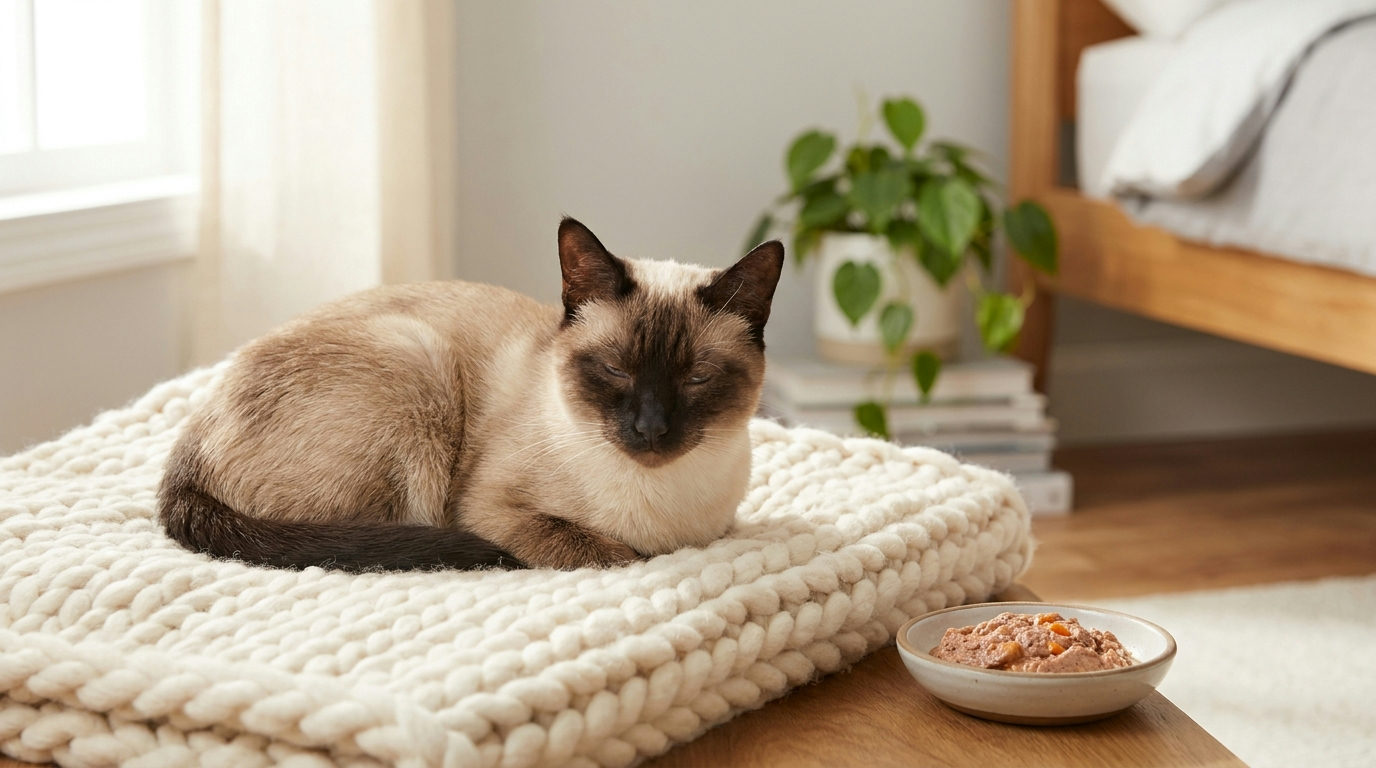
If your cat has been diagnosed with pancreatitis, food quickly becomes one of your biggest worries. Your cat may be refusing meals, eating only a few bites or showing interest one day and none the next. A cat pancreatitis diet is less about one special food and more about a careful, vet-guided plan to help your cat eat enough while recovering.
Disclosure: Cat Nutrition Guide may earn a commission from qualifying purchases made through links on this page, at no extra cost to you.
This guide explains why getting a cat eating again matters so much, what vets currently think about fat levels, the appetite support options your vet may discuss, and practical things you can do at home. Every cat is different, so please treat this as background for a conversation with your vet, not a replacement for one.
What Pancreatitis Is, in Plain Terms
The pancreas is a small organ near the stomach and intestines. It helps digest food and helps control blood sugar. Pancreatitis means the pancreas is inflamed. In cats, it can be sudden (acute) or long-lasting and recurring (chronic).
According to the Cornell Feline Health Center, signs in cats are often vague. They can include poor appetite, lethargy, weight loss, vomiting and sometimes diarrhea. Some cats show only a reduced appetite and low energy, which is why the condition can be easy to miss.
Diagnosis usually involves an exam, blood tests and often imaging such as ultrasound. Your vet may also check for related conditions, since pancreatitis in cats sometimes occurs alongside problems in the liver or intestines.
Why Getting Your Cat Eating Again Matters
Cats are not built to go without food. Veterinary sources, including Cornell and VCA Animal Hospitals, explain that a cat that stops eating can develop hepatic lipidosis, also called fatty liver disease, which is a serious condition in its own right.
For that reason, your vet will likely treat nutrition as a central part of care rather than an afterthought. In practice, that often means encouraging your cat to eat sooner rather than later, as long as vomiting is controlled.
Red flags: call your vet right away
- Your cat has eaten nothing for 24 hours, or very little for longer
- Repeated vomiting, or vomiting with any food or water
- Hiding, weakness, collapse or unusual quietness
- Yellow tinge to the gums, eyes or skin
- Signs of pain, such as a hunched posture or reluctance to move
- Rapid weight loss
Do not wait to see if your cat “comes around” on its own. Early contact with your vet gives your cat the best range of options.
The Debate Over Fat in a Cat Pancreatitis Diet
If you have read about pancreatitis in dogs, you have probably seen strong advice to feed a low-fat diet. In cats, however, the picture is less clear.
Many veterinary sources note that the evidence for strict fat restriction in cats is limited. Some vets prefer a moderately lower-fat, highly digestible food, while others focus mainly on finding any complete food the cat will eat. Since cats with pancreatitis often have poor appetites, a food your cat accepts may matter more than one that looks perfect on paper.
The right choice depends on your individual cat, including any other conditions such as diabetes, intestinal disease or kidney concerns. That is exactly why the decision belongs with your vet.
Types of Food Your Vet May Suggest
Your vet may recommend one or more of these approaches:
- Highly digestible therapeutic diets: Prescription gastrointestinal foods are designed to be gentle on the digestive system.
- Recovery or critical-care diets: These are energy-dense, soft foods often used for cats who are eating only small amounts.
- Your cat’s usual food: In some cases, a vet may suggest offering a familiar complete food to encourage eating.
- Feeding tubes: If a cat will not eat enough, a vet may place a temporary feeding tube. This may sound alarming, but tubes are a common, practical tool that lets owners give nutrition and medication at home with less stress.
Please do not switch foods or add home-cooked items without checking first. Fatty table scraps in particular are best avoided.
Appetite Support Options to Discuss
Because poor appetite is so common, your vet may talk to you about ways to support it. These may include:
- Medication to control nausea, since a nauseous cat is unlikely to eat
- Pain relief, because pain can suppress appetite
- Prescription appetite stimulants, where appropriate
- Fluid therapy if your cat is dehydrated
Your vet will decide which, if any, suit your cat. Never give human medicines to your cat, as many are dangerous for cats.
Practical Feeding Tips at Home
Once your vet has a plan in place, these small habits may help your cat eat more comfortably:
- Offer small, frequent meals. Several small portions may be easier than two large ones.
- Warm wet food slightly. Bringing food to around body temperature can make it smell more appealing. Stir well and check that no part is hot.
- Use a shallow dish. A flat plate may be more comfortable for a cat that feels unwell.
- Keep the area calm. Feed in a quiet spot away from other pets and noise.
- Remove uneaten wet food. Offer fresh food at the next meal rather than leaving old food out.
- Do not force-feed. Pushing food into a cat’s mouth can create food aversion. Ask your vet about assisted feeding instead.
- Track intake. Write down what and how much your cat eats each day.
Worked Example: A Simple Daily Log
A short daily log can make vet check-ins much more useful. For example, you might record:
| Time | Food offered | Amount eaten | Notes |
|---|---|---|---|
| 7:00 | Prescribed wet food | About a quarter | Licked gravy, walked away |
| 11:00 | Same, warmed | About half | Ate slowly |
| 16:00 | Same | None | Hid under bed |
| 20:00 | Same, warmed | About half | No vomiting today |
A log like this helps your vet see trends, adjust medication and decide whether more support is needed. Weighing your cat regularly, if your vet suggests it, adds another useful data point. If weight loss has been significant, our guide on underweight cats covers some general principles to discuss with your vet.
Long-Term Care for Chronic Pancreatitis
Some cats have repeated flare-ups. In these cases, your vet may recommend a consistent long-term diet, regular check-ups and a plan for what to do at the first sign of appetite loss. Keeping a written history of flare-ups and what helped can make future episodes easier to manage.
Questions to Ask Your Vet
- What food do you recommend for my cat right now, and for the longer term?
- How much should my cat be eating each day?
- At what point should I call you if my cat is not eating?
- Would anti-nausea or appetite medication help?
- Is a feeding tube something we should consider?
- Are there other conditions we should check for?
The Bottom Line
A cat pancreatitis diet is a team effort between you and your vet. The main goal is usually to get your cat eating enough, safely and comfortably. The evidence on fat levels in cats is still evolving, so follow your vet’s specific advice. Meanwhile, small meals, a calm space, careful tracking and quick action on red-flag signs may all support your cat’s recovery.
This article is for general information only and is not veterinary advice. It is not a substitute for advice from a licensed veterinarian who knows your cat.

