
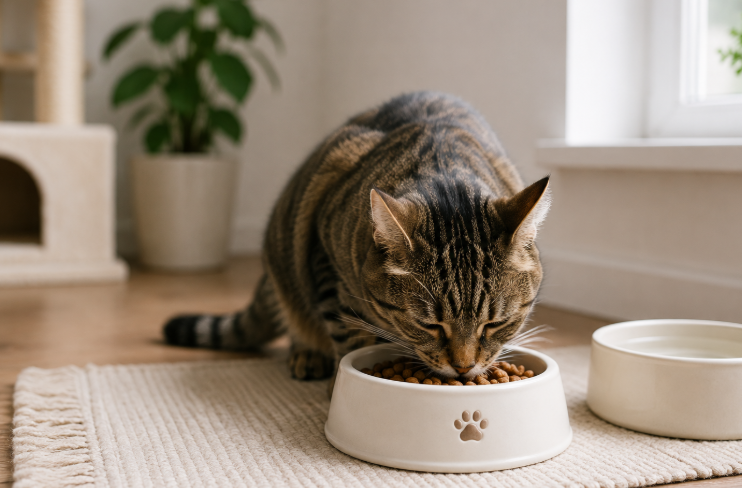
Many cat owners assume feeding should be simple. You place food in a bowl, your cat eats, and everyone moves on with their day. However, reality often looks very different. Some cats beg constantly, while others refuse meals without warning. Certain cats eat too quickly, whereas others seem anxious whenever food appears. Multi-cat households can become even more challenging when competition and tension develop around feeding areas. Understanding Stress Free Cat Feeding can help eliminate confusion and create a calmer, healthier experience for both cats and owners.
Cats thrive on predictability. They feel most comfortable when daily routines remain consistent and their environment feels safe. Feeding routines play a major role in this sense of security. When meals occur unpredictably or in stressful situations, cats may develop unwanted behaviors that affect appetite, digestion, and emotional well-being. Consequently, feeding becomes about much more than nutrition alone.
Fortunately, creating a positive mealtime experience does not require complicated changes. Small adjustments often make a significant difference. By understanding feline instincts and applying practical strategies, owners can establish Stress Free Cat Feeding habits that support both physical and emotional health.
A calm approach to feeding helps reduce anxiety, strengthen routines, and encourage healthier eating behaviors throughout a cat’s life.
Why Cats Need Predictable Feeding Routines
One of the most important aspects of Stress Free Cat Feeding involves consistency. Cats are creatures of habit and generally prefer routines that remain stable from day to day.
In nature, cats spend time hunting, resting, grooming, and exploring according to predictable patterns. Domestic cats retain many of these instincts despite living indoors. Consequently, sudden changes in feeding schedules can create uncertainty and stress.
When meals occur at consistent times, cats learn what to expect. This predictability reduces anxiety and helps regulate appetite. Many cats become calmer because they no longer feel the need to worry about when food will arrive.
Consistent feeding schedules may also improve digestive function. The body often responds positively when meals occur at regular intervals.
Owners benefit as well. Predictable feeding makes it easier to monitor appetite and identify health concerns early. A cat that suddenly loses interest in food becomes easier to notice when routines remain consistent.
Establishing reliable meal schedules creates a strong foundation for Stress Free Cat Feeding and promotes a greater sense of security.
Understanding Your Cat’s Natural Feeding Behavior
To achieve Stress Free Cat Feeding, it helps to understand how cats naturally approach food.
Unlike some animals that consume large meals infrequently, cats evolved as hunters of small prey. In the wild, they often eat multiple small meals throughout the day and night.
This natural behavior explains why some cats prefer several smaller portions instead of one or two large meals. Consequently, feeding strategies should consider individual preferences whenever possible.
Cats also rely heavily on their senses. Smell, texture, temperature, and presentation influence food acceptance. A meal that appears perfectly acceptable to an owner may seem unappealing to a cat.
Environmental awareness also affects feeding behavior. Cats remain alert while eating because vulnerability increases when attention focuses on food.
Understanding these instincts helps owners create feeding routines that align more closely with natural behaviors. As a result, mealtimes often become calmer and more successful.
Recognizing feline feeding preferences supports long-term Stress Free Cat Feeding by reducing frustration and encouraging healthy eating habits.
Creating A Safe Feeding Environment
The feeding environment significantly influences whether Stress Free Cat Feeding becomes successful.
Cats prefer quiet locations where they can eat without interruption. Loud appliances, heavy foot traffic, and frequent disturbances may increase anxiety during meals.
Choosing a calm feeding area allows cats to focus comfortably on eating. Consequently, many cats show improved appetite when environmental stress decreases.
Location matters as well. Food bowls should remain separate from litter boxes whenever possible. Most cats prefer clear separation between eating and elimination areas.
Some cats appreciate elevated feeding stations because they provide a better view of the surrounding environment. Others prefer secluded spaces that feel protected.
Observing individual preferences helps identify the most suitable feeding setup. What works well for one cat may not work for another.
Creating a secure environment remains one of the easiest ways to support Stress Free Cat Feeding and improve overall mealtime comfort.
Choosing The Right Food Bowl
Many owners overlook bowl selection when considering Stress Free Cat Feeding, yet the feeding dish can influence a cat’s willingness to eat.
Some cats dislike deep bowls because their sensitive whiskers repeatedly touch the sides. This phenomenon, often called whisker fatigue, may create discomfort during meals.
Wide, shallow dishes often provide a more comfortable eating experience. Consequently, many cats prefer these designs.
Material can also matter. Stainless steel and ceramic bowls generally remain popular because they are durable and easy to clean. Certain cats dislike plastic bowls due to odors or texture preferences.
Cleanliness plays an important role as well. Food residue can affect taste and smell, reducing meal appeal. Therefore, bowls should be washed regularly.
Fresh water should always remain available in clean containers. Some cats prefer fountains because moving water appears more appealing.
These simple adjustments often contribute significantly to Stress Free Cat Feeding by eliminating unnecessary sources of discomfort.
Reducing Stress In Multi-Cat Households
Feeding multiple cats presents unique challenges. Consequently, Stress Free Cat Feeding often requires additional planning in shared living environments.
Competition for resources can create tension even among cats that generally get along. Some cats eat too quickly because they fear another pet may take their food.
Others become hesitant and eat less when dominant cats remain nearby. Therefore, separate feeding stations often improve mealtime experiences.
Distance between feeding areas helps reduce conflict. In some households, feeding cats in different rooms provides the best solution.
Monitoring interactions during meals allows owners to identify potential problems. Subtle signs of tension may include staring, blocking access, or waiting near another cat’s bowl.
Each cat should have an opportunity to eat without feeling threatened. Consequently, individualized feeding arrangements often support healthier behavior and better nutrition.
Addressing social stress remains essential for successful Stress Free Cat Feeding in multi-cat homes.
Avoiding Common Feeding Mistakes
Many owners unintentionally create obstacles to Stress Free Cat Feeding through well-meaning habits.
Frequent food changes represent one common mistake. While variety seems appealing, abrupt diet switches may cause digestive upset and reduce food acceptance.
Using food as the primary response to every meow can also create confusion. Cats quickly learn behavioral patterns and may begin requesting food even when hunger is not the motivation.
Overfeeding presents another challenge. Excessive portions can contribute to obesity and make appetite assessment more difficult.
Punishment should never accompany feeding issues. If a cat refuses food or exhibits undesirable behavior, addressing underlying causes remains far more effective than negative responses.
Ignoring subtle appetite changes can also delay recognition of health concerns. Consequently, owners should monitor eating habits regularly.
Avoiding these mistakes helps create a more predictable and positive experience that supports Stress Free Cat Feeding.
Using Enrichment To Improve Mealtimes
Mental stimulation can play an important role in Stress Free Cat Feeding because it engages natural hunting instincts.
Puzzle feeders encourage cats to work for food in ways that resemble foraging behaviors. Consequently, meals become both nutritional and mentally stimulating.
Food-dispensing toys may also slow rapid eaters while providing enrichment. This combination often improves digestion and reduces boredom.
Hiding small portions around the home creates opportunities for exploration and problem-solving. Many cats enjoy searching for food, especially when the activity mimics natural hunting patterns.
Interactive feeding can increase confidence in shy cats and provide valuable physical activity. Therefore, enrichment often benefits both emotional and physical health.
Not every cat enjoys the same type of enrichment. Experimenting with different options helps identify what works best.
Incorporating enrichment into daily routines supports Stress Free Cat Feeding by transforming meals into engaging experiences rather than simple feeding events.
Recognizing When Feeding Stress Signals A Health Problem
While environmental improvements help many cats, some feeding difficulties indicate underlying medical concerns. Therefore, Stress Free Cat Feeding also involves recognizing when veterinary attention becomes necessary.
Sudden appetite changes should never be ignored. Cats that stop eating entirely require prompt evaluation because prolonged fasting can become dangerous.
Dental disease frequently affects eating behavior. Cats experiencing oral pain may approach food but struggle to consume it comfortably.
Digestive disorders, kidney disease, hyperthyroidism, and other medical conditions can also influence appetite and feeding patterns.
Weight loss, vomiting, diarrhea, lethargy, or behavioral changes accompanying feeding issues warrant professional assessment.
Veterinary guidance helps distinguish between behavioral challenges and medical problems. Consequently, owners can address concerns appropriately and avoid unnecessary delays in treatment.
Health monitoring remains an important component of Stress Free Cat Feeding because physical comfort directly influences eating behavior.
Building Long-Term Feeding Success
Successful Stress Free Cat Feeding depends on consistency rather than perfection.
Cats thrive when routines remain stable, environments feel secure, and meals occur without unnecessary stress. Small improvements often produce meaningful results over time.
Observing individual preferences helps owners adapt feeding strategies effectively. Some cats prefer quiet locations, while others enjoy interactive feeding experiences. Understanding these differences supports better outcomes.
Patience also plays an important role. Behavioral changes rarely happen overnight. However, consistent routines gradually build trust and confidence.
Regular monitoring allows owners to identify shifts in appetite, body condition, and eating behavior before they become serious concerns.
Long-term success comes from creating a feeding experience that supports both physical health and emotional well-being.
Conclusion
Stress Free Cat Feeding is about much more than choosing the right food. It involves creating a calm, predictable, and supportive environment where cats can eat comfortably and confidently.
By understanding natural feeding instincts, maintaining consistent schedules, selecting appropriate feeding areas, reducing social stress, and incorporating enrichment, owners can transform mealtimes into positive experiences. These strategies not only encourage healthy eating habits but also contribute to overall emotional well-being.
Every cat has unique preferences and needs. Therefore, successful feeding routines require observation, flexibility, and patience. Small adjustments often create significant improvements when applied consistently.
Most importantly, owners should remain attentive to changes in appetite or behavior. Early recognition of potential problems helps protect long-term health and supports a happier life.
When approached thoughtfully, Stress Free Cat Feeding becomes an essential part of caring for a healthy, confident, and content feline companion.
FAQ
1. How often should I feed my cat each day?
Most cats benefit from two or more scheduled meals, although individual needs may vary.
2. Why does my cat seem anxious during meals?
Environmental stress, competition, health concerns, or inconsistent routines may contribute to feeding anxiety.
3. Are puzzle feeders good for cats?
Yes. Puzzle feeders provide mental stimulation and encourage natural hunting behaviors.
4. Should cats in the same home eat together?
Some cats can eat together comfortably, while others benefit from separate feeding areas.
5. When should I contact a veterinarian about appetite changes?
Seek veterinary advice if your cat suddenly stops eating, loses weight, or shows other concerning symptoms.


