
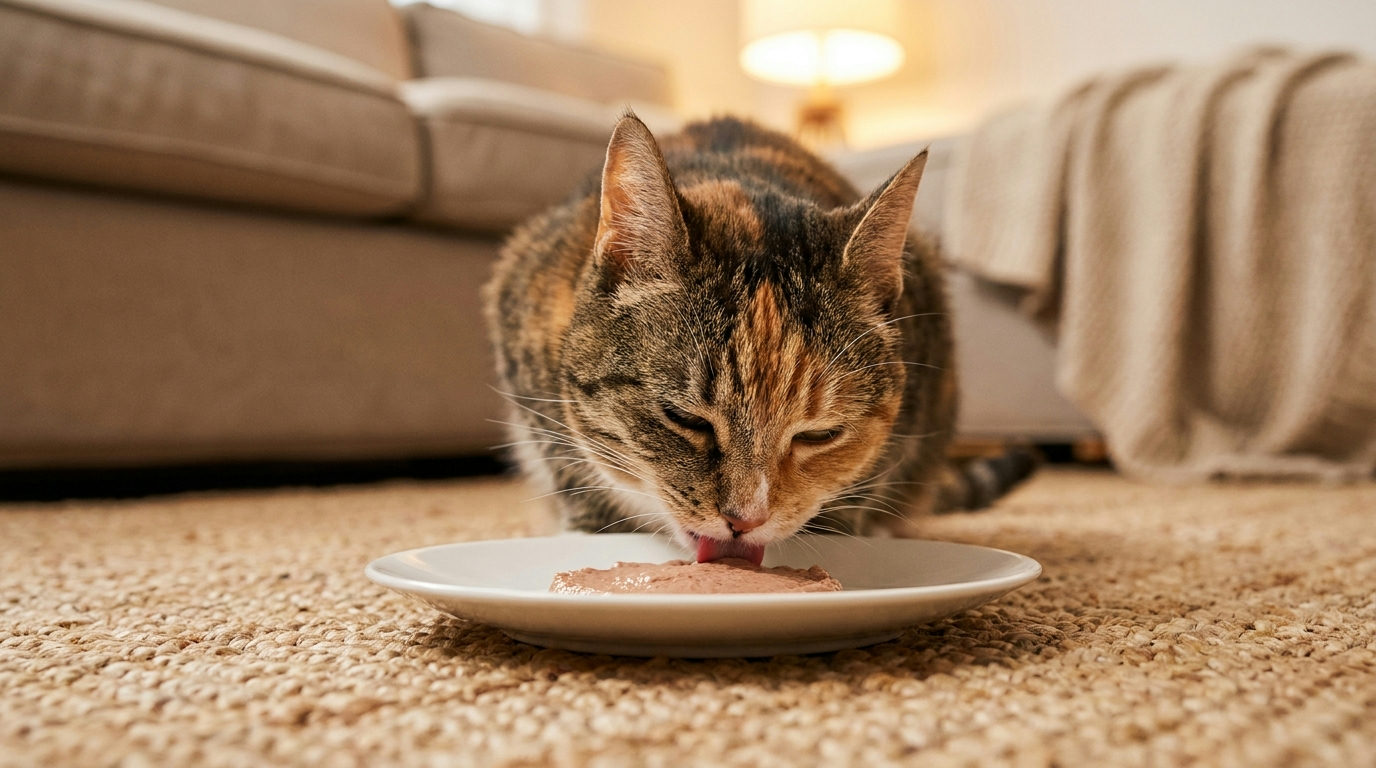
Hearing that your cat needs several teeth removed, or even all of them, can be worrying. One of the first questions most owners ask is simple: how will my cat eat? The reassuring news is that feeding cats without teeth is usually very manageable. Many cats adapt well, and some seem more comfortable once painful teeth are gone.
Disclosure: Cat Nutrition Guide may earn a commission from qualifying purchases made through links on this page, at no extra cost to you.
This guide covers the recovery period after extractions, how to choose textures, whether toothless cats can eat kibble, and how to keep your cat’s weight steady over the long term. Your vet’s specific aftercare instructions always come first, so use this as a companion to those, not a replacement.
Why Cats Lose Teeth
Cats can need extractions for several reasons. Common ones include advanced periodontal disease, painful tooth resorption, broken teeth and chronic mouth inflammation. VCA Animal Hospitals explains that dental disease is common in adult cats and that painful teeth are often removed to keep the mouth comfortable.
Cats are also good at hiding mouth pain. Some keep eating even when their teeth hurt, which is why a vet exam and dental X-rays are often needed to spot problems. After treatment, owners sometimes notice their cat seems brighter or more playful, though every cat is different.
How Cats Eat Without Teeth
It helps to know how cats normally eat. Unlike people, cats do not chew their food much. They mostly use their teeth to grab, tear and cut food into pieces small enough to swallow. Many cats swallow kibble pieces whole or after only a bite or two.
As a result, losing teeth does not mean losing the ability to eat. Cats use their tongue and gums to pick up and move food, and many go back to a fairly normal routine once their mouth has healed.
The First Days After Dental Extractions
The recovery period is when feeding needs the most care. Your vet will give you instructions based on how many teeth were removed and how your cat’s surgery went. Typical guidance may include:
- Soft food only for a set period: Many vets recommend wet food during healing, often for one to two weeks. Follow your vet’s timeline.
- Small, frequent meals: These may be easier while the mouth is sore and your cat is recovering from anesthesia.
- Pain relief as prescribed: Give medication exactly as directed. A comfortable cat is much more likely to eat.
- No hard treats or chew toys: Avoid anything firm until your vet confirms the gums have healed.
- A recheck visit: Your vet may want to see your cat to check how the gums are healing.
Red flags after dental surgery
Contact your vet promptly if your cat:
- Refuses food for more than 24 hours after coming home
- Paws at the mouth, drools heavily or cries when eating
- Has bleeding that does not stop, or bad-smelling discharge
- Has facial swelling
- Seems very lethargic, hides or vomits repeatedly
Cats that stop eating for too long can become seriously unwell, so do not wait to see if things improve on their own.
Choosing Textures When Feeding Cats Without Teeth
International Cat Care and other feline welfare groups emphasize that cats have individual food preferences, and that includes texture. When feeding cats without teeth, it often takes a little trial and error to find what your cat likes best.
| Texture | What it is like | Good to know |
|---|---|---|
| Smooth pâté or mousse | Soft and easy to lap up | Often a good first choice during recovery |
| Minced or flaked | Small soft pieces | Many toothless cats manage well once healed |
| Chunks in gravy or jelly | Larger soft pieces | Some cats lick the gravy and leave the chunks; mash if needed |
| Recovery or critical-care diets | Very soft, energy dense | Your vet may suggest these if appetite is low |
| Dry kibble | Hard, small pieces | Possible for some cats after full healing; check with your vet |
Whatever you choose, make sure the main diet is complete and balanced for your cat’s life stage. Toppers and treats are fine in small amounts, but they should not replace a complete food.
Simple ways to make food easier
- Mash chunks with a fork into a smoother texture.
- Add a little warm water to pâté to loosen it.
- Warm refrigerated food to around room or body temperature, stirring well so there are no hot spots.
- Use a shallow, wide dish so your cat can reach food easily.
- Smear soft food thinly across a flat plate for cats who find scooping from a bowl awkward.
Can Toothless Cats Eat Kibble?
Many owners are surprised to learn that the answer is often yes, at least once the mouth has fully healed. Because cats tend to swallow kibble pieces whole or nearly whole, a lot of cats with few or no teeth go back to eating dry food without trouble.
That said, it depends on the individual cat. Kibble size and shape matter, and some cats simply prefer soft food after dental surgery. In addition, some cats with ongoing mouth inflammation may find dry food uncomfortable.
If you would like to reintroduce kibble, ask your vet when it is safe to try. Then offer a small amount alongside your cat’s usual soft food and watch closely. Signs that kibble is not working include dropping pieces, head tilting while eating, eating more slowly or leaving food behind. If you notice these, go back to soft food and mention it to your vet.
Keeping Weight Steady
Changing textures can quietly change how much your cat eats. Wet food contains much more water than dry food, so it typically contains fewer calories per gram. A cat that switches from dry to wet food may need a larger volume to get the same energy.
To keep your cat’s weight steady:
- Check the calorie statement on each food. Use it to estimate how much to feed each day.
- Ask your vet for a daily calorie target. This gives you a number to work toward.
- Weigh your cat regularly. Every couple of weeks during the transition is a sensible rhythm.
- Measure portions. A kitchen scale helps more than guessing by eye. Our guide on how to measure cat food portions walks you through it.
- Watch body condition. Feel for ribs and look for a visible waist from above.
On the other hand, some cats eat more enthusiastically once painful teeth are gone, so watch for gradual weight gain too.
Worked Example: A Two-Week Recovery Plan
Here is how a typical plan might look for a cat recovering from multiple extractions. Your vet’s instructions may differ, so treat this as an illustration only.
- Day 1 (evening home): Offer a small portion of smooth wet food once your cat is alert and steady. Do not worry if your cat eats little on the first night, but call your vet if there is no interest the next day.
- Days 2–7: Feed smooth pâté in four or five small meals. Give pain medication as prescribed. Note how much your cat eats.
- Days 8–14: Continue soft food. Attend the recheck visit and ask whether minced textures or kibble can be introduced.
- After healing: Settle on the textures your cat prefers, measure portions and weigh your cat every couple of weeks until weight is stable.
Long-Term Mouth Care for Toothless Cats
Even without teeth, your cat’s mouth still needs attention. Gums can become inflamed, and remaining teeth can develop new problems. Regular vet check-ups, including a look in the mouth, help catch issues early. Ask your vet whether any home care, such as gently checking the gums, makes sense for your cat.
Older cats are especially likely to need dental care, so if your cat is a senior, our senior cat diet guide covers other feeding points to discuss with your vet.
Questions to Ask Your Vet
- How long should my cat eat only soft food after surgery?
- Which texture do you recommend during recovery?
- When can I try kibble again, if at all?
- How many calories should my cat eat each day?
- What signs mean I should bring my cat back in?
- How often should my cat’s mouth be checked from now on?
Frequently Asked Questions
Will my cat be able to eat treats?
Many soft treats work well for toothless cats. Avoid hard treats until your vet confirms healing, and keep treats to a small share of daily calories.
My cat seems hungrier after extractions. Is that normal?
Some owners notice this once mouth pain is gone. Keep measuring portions, and talk to your vet if weight starts to climb.
Should I syringe-feed if my cat will not eat?
Only if your vet shows you how and recommends it. Forcing food can cause stress and food aversion, so ask your vet first.
The Bottom Line
Feeding cats without teeth is usually far simpler than owners expect. Follow your vet’s recovery plan, start with soft textures, and experiment gently to find what your cat enjoys. Many cats can even return to kibble after healing. Meanwhile, keep an eye on weight and watch for any red flags, and call your vet whenever something does not seem right.
This article is for general information only and is not veterinary advice. It is not a substitute for advice from a licensed veterinarian who knows your cat.


