
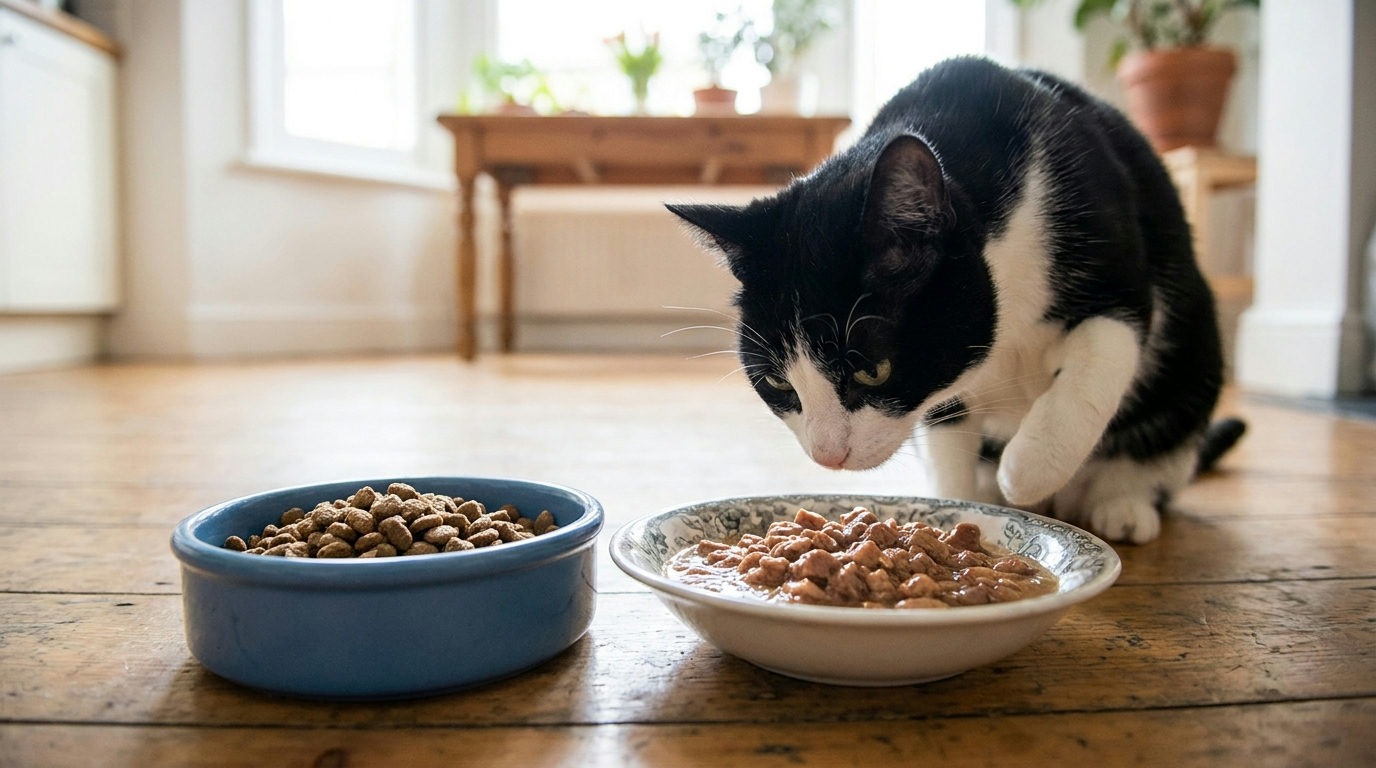
Switching cat food is sometimes necessary. Your cat may be moving from kitten to adult food, or your vet may suggest a new diet. Either way, a slow and steady change helps avoid stomach trouble and food refusal.
Disclosure: Cat Nutrition Guide may earn a commission from qualifying purchases made through links on this page, at no extra cost to you.
Why a Gradual Change Matters
A cat’s gut gets used to its usual food. When the diet changes suddenly, the digestive system may react. As a result, you may see vomiting, loose stools, or gas.
In addition, cats can be wary of new tastes and textures. A sudden swap may lead to a cat refusing to eat. That matters, because cats should not go without food for long. Therefore, patience pays off.
A 7 to 10 Day Plan for Switching Cat Food
Most cats do well with a gradual mix over about a week. Here is a common schedule:
- Days 1 to 2: 75 percent old food, 25 percent new food
- Days 3 to 4: 50 percent old food, 50 percent new food
- Days 5 to 6: 25 percent old food, 75 percent new food
- Day 7 onward: 100 percent new food
For sensitive cats, stretch each step to three or four days. There is no rush.
Tips for Picky Eaters
Some cats resist new food no matter how slowly you go. In that case, try these ideas:
- Warm wet food slightly to boost its aroma.
- Serve meals at the same time and place each day.
- Keep the bowl clean, since stale smells can put cats off.
- Try a similar texture to the old food first.
For more ideas, see our guide to picky cat eating solutions.
Switching Cat Food Between Wet and Dry
Changing form is often harder than changing brand. Cats can be very attached to texture. So, when moving from dry to wet, start with a small spoonful beside the usual kibble. Then, slowly increase the wet portion. Remember to reduce the dry portion to keep calories steady. Our article on dry vs wet cat food explains the trade-offs.
Signs the Switch Is Not Going Well
Mild changes in stool are common for a few days. However, call your vet if you notice:
- Vomiting more than once
- Diarrhea lasting over a day or two
- Refusing food for more than 24 hours
- Lethargy or hiding
Cats that stop eating can develop serious liver problems. For this reason, do not try to “wait out” a hunger strike. The Cornell Feline Health Center offers more guidance on feline health.
When Your Vet Prescribes a Diet
Therapeutic diets sometimes need a faster change. In those cases, follow your vet’s plan exactly. They may give specific steps that differ from the general guide above.
Final Thoughts on Switching Cat Food
Overall, switching cat food works best when you go slowly and watch your cat closely. Mix old and new over a week or more, keep meals appealing, and call your vet if problems appear. With patience, most cats adjust well.
This article is for general information only and is not a substitute for advice from a licensed veterinarian. Always consult your vet about your cat’s specific needs.


