
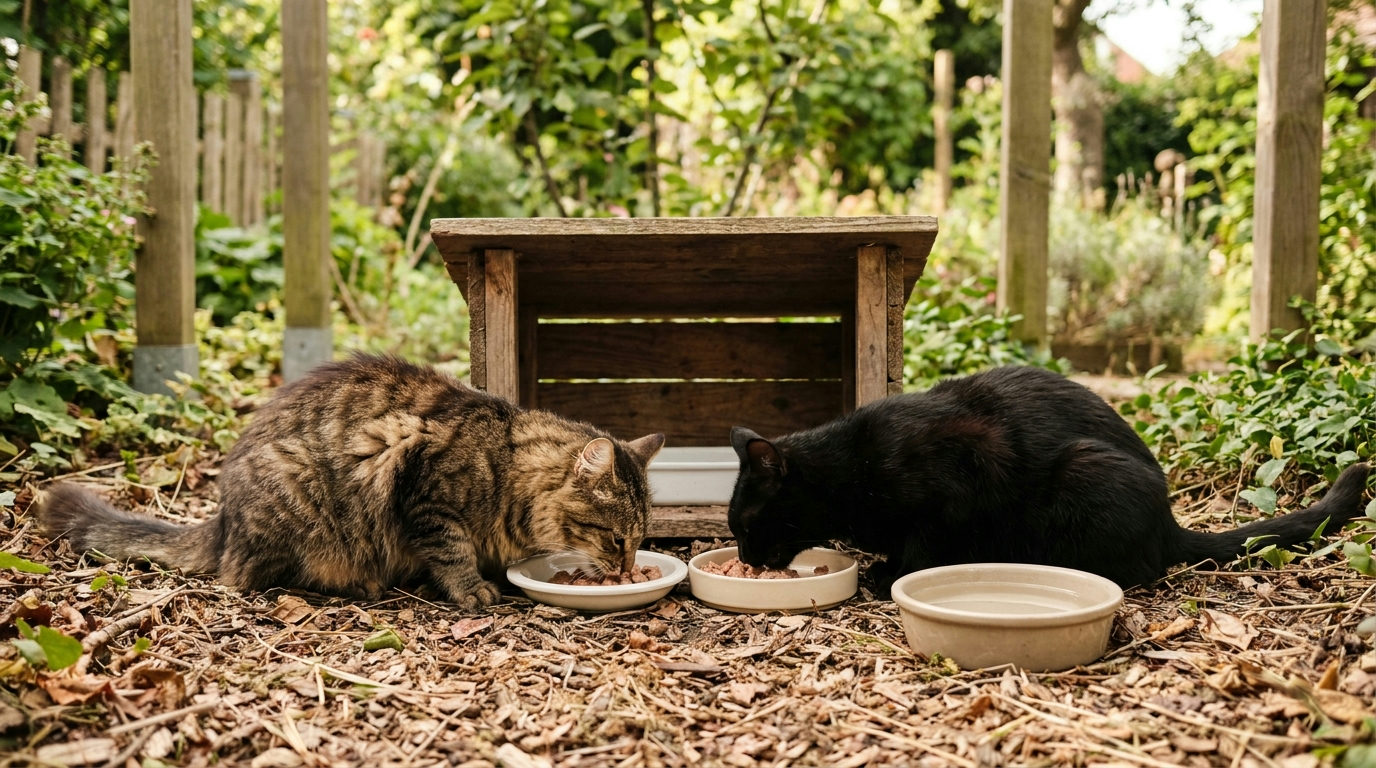
If you leave food for neighborhood cats, learning how to feed feral cats well means more than a bowl on the step. A clean daytime routine, leftovers picked up, and a plan for trap-neuter-return (TNR) keep cats fed without inviting pests or neighbor conflict.
By Cat Nutrition Guide Editorial. Not veterinary advice: This content is general information only. It is not a substitute for professional veterinary advice, diagnosis or treatment.
Open these pages first
- Humane World for Animals — Community Cat Feeding Guide
- Alley Cat Allies — Best Practices: Community Cat Colony Care
- Cornell Feline Health Center — Feeding Your Cat
- AVMA — Free-roaming, abandoned and feral cats
Do not restate cup amounts, percentages, wait times or medical claims from memory. Write what each page says in your notebook and follow local animal-services rules where you live.
A quick word on terms
“Feral” usually means cats not socialized to people. “Community cats” also covers strays and friendly outdoor cats without a clear owner. Feeding basics below apply to both. Ask your local animal services office whether any local rules apply.
The AVMA page linked above describes free-roaming cat management as complex. Open it and note how they frame welfare, public health and wildlife before you expand a colony station.
What to feed when you learn how to feed feral cats
Outdoor cats still need complete and balanced cat food. Open Cornell’s feeding page and write how they describe obligate carnivores and AAFCO adequacy statements. In practice:
- Use a complete and balanced cat food with a nutritional adequacy statement on the label.
- Skip dog food and table scraps. See our note on whether cats can eat dog food.
- Offer clean water with every meal — Humane World’s guide stresses fresh water alongside food.
Dry, wet or both can work outdoors. Open Cornell for how they describe moisture in canned versus dry food rather than quoting numbers from memory. Pick up what is not eaten promptly. Our wet vs dry guide compares formats for pet homes; outdoor stations still need the same cleanup discipline.
How much and how often
Consistency matters more than guessing a scoop size. Open Humane World’s community cat feeding guide and write their daytime schedule and portion guidance in your notebook. Check the feeding directions on your food’s label too.
Open Alley Cat Allies’ colony care page for how they suggest fine-tuning portions by watching how quickly bowls clear. Write their method; do not invent a stopwatch rule from a forum.
How to feed feral cats without attracting pests
This is where many well-meaning feeders run into trouble. Open Alley Cat Allies and Humane World for daylight feeding, leftover pickup, and ant control ideas. Then apply:
- Feed in daylight when you can.
- Remove uneaten food on the timing those guides recommend — write it down rather than guessing.
- Use a shallow water moat or ant-proof bowls if ants are a problem.
- Do not feed wildlife on purpose; change timing or location if other animals take over.
Choosing a feeding spot
A good station is quiet, safe and easy to clean. Open Humane World for siting away from busy roads and sensitive wildlife areas, and Alley Cat Allies for keeping one consistent location. Practical extras:
- Out of heavy foot traffic so shy cats feel safer.
- Simple cover against rain and snow.
- Permission before feeding on property that is not yours.
- Away from bird feeders.
Water, cleaning and seasons
Fresh water matters as much as food. Open Humane World and Alley Cat Allies for year-round water tips, bowl cleaning, disposable plates, and litter-area ideas that keep cats out of neighbors’ gardens. Write seasonal notes from those pages for hot and cold weather instead of inventing amounts.
Pair feeding with TNR
Feeding alone does not stop new litters. Open Alley Cat Allies and Humane World for how they connect colony care with trap-neuter-return. A regular feeding routine may make trapping easier to plan because you know when cats appear. Local shelters and rescue groups can explain equipment and appointments where you live.
Neighbors and health watching
A short, friendly conversation can prevent conflict. Tell neighbors you feed on a schedule, clean up, and are working toward neutering. Share a contact number.
Feeding time is your best chance to notice a cat who stops showing up, limps, or looks unwell. Contact a local TNR group or a vet who works with community cats. Do not medicate outdoor cats on your own.
Friendly cats at the station
Not every visitor is feral. A cat who seeks people may be lost. Ask a clinic or shelter to scan for a microchip and check local lost-pet posts. Adoption may fit better than outdoor life for some friendly cats.
Permissions and local rules
Before you expand how to feed feral cats on a new block, ask property owners and check animal-services pages for feeding ordinances. Write the answer on your checklist card. A tidy station on land you have permission to use beats a hidden buffet that gets the colony moved overnight.
If a homeowner association or landlord has written rules, follow them or propose a written daytime plan with cleanup times. Paper trails help when someone new complains.
Caretaker checklist: how to feed feral cats this week
- Open the four linked pages and jot local rules.
- Pick one daytime spot with permission.
- Use complete and balanced cat food plus fresh water.
- Pick up leftovers on the timing in your notebook.
- Wash or discard dishes each visit.
- Note which cats show up and how they look.
- Connect with a local TNR contact.
Shared caretaker rotation
If more than one person feeds, write a shared calendar: who covers which days, who buys food, and who texts the TNR contact. Shared how-to-feed-feral-cats routines fail when everyone assumes someone else cleaned up.
Keep a simple log of cats you recognize. New faces matter for TNR planning. Do not post private addresses publicly when you ask for help online.
What not to do
- Do not leave wet food out for hours in heat.
- Do not invent medication for outdoor cats.
- Do not move a colony onto someone else’s land without agreement.
- Do not skip cleanup because “they will finish later.”
Quiet, consistent care beats a dramatic rescue weekend that leaves mess behind.
Carry spare bags for trash and a spare water jug in the car so a forgotten item does not become an excuse to skip cleanup when you are learning how to feed feral cats on a tight schedule. Small prep prevents skipped visits.
FAQ: how to feed feral cats
Can I leave food out overnight?
Open Alley Cat Allies and Humane World — both stress cleanup and wildlife risk. Write their guidance and follow it.
What food is safe?
Complete and balanced cat food. Open Cornell for why cats need animal-based nutrients and how labels signal adequacy.
Do I need TNR if I already feed?
Feeding without a sterilization plan can grow the colony. Open the TNR sections of the guides linked above.
What about winter water?
Open Alley Cat Allies for cold-weather bowl tips rather than guessing.
Neighbors are upset — what helps?
Daytime schedule, cleanup, and a clear TNR plan. Share contact details so concerns come to you first.
Closing routine
Learning how to feed feral cats responsibly is a daytime station, leftover pickup, clean water, and a TNR plan — not a permanent buffet. Keep neighbors informed and local rules in view.
Concrete tip for this week: print the seven-line checklist, open Humane World and Alley Cat Allies, write their leftover-pickup timing on the card, and feed the next meal in daylight with dishes ready to leave clean.
This article is general information, not veterinary advice. For health concerns about a specific cat, contact a veterinarian or local TNR organization.


