
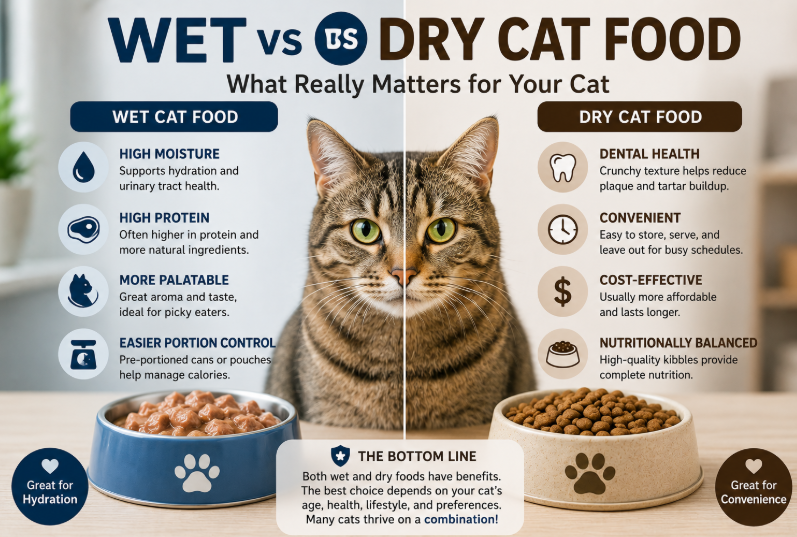
Choosing the right food for a cat can feel surprisingly complicated. Walk through any pet store and you will find shelves filled with wet foods, dry foods, specialty formulas, premium brands, and countless marketing claims. Many owners wonder whether canned food is healthier than kibble or if dry food provides benefits that wet food cannot match. The truth is that the Wet Vs Dry Cat Food debate is not as simple as declaring one option universally better than the other. What truly matters is understanding how each type of food affects your cat’s nutrition, hydration, health, and lifestyle.
Cats are unique animals with specific dietary needs. As obligate carnivores, they rely heavily on animal-based nutrients to support healthy muscles, organs, skin, and overall well-being. Therefore, evaluating food quality involves much more than simply choosing between wet and dry formats. Nutritional balance, ingredient quality, calorie content, hydration, and individual health requirements all influence the best choice for a particular cat.
Many veterinarians encourage owners to look beyond marketing and focus on practical factors. Consequently, understanding the realities behind the Wet Vs Dry Cat Food discussion helps owners make informed decisions based on evidence rather than assumptions.
While both feeding methods offer advantages, the ideal solution often depends on the individual cat. By exploring the strengths and limitations of each option, owners can better support lifelong feline health.
Understanding The Nutritional Foundations
Before comparing specific benefits, it is important to understand that the Wet Vs Dry Cat Food conversation should begin with nutrition rather than food texture.
Cats require high-quality protein, essential fatty acids, vitamins, minerals, and amino acids such as taurine. These nutrients support nearly every function within the body. Whether food comes from a can or a bag matters less than whether it provides complete and balanced nutrition.
Many high-quality wet and dry foods meet established nutritional standards. Consequently, both categories can support healthy cats when formulated appropriately.
Problems arise when owners focus exclusively on food format while ignoring ingredient quality. A premium dry food may offer better nutrition than a poorly formulated canned food. Likewise, a high-quality wet diet can outperform low-grade kibble.
The most productive approach to the Wet Vs Dry Cat Food question involves evaluating nutritional content first. Once nutritional requirements are satisfied, other factors such as hydration, convenience, and health conditions become more relevant.
Understanding this foundation helps owners make choices based on science rather than misconceptions.
Why Moisture Content Matters
One of the most significant differences in the Wet Vs Dry Cat Food comparison involves moisture content.
Wet food typically contains between 70 and 80 percent water. Dry food usually contains around 10 percent moisture or less. This difference can have important implications for feline hydration.
Cats evolved from desert-dwelling ancestors and naturally obtain much of their water through prey. Consequently, many cats do not drink enough water independently. Wet food helps compensate for this tendency by providing substantial moisture with every meal.
Improved hydration may support urinary tract health, kidney function, and overall wellness. For this reason, veterinarians often recommend wet food for cats with certain medical conditions.
However, hydration does not automatically make wet food superior in every situation. Cats consuming dry food can remain healthy when they drink adequate amounts of water.
Still, moisture remains one of the strongest arguments discussed during the Wet Vs Dry Cat Food debate because hydration influences several important aspects of feline health.
Owners should consider their cat’s drinking habits when evaluating feeding options.
The Benefits Of Wet Food
Many advocates in the Wet Vs Dry Cat Food discussion favor canned diets because of their moisture content and protein-rich composition.
Wet foods often contain higher levels of animal protein while maintaining lower carbohydrate percentages. This nutritional profile more closely resembles the natural prey-based diets that cats evolved to consume.
The increased water content may support cats prone to urinary issues. Consequently, many veterinarians recommend wet food for cats with histories of urinary tract concerns.
Wet food can also be highly palatable. Cats frequently find canned diets more appealing due to their aroma and texture. This benefit becomes particularly valuable for picky eaters, senior cats, or pets recovering from illness.
Portion control may also become easier because individual servings often come pre-measured. As a result, some owners find it simpler to manage calorie intake.
These advantages contribute significantly to the popularity of wet diets. However, a balanced Wet Vs Dry Cat Food evaluation must also consider potential drawbacks.
Potential Limitations Of Wet Food
Although wet food offers several benefits, it is not perfect. Therefore, the Wet Vs Dry Cat Food conversation should acknowledge its limitations as well.
Cost represents one of the most common concerns. Feeding wet food exclusively often costs substantially more than feeding dry food, particularly in multi-cat households.
Storage can also be less convenient. Once opened, canned food requires refrigeration and typically remains fresh for only a limited period.
Some cats prefer grazing throughout the day. Wet food left out for extended periods may spoil, making free-feeding more difficult.
Packaging waste presents another consideration. Individual cans, pouches, and containers create more waste than many dry food products.
Despite these challenges, many owners still choose wet diets because they prioritize hydration and palatability. Ultimately, the value of wet food depends on each cat’s needs and the owner’s circumstances.
A complete Wet Vs Dry Cat Food analysis must balance both strengths and weaknesses objectively.
The Advantages Of Dry Food
Dry food remains extremely popular for practical reasons. In the Wet Vs Dry Cat Food debate, convenience often emerges as one of kibble’s strongest advantages.
Storage is simple. Dry food requires no refrigeration and generally maintains freshness longer after opening when stored properly.
Many owners appreciate the flexibility dry food provides. It can remain available throughout the day, making it suitable for cats that prefer multiple small meals.
Cost efficiency also contributes to its popularity. Dry food typically costs less per serving than wet food, allowing owners to manage feeding expenses more easily.
Modern premium dry foods often contain high-quality proteins and balanced nutrition. Consequently, many healthy cats thrive on carefully selected kibble diets.
Dry food may also work well with automated feeders, making feeding schedules easier to manage for busy households.
These practical benefits explain why dry food continues to play a major role in feline nutrition. Therefore, the Wet Vs Dry Cat Food discussion should not dismiss kibble simply because wet food offers more moisture.
Common Concerns About Dry Food
Despite its convenience, dry food receives criticism in many Wet Vs Dry Cat Food discussions.
Lower moisture content remains the primary concern. Cats consuming dry food depend more heavily on voluntary water intake to maintain hydration.
Some dry foods also contain higher carbohydrate levels than wet alternatives. While cats can digest carbohydrates, excessive amounts may not align closely with their natural dietary patterns.
Portion control can become challenging when food remains available continuously. Consequently, some cats consume more calories than necessary and gain excess weight.
Not all kibble products provide equal quality. Lower-grade formulas may rely heavily on fillers and less desirable ingredients. Therefore, owners should evaluate nutritional content carefully rather than assuming all dry foods are equivalent.
Although these concerns deserve attention, many healthy cats live long lives while eating high-quality dry diets. The key lies in selecting appropriate products and monitoring overall health.
Can You Combine Both Feeding Methods
For many households, the best answer to the Wet Vs Dry Cat Food question may be a combination approach.
Mixed feeding allows cats to receive the hydration benefits of wet food while maintaining the convenience of dry food. Many veterinarians support this strategy because it combines strengths from both feeding methods.
Offering wet food at scheduled meals while providing measured amounts of dry food throughout the day creates flexibility and variety.
This approach may also help satisfy cats with strong texture preferences. Some cats enjoy both food types and benefit from dietary diversity.
Mixed feeding allows owners to adjust ratios according to health needs, budget considerations, and lifestyle factors. Consequently, it often represents a practical compromise.
When combining foods, maintaining appropriate calorie intake remains important. Owners should calculate total daily calories rather than treating wet and dry foods as separate diets.
For many cats, a mixed approach resolves much of the controversy surrounding Wet Vs Dry Cat Food.
Choosing Based On Your Cat’s Needs
No universal answer exists within the Wet Vs Dry Cat Food debate because every cat has unique requirements.
Kittens, adults, and seniors often have different nutritional needs. Likewise, medical conditions may influence feeding recommendations significantly.
Cats with kidney disease, urinary issues, or low water intake frequently benefit from increased moisture consumption. Consequently, wet food may play a larger role in these situations.
Highly active cats sometimes require different calorie strategies than sedentary indoor cats. Weight management goals may also affect food selection.
Individual preferences matter as well. Some cats strongly favor one texture over another. Forcing a cat to consume an unwanted food often creates unnecessary challenges.
Veterinary guidance helps ensure dietary choices align with health requirements. Therefore, professional recommendations should always carry significant weight when making feeding decisions.
Ultimately, successful feeding focuses on supporting the specific needs of the individual cat.
Conclusion
The Wet Vs Dry Cat Food debate often creates the impression that owners must choose one side or the other. In reality, both options can support healthy feline lives when selected thoughtfully and used appropriately.
Wet food offers hydration, palatability, and a nutritional profile that many owners find appealing. Dry food provides convenience, affordability, and flexibility. Each approach has strengths and limitations that deserve consideration.
Rather than focusing solely on food format, owners should prioritize nutritional quality, hydration, calorie balance, and individual health requirements. For many cats, a combination feeding strategy provides the best of both worlds.
The most important goal is not choosing a winner in the Wet Vs Dry Cat Food debate. Instead, it is providing complete, balanced nutrition that supports long-term health, comfort, and happiness. When owners focus on their cat’s unique needs, the right feeding decision often becomes much clearer.
FAQ
1. Is canned food healthier than kibble?
Not necessarily. Nutritional quality matters more than food format alone.
2. Why do veterinarians often recommend wet food?
Wet food provides additional moisture, which may support urinary and kidney health.
3. Can cats live healthy lives on dry food?
Yes. Many cats thrive on high-quality dry diets when hydration and nutrition are adequate.
4. Is combining food types a good idea?
Many veterinarians support mixed feeding because it combines benefits from both options.
5. How do I know which food is best for my cat?
Consider age, health status, hydration needs, lifestyle, and veterinary recommendations when choosing a diet.


