
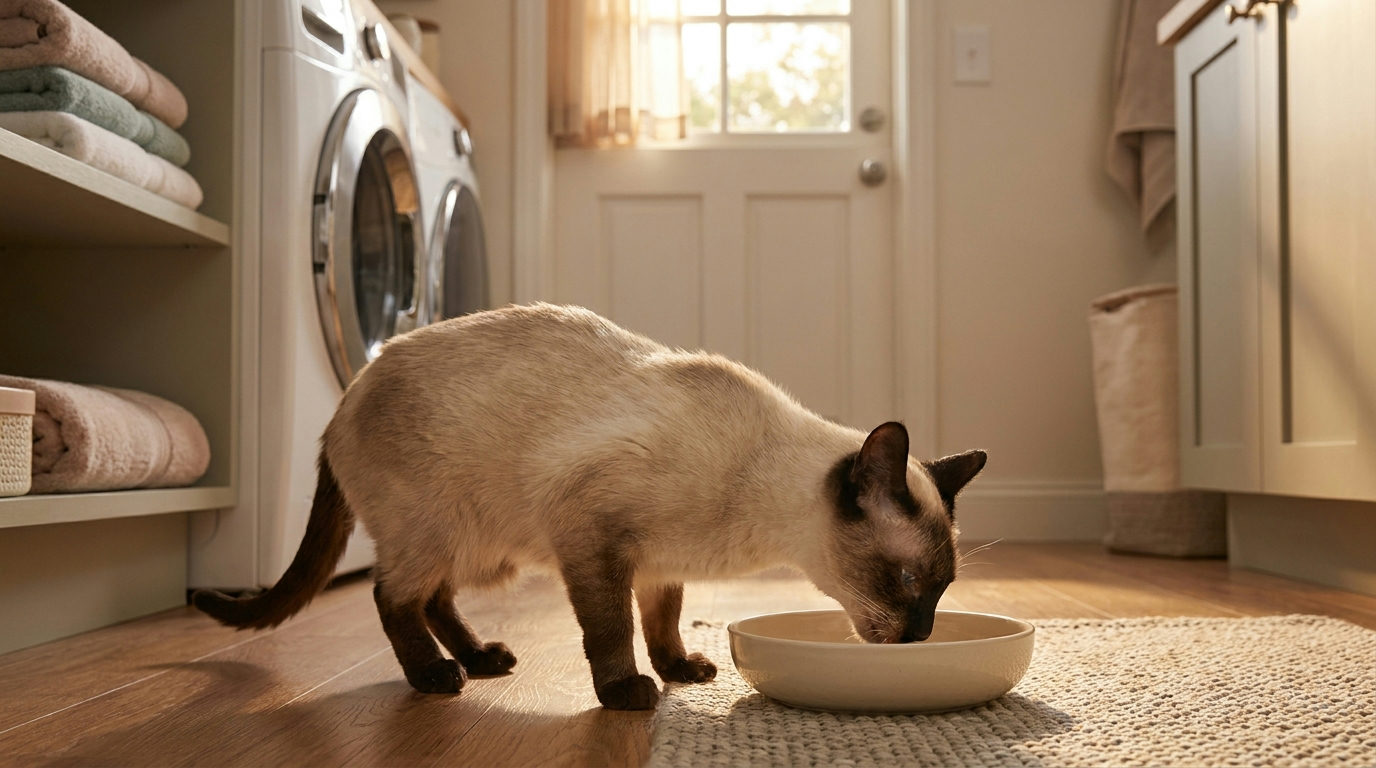
If your cat has just been diagnosed with hyperthyroidism, you may be wondering whether a hyperthyroid cat diet can help. The short answer is that nutrition can be one part of a treatment plan, but it isn’t a do-it-yourself fix. A prescription iodine-restricted diet is one option some vets offer, and it only works under specific conditions. This guide explains how diet fits alongside other treatments, so you can have a more informed conversation with your vet.
Disclosure: Cat Nutrition Guide may earn a commission from qualifying purchases made through links on this page, at no extra cost to you.
What Is Hyperthyroidism in Cats?
The thyroid glands sit in the neck and make hormones that help control metabolism. In a hyperthyroid cat, the glands produce too much hormone, so the body runs in overdrive.
According to the Cornell Feline Health Center, hyperthyroidism is one of the more common hormone disorders in middle-aged and older cats. Cornell also notes that it is usually caused by a non-cancerous enlargement of the thyroid tissue.
Signs owners often notice
The signs can develop slowly, so they’re easy to miss at first. Your vet may check for hyperthyroidism if you notice:
- Weight loss, even though your cat seems hungrier than usual
- Drinking and urinating more
- Restlessness, more vocalizing, or seeming “wired”
- Vomiting or diarrhea
- A scruffy or unkempt coat
Many of these signs overlap with other conditions common in older cats, such as kidney disease or diabetes. Consequently, only blood tests and an exam by your vet can confirm what’s going on.
Treatment Options Your Vet May Discuss
Diet is only one of several approaches. The Cornell Feline Health Center and the VCA Animal Hospitals pet care library both describe a range of options, and each has its own trade-offs. Your vet will help you weigh them based on your cat’s overall health, temperament, and your household.
| Option | How it works, in brief | Things to discuss with your vet |
|---|---|---|
| Oral or topical medication | Helps reduce thyroid hormone production | Ongoing daily dosing, regular blood tests, possible side effects |
| Radioactive iodine therapy | Targets the overactive thyroid tissue | Specialized facility, hospital stay, handling rules afterward |
| Surgery | Removes the affected thyroid tissue | Anesthesia risk, especially in older cats |
| Iodine-restricted prescription diet | Limits the iodine the thyroid needs to make hormone | Must be the only food the cat eats; regular monitoring |
There’s no single right answer for every cat. Some owners and vets may also use one approach first and switch later if needed.
How a Hyperthyroid Cat Diet Works
The thyroid needs iodine to make its hormones. An iodine-restricted prescription diet supplies very little iodine, which may help limit how much thyroid hormone the body can produce. VCA’s resources describe this as a management approach, not a cure. In other words, it may help control hormone levels only for as long as the cat stays on the diet.
The “nothing else” rule
This is the most important point to understand about a hyperthyroid cat diet. For it to have a chance of working, the cat generally has to eat the prescription food and nothing else. That means:
- No other cat foods, including small amounts
- No treats, unless your vet approves one specifically
- No table scraps, fish, or dairy
- No hunting, which makes this harder for outdoor cats
- No sharing bowls with other pets in the home
Even small amounts of other food can add iodine and may undermine the diet. So, before choosing this route, it’s worth asking honestly whether your household can stick to it.
Is a Hyperthyroid Cat Diet the Right Fit for Your Cat?
A prescription diet may suit some situations better than others. Here’s a practical checklist to talk through with your vet.
Questions that may point toward diet
- Is your cat indoor-only, with no chance to hunt or scavenge?
- Is your cat the only pet, or can you feed pets completely separately?
- Does your cat accept new foods without much fuss?
- Is giving daily pills especially difficult for your cat?
- Are other options limited because of your cat’s health or location?
Questions that may point elsewhere
- Does your cat go outdoors or share space with other cats who eat different food?
- Is your cat a picky eater who refuses diet changes?
- Does anyone in the home tend to share snacks with the cat?
- Would you prefer an approach aimed at the thyroid tissue itself?
Making a Diet Switch Safely
If you and your vet choose the diet route, a careful transition matters. Your vet may suggest mixing the new food with the old over several days, then moving fully to the prescription diet. Follow their timeline.
Above all, make sure your cat keeps eating. Cats that stop eating can develop serious health problems quickly, as the VCA pet care library explains. If your cat refuses the new food, call your vet rather than waiting it out.
Practical tips for multi-pet homes
- Feed the hyperthyroid cat in a separate room with the door closed.
- Pick up bowls once meals are finished.
- Consider a microchip-activated feeder so other pets can’t get in.
- Store all other pet foods out of reach.
- Ask visitors and family not to give treats.
For general meal timing ideas, see our guide to building a cat feeding schedule.
Living With the Diet Day to Day
Once the switch is done, the challenge shifts from starting the diet to keeping it consistent. Small habits make that easier. For instance, keep the prescription food in one clearly labeled container so nobody grabs the wrong bag by mistake. If your cat takes medication for something else, ask your vet how to give it without hiding it in a treat or other food.
Next, think about the moments when slip-ups tend to happen. Holidays, house guests, and pet sitters are common ones. Write a short note for anyone caring for your cat that explains the rule in one line: this cat eats only this food. It may feel strict, but clear instructions protect the plan you and your vet chose.
Finally, pay attention to your cat’s mood around meals. Some cats settle into a new food quickly, while others take longer. Appetite, energy, and litter box habits are all useful clues. If anything changes in a way that worries you, it’s always reasonable to call your vet and ask.
Monitoring: Why Follow-Up Visits Matter
Whatever treatment you choose, regular check-ups are part of the plan. Your vet will usually recheck thyroid levels and weight. They’ll also keep an eye on kidney function, since treating hyperthyroidism can sometimes reveal kidney problems that were masked before, as Cornell’s resources describe.
Keep a simple log at home. Note your cat’s weight, appetite, water intake, and energy. Bring it to each visit, because it gives your vet useful context.
When to Call Your Vet Right Away
Contact your vet promptly if your cat:
- Stops eating or eats much less than usual
- Has repeated vomiting or diarrhea
- Seems weak, wobbly, or unusually lethargic
- Breathes fast or with effort
- Continues to lose weight despite treatment
- Drinks or urinates far more than before
Frequently Asked Questions
Can I make a low-iodine diet at home?
This isn’t recommended without specialist guidance. Controlling iodine precisely while keeping a diet complete and balanced is difficult, and a homemade attempt may fall short in other nutrients. Ask your vet before trying anything other than the prescribed food.
Is the diet safe for my other cats?
A diet designed for one cat’s medical condition may not suit healthy cats, especially kittens. Ask your vet whether other pets can share it, or plan to feed them separately.
Will my cat need the diet for life?
Because diet manages hormone levels rather than treating the thyroid tissue itself, it’s usually a long-term commitment. Your vet can explain how this compares with other options.
Questions to Ask Your Vet
- Which treatment options make the most sense for my cat, and why?
- Would a hyperthyroid cat diet work in our household?
- How often will we need blood tests?
- How will we monitor kidney function?
- What should I do if my cat won’t eat the new food?
- Can we change approaches later if needed?
The Bottom Line
A hyperthyroid cat diet can be one tool in your vet’s plan, but it works only when the cat eats nothing else, and it manages the condition rather than curing it. Medication, radioactive iodine, and surgery are other options worth discussing. Work with your vet to choose the approach that fits your cat and your home, and keep up with follow-up visits.
This article is for general information only and is not veterinary advice. It is not a substitute for advice from a licensed veterinarian who knows your cat.


