
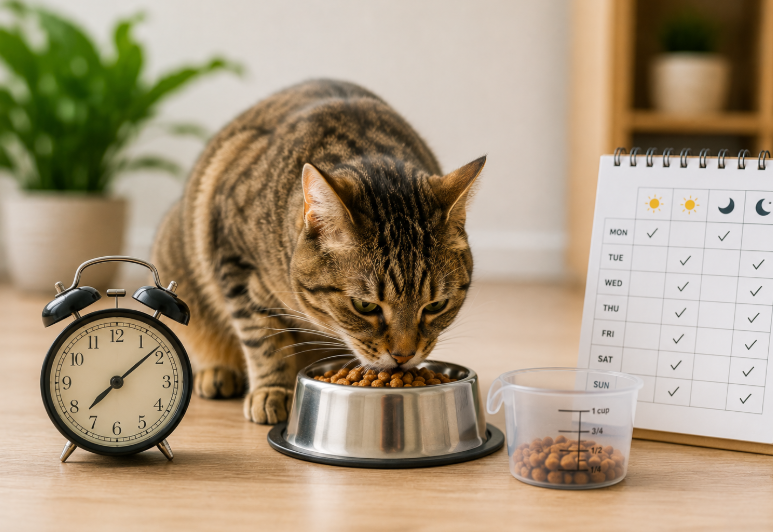
Maintaining a healthy weight is one of the most important parts of long-term feline wellness. Unfortunately, many cats struggle with weight gain due to overfeeding, inactivity, excessive treats, and inconsistent eating habits. While food quality certainly matters, meal timing and portion control also play major roles in supporting a healthier lifestyle. A structured cat feeding schedule can help regulate appetite, improve digestion, and prevent unhealthy weight changes over time.
Many cat owners leave food available all day without monitoring portions carefully. Although free feeding may seem convenient, it often encourages overeating and makes weight management more difficult. Cats living indoors especially face higher obesity risks because they usually burn fewer calories than outdoor or highly active cats.
Weight gain affects far more than appearance alone. Excess body fat increases strain on joints, heart function, and mobility while raising the risk of diabetes, arthritis, urinary problems, and reduced lifespan. Consequently, maintaining a balanced feeding routine becomes extremely important for long-term health.
Fortunately, healthy feeding habits do not need to feel complicated. Consistency, portion awareness, meal timing, and balanced nutrition often provide significant improvements without requiring drastic dietary changes. Understanding how feeding schedules influence feline metabolism helps owners create routines that support healthier weight management and better overall well-being.
Why Feeding Schedules Matter for Cats
Cats naturally prefer routine. In the wild, felines typically hunt multiple small meals throughout the day instead of grazing constantly. Domestic feeding habits that encourage unlimited eating may therefore conflict with natural behavioral patterns.
A cat feeding schedule helps regulate appetite and energy levels more consistently. Structured meal times also make it easier to monitor eating behavior and detect health changes early.
Cats who follow predictable routines often experience less food anxiety and fewer begging behaviors. Regular feeding times help establish expectations while reducing constant food-seeking habits.
Digestive health may improve as well. Consistent meal timing supports more stable digestion compared to irregular feeding patterns or unrestricted grazing.
Weight management becomes easier because portion sizes remain measurable and controlled. Owners can monitor calorie intake more accurately instead of guessing how much their cat consumes daily.
Importantly, feeding schedules additionally strengthen bonding routines between cats and owners. Many cats feel more secure when daily activities follow familiar patterns.
Routine feeding also supports medication schedules or specialized diets for cats with medical conditions requiring closer nutritional monitoring.
How Free Feeding Contributes to Weight Gain
Free feeding refers to leaving dry food available throughout the day so cats can eat whenever they choose. While this method offers convenience, it often creates problems for indoor cats with lower activity levels.
A cat feeding schedule generally supports healthier weight control because it limits unrestricted calorie access. Free-fed cats frequently snack out of boredom rather than genuine hunger.
Dry food especially encourages overeating because it remains easy to access and highly calorie-dense. Some cats develop habitual grazing behaviors that gradually increase body weight over time.
Portion monitoring also becomes difficult with free feeding. Owners may not notice increased consumption until significant weight gain has already occurred.
Multiple-cat households create additional challenges as well. Dominant cats may overeat while timid cats consume less than needed.
Free feeding can additionally mask medical problems. Appetite changes often provide early signs of illness, yet unrestricted food access makes these changes harder to recognize quickly.
Importantly, not all cats overeat when free fed. However, structured meal routines generally provide better control for most indoor cats prone to weight gain.
The Benefits of Portion Control
Portion control remains one of the most effective tools for managing feline weight. Even high-quality food may contribute to obesity if calorie intake exceeds energy needs consistently.
A cat feeding schedule works best when paired with accurate portion measurement instead of estimating serving sizes visually.
Measuring cups or kitchen scales help owners provide more consistent calorie intake daily. Many people unintentionally overfeed because recommended serving sizes often appear smaller than expected.
Calorie needs vary depending on age, activity level, breed, and health status. Indoor cats typically require fewer calories than highly active outdoor cats.
Weight loss should always occur gradually. Rapid calorie restriction may create dangerous metabolic complications in cats, including hepatic lipidosis.
Smaller scheduled meals additionally help prevent excessive hunger between feedings while supporting more stable energy levels.
Importantly, treats should remain part of overall calorie calculations rather than extra additions outside daily intake limits.
Consistent portion control often improves body condition significantly over time without requiring extreme dietary restrictions.
How Often Should Cats Eat?
Meal frequency depends partly on age, health, and lifestyle. However, most healthy adult cats benefit from eating two to four smaller meals daily rather than one large feeding.
A cat feeding schedule involving multiple small meals often supports digestion and appetite regulation more naturally.
Morning and evening meals remain common because they fit most household routines conveniently. Some owners additionally provide smaller midday portions when possible.
Senior cats or cats with medical conditions may benefit from more frequent smaller meals to support digestion and nutrient absorption.
Kittens generally require more frequent feeding because they grow rapidly and have higher energy needs.
Timed automatic feeders can also help maintain consistency for owners with busy schedules. These devices reduce irregular feeding habits while controlling portions accurately.
Importantly, feeding frequency matters less than consistency and appropriate calorie intake overall.
Wet Food Versus Dry Food Timing
Both wet and dry foods can fit within healthy feeding routines when balanced properly. However, meal timing and portion management often differ between the two feeding styles.
A cat feeding schedule frequently includes wet food because its higher moisture content supports hydration while often providing better appetite satisfaction.
Wet food typically contains fewer calories per volume than dry kibble. Consequently, some cats feel fuller eating wet meals despite consuming fewer calories overall.
Dry food remains convenient and cost-effective, yet calorie density often increases overeating risk if portions are not controlled carefully.
Many owners successfully combine wet and dry foods during separate meals throughout the day. For example, wet food may work well during morning and evening meals while small dry portions support midday feeding.
Hydration benefits also favor wet food, especially for cats prone to urinary or kidney issues.
Importantly, whichever feeding method owners choose, consistent calorie management remains the most important factor for healthy weight control.
Creating a Consistent Daily Routine
Cats generally thrive when daily routines remain predictable. Consistency reduces stress while helping regulate hunger patterns and eating behavior.
A cat feeding schedule should ideally occur at similar times each day whenever possible. Predictable routines help cats feel secure while reducing excessive begging or anxiety.
Morning feeding often works well shortly after waking because many cats naturally become active early in the day.
Evening meals additionally fit natural feline behavior patterns since cats frequently display increased activity during dusk hours.
Quiet feeding environments also support healthier eating habits. Loud distractions or stressful surroundings may affect appetite and digestion negatively.
Water access should remain available at all times regardless of meal schedules.
Importantly, routine changes should occur gradually when adjustments become necessary. Sudden feeding disruptions sometimes create stress or digestive upset.
Managing Treats Without Causing Weight Gain
Treats play an important role in bonding, training, and enrichment. However, excessive treats frequently contribute to unhealthy weight gain when not managed carefully.
A cat feeding schedule should include treat calories within overall daily intake rather than adding them separately.
Many commercial treats contain surprisingly high calorie levels despite small serving sizes. Frequent snacking throughout the day quickly increases total calorie consumption.
Healthy treat alternatives may include small portions of cooked lean meat or veterinarian-approved low-calorie snacks.
Puzzle feeders and treat-dispensing toys additionally encourage mental stimulation and slower eating behavior.
Importantly, treats should remain occasional rewards instead of constant feeding responses to begging behavior.
Cats sometimes request attention rather than actual hunger. Interactive play or affection may satisfy these needs more effectively than extra food.
Moderation remains the key to balancing enjoyment and healthy weight management successfully.
How Activity Levels Affect Feeding Needs
Indoor cats often burn significantly fewer calories than outdoor or highly active cats. Consequently, feeding schedules should reflect actual activity levels rather than generalized package recommendations alone.
A cat feeding schedule paired with regular activity supports healthier metabolism and weight control more effectively.
Interactive play sessions help increase calorie expenditure while reducing boredom-related eating habits.
Cats naturally enjoy short bursts of movement rather than prolonged exercise. Toys encouraging chasing, jumping, or stalking behaviors often work best.
Climbing trees, scratching posts, and window perches also encourage movement throughout the day.
Weight management becomes much easier when balanced nutrition combines with consistent physical activity.
Importantly, severely overweight cats may initially require gentler activity increases to avoid joint stress or exhaustion.
Feeding Multiple Cats Successfully
Managing feeding routines becomes more challenging in multi-cat households because different cats often have different calorie needs and eating habits.
A cat feeding schedule helps owners monitor intake more accurately while preventing one cat from overeating another’s food.
Separate feeding stations often reduce competition and stress during meals. Timid cats may otherwise avoid eating properly around dominant companions.
Microchip feeders can additionally help households where cats require different diets or portion sizes.
Scheduled feeding times also allow owners to observe appetite changes individually, which helps detect potential health concerns earlier.
Importantly, group free feeding usually creates greater difficulty controlling weight fairly across multiple cats.
Consistency and observation become especially valuable in shared feeding environments.
Recognizing Healthy Weight in Cats
Many owners underestimate feline obesity because gradual weight gain becomes difficult to notice over time. Understanding healthy body condition helps support better feeding decisions.
A cat feeding schedule should aim to maintain stable healthy weight rather than simply reducing food whenever cats appear slightly larger.
Ribs should generally feel noticeable beneath a light fat covering without being sharply visible.
Cats should also display a visible waistline when viewed from above and a slight abdominal tuck from the side.
Difficulty grooming, reduced jumping ability, excessive sleeping, or heavy breathing sometimes indicate unhealthy weight gain.
Veterinary weigh-ins provide useful monitoring as well. Small weight changes may become easier to detect professionally.
Importantly, sudden weight loss also requires attention because it may signal illness rather than healthy progress.
Special Feeding Considerations for Senior Cats
Older cats often require adjusted feeding schedules due to changes in metabolism, digestion, hydration, and activity levels.
A cat feeding schedule for seniors frequently involves smaller, more frequent meals to support digestion and appetite.
Senior cats sometimes experience reduced appetite, dental discomfort, or chronic health conditions affecting nutritional needs.
Wet food often becomes more beneficial due to hydration support and easier chewing.
Protein remains important for maintaining muscle mass during aging, although some medical conditions may require specialized dietary adjustments.
Medication schedules additionally influence feeding timing for many senior cats.
Importantly, aging cats benefit greatly from routine and consistency, particularly when managing medical conditions.
The Importance of Veterinary Guidance
Weight management should always consider overall health rather than focusing solely on appearance or calorie reduction.
A cat feeding schedule works best when guided partly by veterinary evaluation, especially for overweight cats or pets with medical concerns.
Conditions such as diabetes, thyroid disease, kidney problems, or digestive disorders often affect appetite and metabolism significantly.
Veterinarians help determine healthy target weights, calorie needs, and appropriate feeding strategies safely.
Prescription diets or specialized nutritional plans may become necessary for certain cats.
Importantly, owners should avoid aggressive dieting approaches without professional guidance because rapid weight loss can become dangerous for felines.
Regular wellness exams additionally help monitor long-term progress and adjust feeding plans when necessary.
Conclusion
A structured cat feeding schedule provides one of the most effective ways to support healthy weight management, digestion, energy balance, and long-term feline wellness. Consistent meal timing, controlled portions, and balanced nutrition help reduce overeating while supporting healthier daily routines.
Indoor cats especially benefit from scheduled feeding because lower activity levels often increase obesity risk. Wet food, portion measurement, hydration support, and regular activity further strengthen healthy weight management efforts.
Importantly, feeding routines should remain flexible enough to match individual needs. Age, health conditions, activity levels, and household environments all influence the ideal approach for each cat.
Most importantly, healthy feeding habits support more than physical appearance alone. Maintaining proper weight improves mobility, energy, comfort, and overall quality of life while helping cats stay active and healthier for many years to come.
FAQ
1. How Many Times a Day Should Adult Cats Eat?
Most adult cats do well with two to four small meals spread consistently throughout the day.
2. Is Free Feeding Bad for Cats?
Free feeding may increase overeating and obesity risk, especially for indoor cats with lower activity levels.
3. Does Wet Food Help With Weight Management?
Yes. Wet food often supports hydration and may help cats feel fuller with fewer calories.
4. How Can Owners Measure Food Portions Accurately?
Measuring cups or kitchen scales provide more reliable portion control than estimating visually.
5. Should Treats Count Toward Daily Calories?
Yes. Treats should remain part of the total daily calorie intake to help prevent weight gain.


