
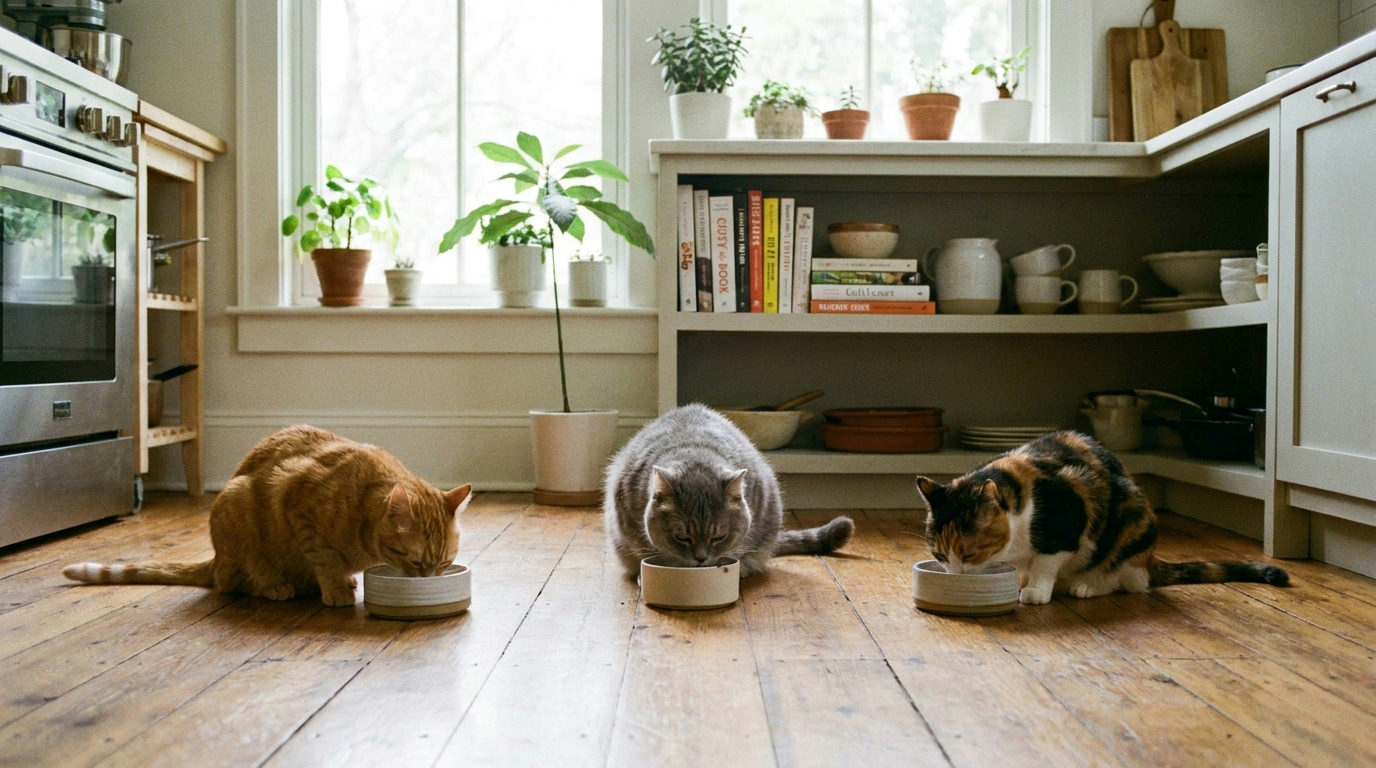
Feeding multiple cats can get complicated fast. One cat eats too much, another eats too little, and a third needs a special diet. This guide shares simple ways to keep every cat fed, calm, and healthy.
Disclosure: Cat Nutrition Guide may earn a commission from qualifying purchases made through links on this page, at no extra cost to you.
Common Challenges in Multi-Cat Homes
- Food stealing: Bold cats may eat from every bowl.
- Stress at mealtimes: Shy cats may skip meals if they feel crowded.
- Different diets: A kitten, a senior, and a cat on a vet diet may all need different food.
- Hard-to-track intake: It is harder to notice if one cat stops eating.
Cats are solitary hunters by nature. As a result, many prefer to eat alone rather than side by side.
Tips for Feeding Multiple Cats
Give Each Cat Its Own Space
Place bowls several feet apart, or in different rooms. In addition, some cats like to eat up high, away from others. Separate spaces may reduce tension and help shy cats eat in peace.
Use Scheduled Meals
Free-feeding makes it hard to know who ate what. By contrast, set meal times let you see each cat eat. You can then pick up leftovers after 20 to 30 minutes. Our guide on the cat feeding schedule can help you plan.
Try Microchip Feeders
Microchip feeders open only for the cat assigned to them. Consequently, they are useful when one cat needs a prescription diet. See our article on automatic cat feeders for features to look for.
Feed in Separate Rooms
For stubborn food thieves, close a door during meals. It is simple but effective.
Feeding Multiple Cats With Different Diets
If one cat is on a special diet, keep other food out of reach. Even small amounts of the wrong food can affect some treatments. For example, a cat on a food trial must eat only the trial diet. Our guide to novel protein cat food explains why.
Likewise, kittens need growth food, while adult cats may gain weight on it. So, feed them separately until the kitten is ready for adult food.
Watch Each Cat’s Weight
Weigh each cat every few weeks. Also, check body shape by feeling for ribs and a waist. If one cat gains or loses weight, adjust portions or feeding setup. The WSAVA nutrition toolkit includes a body condition chart.
Water and Resources
Offer several water bowls in different spots. A common rule of thumb is one resource per cat, plus one extra. This applies to food and water stations as well as litter boxes. The International Cat Care charity shares more guidance on multi-cat homes.
Final Thoughts
In short, feeding multiple cats works best with separate spaces, set meal times, and close attention to each cat. Tools like microchip feeders can help with special diets. Above all, keep track of each cat’s appetite and weight, and call your vet if anything changes.
This article is for general information only and is not a substitute for advice from a licensed veterinarian.


