
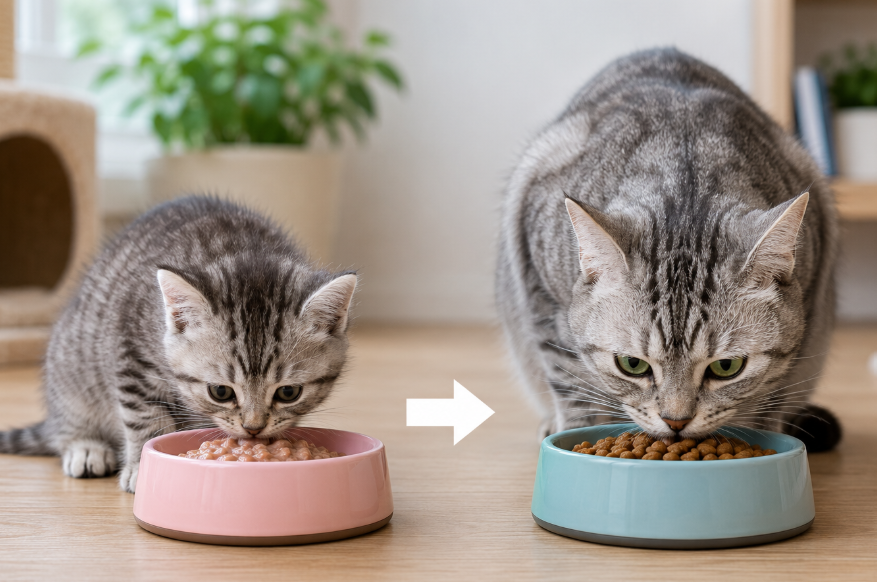
Knowing when to switch kitten food to adult cat food is an important part of supporting long-term feline health. Kittens grow rapidly during their first year, and their nutritional needs differ greatly from those of adult cats. While kitten food supports growth and development, adult cat food focuses more on maintenance and balanced energy intake.
Many cat owners feel uncertain about the right time to make the transition. Some cats seem fully grown before their first birthday, while others continue developing for much longer. In addition, breed size, activity level, and overall health may influence when dietary changes become appropriate.
Switching too early may deprive kittens of important nutrients needed for growth. On the other hand, waiting too long can lead to excess calorie intake and unhealthy weight gain. Because of this, timing matters more than many people realize.
Fortunately, most cats transition successfully when owners understand their developmental stages and feeding needs. Gradual adjustments, careful observation, and balanced nutrition help support smoother changes without digestive upset or stress.
Learning how and when to switch kitten food helps owners create healthier feeding habits while supporting steady development into adulthood.
Why Kittens Need Different Nutrition Than Adult Cats
Kittens require nutrient-dense food because their bodies develop extremely quickly during the first year of life. Their muscles, bones, organs, and immune systems all depend on higher calorie intake and specialized nutrients for proper growth.
Kitten food usually contains more protein, fat, vitamins, and minerals than adult formulas. These nutrients support rapid development while providing enough energy for active and playful behavior.
Young cats also burn calories quickly. Since kittens spend much of their day running, climbing, and exploring, they require more concentrated nutrition than adult cats with slower metabolisms.
Calcium and phosphorus levels matter greatly during kittenhood as well. Balanced mineral support helps strengthen bones and teeth while supporting healthy development.
Adult cat food serves a different purpose. Instead of promoting rapid growth, adult formulas help maintain healthy body condition and stable energy levels. These foods typically contain fewer calories because mature cats no longer need the same intense nutritional support.
Feeding adult food too early may slow growth or reduce muscle development. Meanwhile, keeping kittens on growth formulas for too long sometimes increases obesity risk later.
Understanding these differences helps owners recognize why the timing to switch kitten food should match physical development rather than convenience alone.
The Ideal Age to Transition to Adult Food
Most cats become ready for adult food around twelve months of age. By this stage, many kittens have completed the majority of their physical growth and no longer require the extremely high calorie levels found in kitten formulas.
However, not all cats mature at the same pace. Larger breeds, such as Maine Coons, often continue developing longer than smaller breeds. Some large cats may benefit from kitten food until eighteen months or even two years of age.
Smaller or average-sized cats usually transition more comfortably around their first birthday. At this point, growth slows noticeably, and calorie needs begin stabilizing.
Veterinarians often evaluate body condition, muscle development, and weight before recommending dietary changes. Healthy adult body shape usually includes a visible waistline with ribs that can be felt easily without excess fat coverage.
Spaying or neutering may also influence calorie needs. After these procedures, some cats become less active and more prone to weight gain. Transitioning to adult food around this time may help maintain healthier body condition.
Owners should avoid rushing the process based solely on appearance. Some cats look fully grown while still requiring kitten nutrition internally.
Choosing the right time to switch kitten food helps support balanced development while preventing nutritional imbalances later.
Signs Your Cat May Be Ready for Adult Food
Several physical and behavioral signs may suggest a cat is approaching adulthood and becoming ready for dietary transition.
Growth rate often slows noticeably first. During early kittenhood, rapid weight gain and visible size changes occur frequently. As adulthood approaches, physical growth becomes much steadier.
Appetite changes may appear as well. Some older kittens become slightly less food-driven because their calorie demands decrease naturally over time.
Activity levels sometimes shift too. Although young adult cats remain playful, they often become slightly calmer than younger kittens that constantly burn energy.
Body condition provides another important clue. Cats approaching adulthood usually develop more defined muscle tone and balanced proportions.
Digestive stability also matters. Cats with healthy digestion and consistent appetite often handle food transitions more comfortably than cats already experiencing digestive sensitivity.
Veterinary guidance remains valuable if owners feel unsure. Routine wellness exams allow professionals to evaluate development and recommend the best timing for nutritional adjustments.
Recognizing these signs helps owners switch kitten food more confidently while supporting healthier transitions into adult feeding routines.
Why Gradual Food Transitions Matter
Cats generally dislike sudden dietary changes. Abrupt transitions may create digestive upset, food refusal, or stress that interferes with healthy eating habits.
A gradual transition usually works best over seven to ten days. Mixing small amounts of adult food with kitten food allows the digestive system to adapt more comfortably.
Many owners begin with roughly twenty-five percent adult food and seventy-five percent kitten food during the first few days. Gradually increasing the adult food ratio often reduces digestive problems significantly.
Slow transitions also help cats adjust to new textures, smells, and flavors. Some cats become cautious around unfamiliar foods, especially if they have eaten the same formula for many months.
Digestive symptoms such as vomiting, diarrhea, or reduced appetite sometimes indicate the transition is moving too quickly. Slowing the process usually improves comfort and food acceptance.
Hydration support remains important during food changes as well. Wet food often helps maintain moisture intake while easing digestive adaptation.
Owners should also avoid changing multiple things simultaneously. New feeding schedules, stress, or environmental changes combined with dietary transitions may increase adjustment difficulty.
A careful plan to switch kitten food gradually helps support healthier digestion and smoother long-term feeding success.
Choosing the Best Adult Food After Kittenhood
Selecting the right adult cat food matters just as much as timing the transition properly. Nutritional quality strongly influences long-term health, energy levels, and weight management.
High-quality animal protein should remain the primary focus. Cats are obligate carnivores, which means they rely heavily on meat-based nutrients throughout life.
Balanced fat levels remain important too. Adult cats still require healthy fats for skin, coat, and energy support, although they no longer need the extremely high calorie density found in kitten food.
Wet food often provides valuable hydration benefits. Since many cats naturally drink limited amounts of water, moisture-rich diets may help support kidney and urinary health long term.
Dry food can still work well when portioned carefully. However, owners should monitor calorie intake closely because adult cats generally require fewer calories than growing kittens.
Ingredient quality matters more than marketing terms alone. Foods with excessive fillers or artificial additives may not provide balanced long-term nutrition.
Owners should also consider lifestyle factors. Indoor cats often require fewer calories than highly active outdoor cats, so portion adjustments may become necessary.
Choosing proper nutrition after you switch kitten food helps maintain healthy weight, digestion, and energy levels throughout adulthood.
Common Feeding Mistakes During the Transition
Many cat owners unintentionally create problems during food transitions despite wanting the best for their pets. Fortunately, most mistakes become easy to avoid once recognized.
One common issue involves switching foods too suddenly. Abrupt dietary changes often trigger digestive upset or food refusal. Slow transitions almost always work better.
Overfeeding adult food is another frequent mistake. Owners sometimes continue kitten-sized portions even after calorie needs decrease, which may contribute to unhealthy weight gain.
Ignoring portion control becomes especially important after neutering or spaying. Reduced activity levels sometimes lower calorie requirements noticeably.
Some owners rely heavily on treats during the transition. Excess treats may interfere with balanced nutrition while encouraging picky eating habits.
Frequent food switching can also create unnecessary digestive stress. Cats generally adapt best when owners choose one balanced adult formula and remain consistent.
Another mistake involves choosing adult food based only on price or packaging claims. Nutritional quality should remain the priority when selecting long-term diets.
Avoiding these mistakes helps owners switch kitten food more successfully while supporting healthier adult eating habits.
How Activity Level Affects Nutritional Needs
Not all adult cats require identical calorie intake after transitioning from kitten food. Activity level strongly influences how much nutrition individual cats need each day.
Highly active cats often burn more calories through climbing, exploring, and play. These cats may require slightly larger portions or calorie-dense adult foods to maintain healthy body condition.
Indoor cats usually need fewer calories because their activity levels remain lower. Without careful portion control, indoor cats sometimes gain weight quickly after moving to adult food.
Interactive play helps maintain balanced energy use as well. Daily exercise supports muscle tone and reduces obesity risk during adulthood.
Owners should monitor body condition regularly after they switch kitten food. Visible waistlines and easy-to-feel ribs generally indicate healthier weight balance.
Age eventually affects calorie needs too. Young adult cats usually remain more active than senior cats, whose metabolisms slow gradually over time.
Adjusting portions based on lifestyle creates healthier long-term feeding habits while supporting ideal body condition throughout adulthood.
The Role of Hydration During Food Changes
Hydration plays an important role during any dietary transition. Cats that receive proper moisture support often experience smoother digestion and better overall comfort.
Wet food helps increase water intake naturally because it contains substantial moisture. During transitions, wet food may reduce digestive stress while supporting healthier stool quality.
Fresh water access should always remain available. Some cats drink more willingly from fountains because moving water feels fresher and more appealing.
Digestive upset sometimes causes mild dehydration, especially if vomiting or diarrhea occurs during rapid food changes. Maintaining hydration helps reduce additional stress on the body.
Owners can also mix small amounts of warm water into wet food to increase moisture intake gently.
Hydration becomes especially valuable for cats already prone to urinary or digestive sensitivity. Moisture-rich diets often support healthier kidney and urinary tract function long term.
Supporting hydration while you switch kitten food helps improve digestion, comfort, and overall wellness during the adjustment period.
Long-Term Benefits of Proper Food Transitions
Making the transition carefully provides important long-term health benefits. Balanced nutrition during early adulthood supports healthy weight, strong muscles, and improved energy management later in life.
Cats that transition gradually often experience fewer digestive issues and maintain healthier eating habits overall.
Proper adult nutrition also reduces obesity risk. Since adult food usually contains fewer calories than kitten formulas, timely transitions help prevent unnecessary weight gain.
Healthy feeding habits established during this stage often continue throughout adulthood. Structured meal schedules, portion control, and balanced hydration all support long-term wellness.
Veterinary monitoring becomes easier too. Stable body condition and consistent nutrition help owners recognize appetite or weight changes more quickly if health concerns develop later.
Dental health may improve with proper feeding routines as well. Consistent diets and balanced nutrition support healthier gums and teeth over time.
Successfully learning when to switch kitten food helps create stronger foundations for lifelong feline health and comfort.
Conclusion
Transitioning from kitten food to adult cat food is an important milestone in feline development. Since kittens require higher calories and specialized nutrients during growth, switching too early or too late may affect long-term health and body condition.
Most cats become ready around twelve months of age, although breed size, activity level, and overall development sometimes influence timing. Gradual food transitions help reduce digestive upset while allowing cats to adjust comfortably to new textures and nutrient levels.
High-quality adult nutrition supports healthy weight management, balanced energy, hydration, and long-term wellness. In addition, careful observation during the transition allows owners to identify digestive sensitivity or appetite changes early.
Understanding when and how to switch kitten food helps owners provide smoother nutritional support as cats move confidently into healthy adulthood. With patience and balanced feeding habits, the transition can become a simple and positive step toward lifelong wellness.
FAQ
1. At what age should cats start eating adult food?
Most cats transition to adult food around twelve months old, although larger breeds may mature more slowly.
2. Can switching food too early affect kitten growth?
Yes, early transitions may reduce important nutrients needed for proper development and healthy growth.
3. How long should food transitions take?
Most cats adjust best when food changes happen gradually over seven to ten days.
4. Is wet food still important after kittenhood?
Yes, wet food supports hydration and may benefit digestion and urinary health throughout adulthood.
5. What signs show a cat is ready for adult food?
Slower growth, stable body condition, and reduced calorie needs often indicate readiness for adult diets.


