
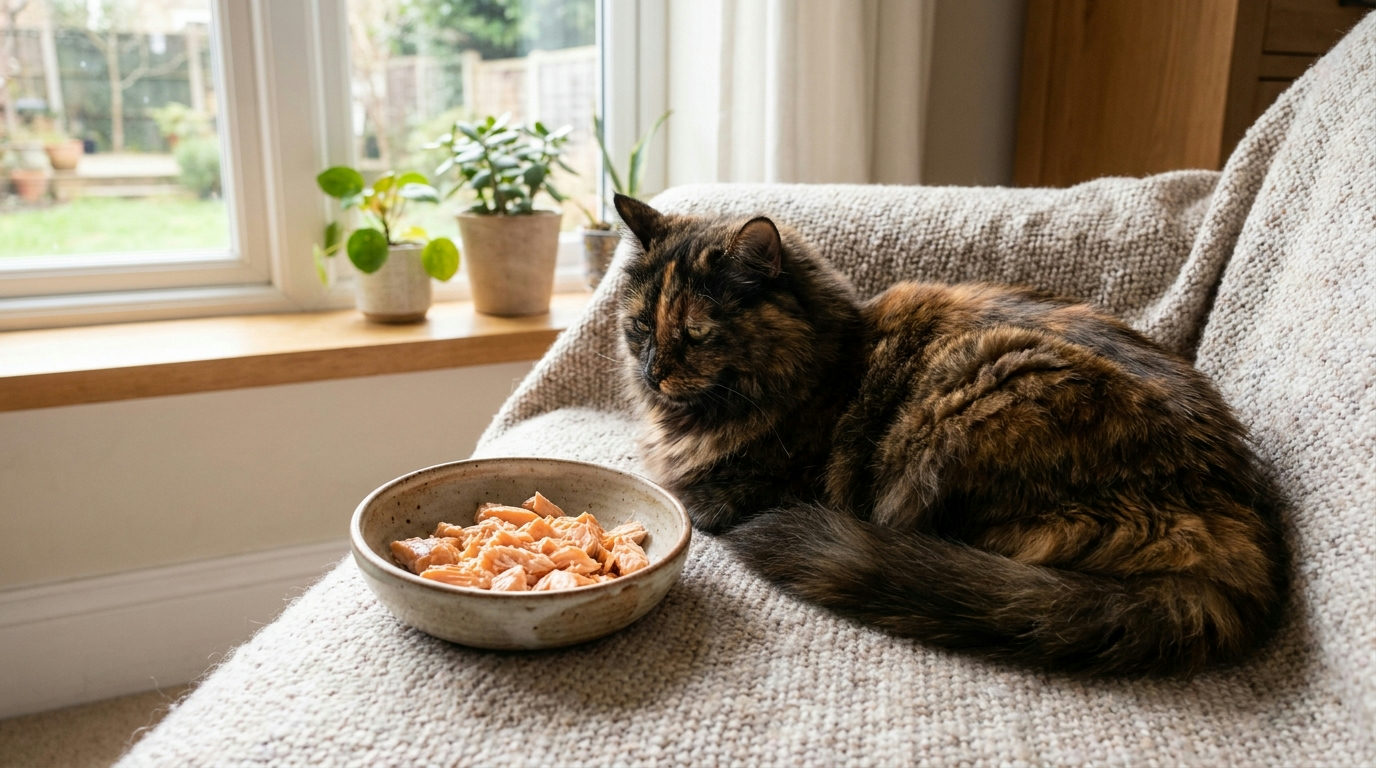
Omega 3 for cats is a popular topic, and for good reason. These healthy fats play several roles in the body. This guide explains what omega-3s may do, where cats get them, and how to use supplements safely.
Disclosure: Cat Nutrition Guide may earn a commission from qualifying purchases made through links on this page, at no extra cost to you.
What Are Omega-3 Fatty Acids?
Omega-3s are a family of polyunsaturated fats. The two most studied for pets are EPA and DHA. Both are found mainly in fish and other marine sources.
Plants contain a different omega-3 called ALA. However, cats convert ALA into EPA and DHA poorly. Therefore, marine sources are generally more useful for cats.
Possible Benefits of Omega 3 for Cats
Research on omega-3s in cats is still growing. Even so, studies and vet experience suggest they may support several areas:
- Skin and coat: Omega-3s may support a soft, glossy coat and healthy skin.
- Joints: They may help support joint comfort and mobility in older cats.
- Brain and eyes: DHA plays a role in normal brain and eye development in kittens.
- Kidney and heart: Some therapeutic diets include added omega-3s for these systems.
Keep in mind that omega-3s are not a cure for any condition. Instead, they may be one part of an overall care plan your vet designs.
Food Sources of Omega 3 for Cats
Many commercial cat foods already include fish oil or fish meal. You can check the ingredient list for items like salmon oil, fish oil, or sardines. Some labels also list EPA and DHA levels.
In addition, small amounts of plain cooked fish can be an occasional treat. For more ideas, see our list of human foods cats can eat. For label tips, read our guide to understanding cat food labels.
Choosing a Fish Oil Supplement
If your vet recommends a supplement, quality matters. Look for these features:
- A product made for pets, with clear EPA and DHA amounts
- Third-party testing for purity and contaminants
- A fresh smell, since fishy or rancid oil may be oxidized
- Packaging that limits air and light, such as pumps or capsules
Also, avoid products with added garlic or onion, which are unsafe for cats.
How Much Is Safe?
Dosing depends on your cat’s weight, diet, and health. For this reason, ask your vet for a specific amount. More is not better. Too much fish oil may cause loose stools, fishy breath, or weight gain. In high doses, it may also affect blood clotting.
Start slowly, too. A gradual increase over a week or two gives the stomach time to adjust.
Who Should Be Cautious?
Some cats need extra care with supplements. These include cats scheduled for surgery, cats on blood thinners, and cats with pancreatitis. As always, talk to your vet first. For a wider look at extras, see our article on cat nutritional supplements. The Tufts Petfoodology team also shares practical advice on supplements.
Final Thoughts
To sum up, omega 3 for cats may support skin, coat, joints, and more. A good complete diet often supplies some already. If you want to add more, choose a pet-specific, tested product and follow your vet’s dosing advice.
This article is for general information only and is not a substitute for advice from a licensed veterinarian. Always consult your vet before starting any supplement.


