
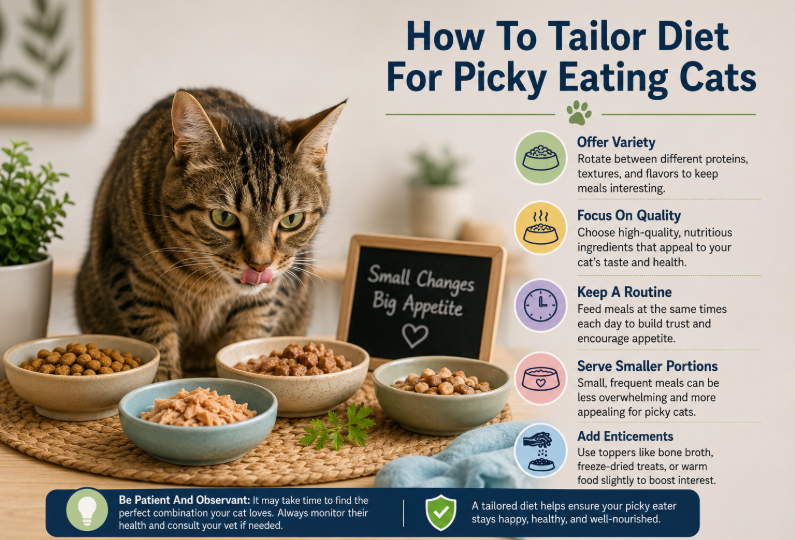
Many cat owners eventually face the challenge of feeding picky eating cats. One day a cat eagerly finishes every meal, and the next day it refuses the same food it seemed to love. This behavior can be frustrating, confusing, and sometimes concerning. While occasional food preferences are normal, consistent picky eating may affect nutrition, weight maintenance, and overall health if not managed properly.
Cats are naturally selective eaters. In the wild, their instincts help them avoid foods that seem unfamiliar or potentially unsafe. Although domestic cats no longer need to hunt for survival, many of those instincts remain strong. Consequently, some cats become very particular about texture, flavor, temperature, or even the shape of their food.
The good news is that most feeding challenges can be improved with patience and a thoughtful plan. Understanding why cats become selective and learning how to tailor their diet appropriately can help transform stressful mealtimes into positive experiences. A balanced approach supports both proper nutrition and long-term health.
Why Some Cats Become Selective Eaters
Understanding picky eating cats begins with recognizing the reasons behind their behavior. Not all food refusal indicates stubbornness. In many cases, specific factors influence a cat’s feeding preferences.
Early life experiences often shape eating habits. Cats exposed to limited food varieties during kittenhood may become less willing to accept new foods later in life. As a result, dietary flexibility can be reduced.
Texture preferences also play a major role. Some cats strongly prefer pate-style foods, while others favor shredded, minced, or chunky textures. Even slight differences may influence acceptance.
Environmental factors contribute as well. Loud noises, stress, household changes, or competition from other pets can reduce appetite and increase food selectivity.
Additionally, some cats simply develop strong personal preferences over time. While this behavior can seem difficult to manage, understanding the cause often makes it easier to address effectively.
Identifying the underlying reason for food refusal provides valuable guidance when creating a more successful feeding strategy.
When Picky Eating May Signal a Health Concern
Although picky eating cats are common, persistent appetite changes should never be ignored. Sometimes food refusal may indicate an underlying medical issue rather than a behavioral preference.
Dental disease is one potential cause. Painful teeth or inflamed gums can make chewing uncomfortable, leading cats to avoid certain foods. Consequently, appetite changes may appear gradually.
Digestive problems can also affect food acceptance. Nausea, stomach discomfort, or gastrointestinal disorders may reduce interest in eating.
Kidney disease, hyperthyroidism, infections, and other health conditions sometimes influence appetite as well. Therefore, sudden or prolonged food refusal warrants veterinary attention.
Additional warning signs include weight loss, vomiting, diarrhea, lethargy, or noticeable behavioral changes. These symptoms suggest that medical evaluation may be necessary.
Before assuming a cat is simply selective, owners should consider possible health concerns. Early diagnosis often improves treatment outcomes and helps restore normal eating habits more quickly.
Understanding Food Preferences
One of the most important steps in managing picky eating cats is identifying specific food preferences. Cats often communicate their preferences clearly through consistent eating patterns.
Temperature can influence food acceptance significantly. Many cats prefer food served slightly warmer because it releases stronger aromas. Since smell plays a major role in appetite stimulation, warming food may encourage eating.
Texture preferences vary widely between individuals. Some cats enjoy smooth pate products, while others prefer foods with visible meat pieces. Experimenting with different textures often reveals clear preferences.
Flavor selection is equally important. A cat may eagerly consume chicken-based food while refusing fish or beef varieties. Therefore, offering a range of protein options can be helpful.
Meal presentation matters too. Certain cats prefer shallow dishes that prevent whisker contact during eating. Small environmental changes sometimes improve feeding behavior more than expected.
Careful observation helps owners identify patterns that support more effective meal planning.
Creating a Consistent Feeding Routine
Routine is particularly beneficial for picky eating cats. Predictable feeding schedules help create structure and encourage healthy eating habits over time.
Cats thrive on consistency. Offering meals at the same times each day helps establish expectations and supports appetite regulation. Consequently, many cats become more willing to eat when routines remain stable.
Leaving food available continuously can sometimes reduce interest in meals. Scheduled feeding periods often encourage greater engagement with food because opportunities feel more predictable.
Meal duration also matters. Leaving food available indefinitely may allow selective behaviors to become more entrenched. Instead, providing food for a reasonable period and then removing it can help establish clearer feeding patterns.
Consistency extends beyond timing. Feeding locations should remain calm and predictable whenever possible. A quiet environment often helps cats focus on eating without distractions.
Structured routines create a sense of security that supports better eating habits and reduces mealtime stress.
Choosing High-Quality Foods
Selecting appropriate nutrition is essential when managing picky eating cats. Food quality influences not only nutritional value but also palatability and overall feeding success.
High-quality diets often contain animal-based proteins that align closely with feline nutritional requirements. Because cats are obligate carnivores, protein-rich foods generally support better acceptance and nutritional balance.
Ingredient quality may also affect aroma and flavor. Foods with appealing scents often attract selective eaters more effectively than heavily processed alternatives.
However, expensive products are not automatically superior. Nutritional completeness and ingredient suitability remain the most important considerations.
Reading labels carefully helps identify products that provide balanced nutrition while meeting individual preferences. Veterinary recommendations can offer additional guidance when needed.
The goal is finding foods that satisfy both nutritional requirements and the cat’s personal preferences. Achieving this balance often improves long-term feeding success.
Introducing New Foods Successfully
Transitioning foods can be particularly challenging with picky eating cats. Abrupt changes often lead to rejection, making gradual introductions far more effective.
Mixing small amounts of new food with familiar food allows cats to adjust slowly. Gradual transitions help reduce resistance while minimizing digestive upset.
Patience is essential during this process. Some cats accept changes within days, while others require several weeks before becoming comfortable with new foods.
Offering multiple new foods simultaneously may create confusion. Instead, introducing one change at a time makes it easier to identify successful options.
Positive experiences also matter. Calm mealtimes and consistent routines help cats associate new foods with comfort rather than stress.
A slow and methodical approach often produces better results than attempting rapid dietary changes. Over time, many cats become more accepting of nutritional variety.
Avoiding Common Feeding Mistakes
Owners of picky eating cats sometimes unintentionally reinforce selective behaviors. Recognizing common mistakes can improve feeding outcomes significantly.
One frequent mistake involves offering numerous alternatives immediately after food refusal. While well intentioned, this practice teaches cats that rejecting food may lead to more desirable options.
Excessive treats can create similar issues. When treats become more appealing than regular meals, balanced nutrition may suffer.
Frequent food changes may also contribute to feeding difficulties. Constantly switching products can prevent cats from developing consistent eating habits.
Pressure during mealtimes should be avoided as well. Encouraging eating gently is appropriate, but forcing interactions may increase stress and reduce appetite further.
Maintaining patience and consistency often proves more effective than reacting to every instance of food refusal. Balanced responses support healthier long-term habits.
Using Enrichment to Encourage Eating
Mental stimulation can play an important role in helping picky eating cats develop healthier feeding behaviors. Many cats respond positively when meals become more engaging.
Food puzzles and interactive feeders encourage natural hunting instincts. Rather than simply consuming food from a bowl, cats work to obtain their meals. This process can increase interest and motivation.
Rotating feeding locations occasionally may provide additional enrichment. However, changes should remain predictable enough to avoid creating unnecessary stress.
Interactive play sessions before meals often stimulate appetite. Physical activity mimics natural hunting behavior and may encourage more enthusiastic eating afterward.
Environmental enrichment also helps reduce boredom, which sometimes contributes to selective eating patterns. Scratching posts, climbing structures, and interactive toys support mental well-being.
By combining nutrition with enrichment, owners create more rewarding and stimulating mealtime experiences.
Managing Multi-Cat Feeding Challenges
Households with multiple cats may face additional difficulties involving picky eating cats. Competition, stress, and differing dietary needs can complicate feeding routines.
Some cats feel uncomfortable eating near other pets. Providing separate feeding areas often reduces anxiety and encourages more consistent food intake.
Resource competition may also influence appetite. Even subtle social dynamics can affect feeding behavior, particularly among more timid cats.
Individual feeding stations allow owners to monitor intake accurately. This approach helps ensure each cat receives appropriate nutrition without interference.
Separate feeding becomes especially important when one cat requires a specialized diet. Controlled feeding prevents accidental consumption of unsuitable foods.
Creating a calm and individualized feeding environment often improves mealtime success in multi-cat households.
Building a Long-Term Feeding Strategy
Successfully managing picky eating cats requires a long-term perspective. Quick fixes rarely address the underlying causes of selective eating behavior.
Consistency remains one of the most valuable tools available. Predictable schedules, stable routines, and gradual dietary adjustments help establish healthier habits over time.
Monitoring body weight provides important feedback regarding nutritional adequacy. Even selective eaters should maintain healthy body condition when feeding plans are effective.
Owners should remain flexible while avoiding constant changes. Small adjustments based on observation often produce better results than dramatic interventions.
Regular veterinary checkups provide additional support and help identify emerging concerns early. Professional guidance can be especially valuable when food refusal becomes persistent.
With patience and thoughtful planning, most selective eaters can develop healthier and more reliable feeding habits that support long-term wellness.
Conclusion
Managing picky eating cats can feel challenging, but understanding the reasons behind food selectivity makes the process much easier. Factors such as texture preferences, flavor choices, environmental influences, health conditions, and feeding routines all contribute to eating behavior. By identifying these influences and responding thoughtfully, owners can create a diet plan that supports both nutritional balance and mealtime enjoyment.
Success rarely happens overnight. However, consistency, patience, high-quality nutrition, gradual food transitions, and regular veterinary care often lead to significant improvements. When feeding strategies align with a cat’s preferences and needs, mealtimes become less stressful and more rewarding. A tailored approach helps ensure that even the most selective cats receive the nutrition necessary for a healthy and happy life.
FAQ
1. Why do some cats suddenly become selective eaters?
Changes in health, environment, routine, or food preferences can all contribute to sudden feeding behavior changes.
2. Should I keep changing foods if my cat refuses meals?
Frequent changes may worsen selectivity. Gradual transitions and consistency are often more effective.
3. Can stress affect appetite in cats?
Yes. Stress can significantly reduce appetite and influence feeding behavior.
4. Is wet food better for selective eaters?
Many cats find wet food more appealing because of its stronger aroma and softer texture.
5. When should I contact a veterinarian about food refusal?
Seek veterinary advice if appetite loss lasts more than a day, especially if weight loss or other symptoms occur.


