
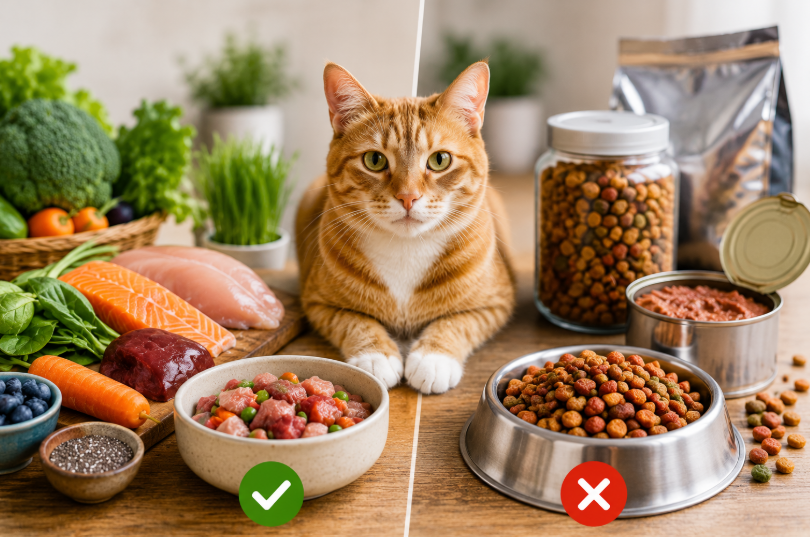
Choosing the right food for a cat can feel overwhelming, especially when pet food labels are filled with terms such as natural, holistic, premium, and minimally processed. Among the most common questions owners ask is whether natural vs processed cat food offers a clear winner when it comes to feline health. While marketing often presents natural foods as the superior option, the reality is more complex. Understanding how these foods are made and what they provide nutritionally can help owners make informed decisions.
Cats rely on balanced nutrition to support muscle development, organ function, immune health, and overall wellness. Therefore, the most important factor is not necessarily whether a food is labeled natural or processed. Instead, it is whether the diet provides complete and balanced nutrition appropriate for the cat’s age, lifestyle, and health status.
Many owners assume that processing automatically reduces food quality. Others believe natural foods are always healthier. However, both types of food can offer benefits and limitations. Looking beyond labels and understanding the facts can help cat owners focus on what truly matters.
A thoughtful approach to feline nutrition begins with knowledge rather than marketing claims. By exploring the differences between natural and processed foods, owners can make choices that support long-term health.
What Is Natural Cat Food?
To understand natural vs processed cat food, it helps to define what natural cat food actually means. In general, natural cat food contains ingredients derived from plant, animal, or mineral sources with limited artificial additives.
Many natural diets emphasize recognizable ingredients such as chicken, turkey, fish, vegetables, and natural preservatives. Manufacturers often avoid artificial colors, flavors, and synthetic preservatives in these formulas.
Natural food appeals to many owners because it seems closer to what cats might consume in a more traditional environment. The ingredient lists are often easier to understand, which can increase consumer confidence.
However, natural does not necessarily mean unprocessed. Most commercial natural cat foods still undergo manufacturing procedures that ensure safety, consistency, and shelf stability. Even foods labeled natural typically require cooking, drying, mixing, or packaging processes before reaching consumers.
As a result, the term natural often describes ingredient sourcing more than production methods. Understanding this distinction helps owners evaluate products more accurately and avoid common misconceptions.
Ultimately, natural food can be a valuable option when it provides balanced nutrition and meets established quality standards.
What Is Processed Cat Food?
The discussion about natural vs processed cat food often creates the impression that processed food is inherently unhealthy. In reality, processing refers to any method used to prepare, preserve, or package food.
Most commercial cat foods undergo some level of processing. Dry kibble, canned food, freeze-dried diets, and even many natural products require manufacturing procedures before they become available for purchase.
Processing can include cooking, grinding, mixing ingredients, sterilization, dehydration, and packaging. These methods help improve food safety, extend shelf life, and ensure nutritional consistency.
Many processed foods are carefully formulated to provide complete and balanced nutrition. Manufacturers often add essential vitamins, minerals, and amino acids to support feline health. Consequently, processing can actually enhance nutritional adequacy in some cases.
The degree of processing varies significantly between products. Some foods experience minimal processing, while others undergo more extensive manufacturing procedures.
Rather than viewing processing as inherently negative, it is more useful to evaluate how processing affects ingredient quality, safety, digestibility, and nutritional value.
Nutritional Value Matters Most
When comparing natural vs processed cat food, nutritional value should remain the primary consideration. Cats require specific nutrients regardless of how their food is manufactured.
Protein is especially important because cats are obligate carnivores. They depend on amino acids found primarily in animal-based ingredients. Therefore, protein quality often matters more than whether a product is labeled natural or processed.
Balanced levels of fats, vitamins, minerals, and taurine are equally important. Nutritional deficiencies can lead to serious health concerns over time, while appropriate nutrient balance supports overall wellness.
Some natural foods offer excellent nutritional profiles. Likewise, many processed foods provide comprehensive nutrition supported by extensive research and quality control measures.
The most important question is whether a food meets a cat’s nutritional requirements consistently. Labels and marketing claims provide only part of the picture.
Owners should focus on complete and balanced formulations rather than assuming one category automatically provides better nutrition than the other. Nutritional adequacy remains the foundation of a healthy diet.
Ingredient Quality and Transparency
Ingredient quality plays a major role in the natural vs processed cat food conversation. High-quality ingredients contribute to better nutrition, digestibility, and overall health.
Natural foods often highlight identifiable protein sources such as chicken, turkey, salmon, or beef. These ingredient lists may appear more appealing because they emphasize recognizable foods.
However, processed foods can also contain high-quality ingredients. The presence of processing does not automatically reduce ingredient value. Many reputable manufacturers source quality ingredients and maintain strict quality control standards.
Transparency is particularly important. Products that clearly identify protein sources and explain nutritional objectives often provide greater confidence than foods with vague ingredient descriptions.
Digestibility should also be considered. Some processing methods improve nutrient availability, making it easier for cats to absorb essential nutrients. Consequently, a carefully processed food may sometimes provide nutritional advantages.
Evaluating ingredient quality requires looking beyond labels and examining the overall formulation. A balanced perspective helps owners make more informed choices.
The Role of Food Safety
Food safety is an essential factor when discussing natural vs processed cat food. Regardless of ingredient quality, food must be safe for consumption.
Processing often plays an important role in reducing harmful bacteria, parasites, and contaminants. Cooking and sterilization procedures help protect both cats and their owners from potential health risks.
Natural foods that undergo minimal processing may require stricter handling and storage procedures. Some raw or lightly processed diets carry increased risks if not managed carefully. Therefore, food safety becomes an important consideration when evaluating options.
Commercial manufacturers often implement quality assurance programs, ingredient testing, and safety protocols to reduce contamination risks. These measures can improve product reliability and consistency.
Owners should remember that natural ingredients are not automatically safer than processed ones. Safety depends on sourcing, manufacturing practices, storage conditions, and handling procedures.
Choosing foods from reputable manufacturers helps ensure higher safety standards regardless of whether the product is marketed as natural or processed.
Digestibility and Nutrient Absorption
Another important aspect of natural vs processed cat food involves digestibility. Nutrients only provide value when the body can absorb and utilize them effectively.
Some processing methods improve digestibility by breaking down ingredients into forms that are easier for cats to digest. Cooking, for example, can increase nutrient availability in certain ingredients.
Natural foods may provide excellent digestibility as well, particularly when they contain high-quality animal proteins and carefully selected ingredients.
Digestibility influences stool quality, nutrient absorption, and overall health. Foods that support efficient digestion often contribute to better energy levels and improved body condition.
Individual cats may respond differently to various diets. Some thrive on minimally processed foods, while others perform exceptionally well on commercial processed diets.
Observing digestion, energy levels, coat quality, and body condition helps determine whether a food is working effectively. Practical results often provide more useful information than marketing labels.
Cost and Convenience Considerations
The debate surrounding natural vs processed cat food often extends beyond nutrition. Cost and convenience can also influence feeding decisions.
Natural foods frequently carry higher price tags because of ingredient sourcing, manufacturing practices, and marketing positioning. While some owners find value in these products, higher cost does not always translate into superior nutrition.
Processed foods often provide more affordable options while still delivering balanced nutrition. This accessibility can be especially important for multi-cat households or owners working within specific budgets.
Convenience also differs. Processed foods generally offer longer shelf life, easier storage, and greater availability. Natural foods may require more careful handling and faster use after opening.
The best choice is often one that balances nutritional quality, affordability, and practicality. A food that supports health while fitting comfortably within the household budget is often more sustainable long term.
Consistency matters. Reliable access to appropriate nutrition is usually more beneficial than frequently switching foods due to cost or availability concerns.
Choosing What Is Best for Your Cat
Understanding natural vs processed cat food ultimately comes down to evaluating individual needs. Every cat is unique, and nutritional requirements vary based on age, health status, activity level, and personal preferences.
Kittens require nutrient-dense diets that support growth and development. Adult cats need balanced maintenance nutrition, while senior cats may benefit from specialized formulations that address age-related changes.
Medical conditions can also influence dietary choices. Certain health concerns may require specific nutrient profiles regardless of whether a food is classified as natural or processed.
Owners should evaluate foods based on nutritional adequacy, ingredient quality, manufacturer reputation, and how well the cat responds to the diet. Healthy weight maintenance, good energy levels, normal digestion, and a healthy coat often indicate appropriate nutrition.
Consulting a veterinarian can provide valuable guidance, particularly when medical concerns or dietary sensitivities are present.
Rather than focusing exclusively on labels, owners should prioritize evidence-based nutrition and overall health outcomes.
Conclusion
The debate between natural vs processed cat food is often more complicated than marketing messages suggest. Natural foods may appeal because of recognizable ingredients and limited artificial additives, while processed foods often provide convenience, safety, and nutritional consistency. Neither category is automatically superior, and both can support excellent feline health when formulated appropriately.
What matters most is providing complete and balanced nutrition that meets a cat’s individual needs. Ingredient quality, digestibility, safety standards, and nutritional adequacy all play important roles in determining food quality. By focusing on these factors rather than labels alone, owners can make informed decisions that support long-term wellness.
A healthy diet should fit the cat’s lifestyle, support overall health, and remain practical for the owner to maintain consistently. When these goals are achieved, cats have the best opportunity to enjoy active, healthy, and fulfilling lives.
FAQ
1. Is natural food always healthier for cats?
No. Natural foods can be nutritious, but overall nutritional balance is more important than the label alone.
2. Does processing remove important nutrients?
Some processing methods affect nutrients, but many manufacturers add essential nutrients to maintain balanced nutrition.
3. Can processed food support long-term health?
Yes. Many processed foods are formulated to provide complete and balanced nutrition for every life stage.
4. What should I look for when choosing cat food?
Focus on nutritional adequacy, quality protein sources, manufacturer reputation, and your cat’s individual needs.
5. Should I switch foods based on marketing claims?
Not necessarily. Evaluate nutritional value and consult a veterinarian before making significant dietary changes.


