
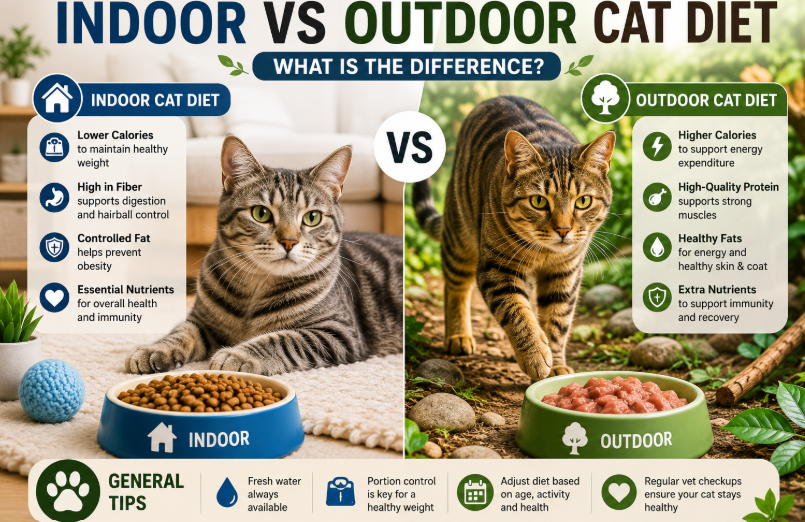
Choosing the right nutrition for a cat involves more than selecting a quality food. Lifestyle plays a major role in determining nutritional needs, and understanding the differences between an indoor vs outdoor cat diet can help owners make better feeding decisions. While all cats require balanced nutrition, their daily activities, energy expenditure, environmental exposure, and health risks often vary significantly based on where they spend most of their time.
Indoor cats generally live more controlled lives. They often have consistent access to food, stable temperatures, and fewer physical challenges. Outdoor cats, however, may spend hours exploring, climbing, hunting, and covering large distances. As a result, their nutritional requirements can differ considerably.
Many owners assume that all cats can eat the same food regardless of lifestyle. Although some cats thrive on similar diets, activity levels and environmental factors often influence calorie needs and nutrient demands. Therefore, feeding strategies should reflect the realities of each cat’s daily routine.
Understanding how lifestyle affects nutrition allows owners to support healthy weight, maintain energy levels, and promote long-term wellness. By tailoring feeding plans appropriately, cats can enjoy healthier and more active lives.
Why Lifestyle Influences Nutritional Needs
The concept of an indoor vs outdoor cat diet begins with understanding how lifestyle affects energy expenditure. Cats burn calories through movement, temperature regulation, exploration, and normal bodily functions. Because indoor and outdoor cats experience different environments, their calorie needs often vary.
Indoor cats typically spend more time resting and less time engaging in intense physical activity. Although many indoor cats enjoy play sessions and climbing structures, their daily energy demands are often lower than those of outdoor cats.
Outdoor cats usually encounter more physical challenges. They may walk long distances, climb fences, patrol territories, and hunt prey. These activities increase calorie expenditure and often require greater nutritional support.
Environmental conditions also matter. Outdoor cats may need additional energy during cold weather because maintaining body temperature requires extra calories. Conversely, indoor cats generally live in climate-controlled environments with more stable energy demands.
Recognizing these lifestyle differences provides the foundation for developing effective feeding strategies that align with each cat’s unique needs.
Calorie Requirements for Indoor Cats
One of the most important aspects of an indoor vs outdoor cat diet is calorie management. Indoor cats often require fewer calories because of their relatively sedentary lifestyles.
Many indoor cats spend a large portion of the day sleeping or resting. While this behavior is normal, it reduces daily calorie expenditure. Consequently, excessive food intake can quickly lead to weight gain if portions are not managed carefully.
Obesity remains one of the most common health concerns among indoor cats. Excess weight increases the risk of diabetes, arthritis, heart disease, and reduced mobility. Therefore, maintaining an appropriate calorie balance becomes especially important.
Portion control helps prevent overfeeding. Measuring meals accurately rather than estimating serving sizes supports consistency and improves weight management. Scheduled feeding routines also make it easier to monitor appetite and detect changes in eating behavior.
Interactive play sessions can help increase activity levels. Although nutrition plays a central role in weight management, regular exercise complements dietary efforts and supports overall wellness.
Indoor cats often thrive when calorie intake matches their lower energy demands while still providing complete and balanced nutrition.
Energy Needs of Outdoor Cats
When comparing an indoor vs outdoor cat diet, outdoor cats generally require more calories because of their active lifestyles. Increased movement and environmental exposure contribute to greater energy expenditure throughout the day.
Outdoor cats may spend hours exploring their surroundings. Hunting, climbing, running, and territorial patrols all require energy. Consequently, these cats often need larger portions or higher-calorie diets to maintain healthy body condition.
Seasonal changes can further influence nutritional requirements. During colder months, outdoor cats burn additional calories to stay warm. Therefore, some cats benefit from increased food intake during winter.
Weight monitoring remains important despite higher calorie needs. Not all outdoor cats are equally active, and individual differences can influence nutritional requirements significantly.
Hydration also deserves attention. Outdoor cats may not always have easy access to fresh water, making moisture-rich foods particularly valuable in some situations.
The goal is to provide enough energy to support activity without encouraging excessive weight gain. Regular assessment helps ensure feeding strategies remain appropriate over time.
How Protein Requirements Compare
Protein plays a critical role in every indoor vs outdoor cat diet discussion because cats rely heavily on animal-based protein for overall health. While both indoor and outdoor cats require quality protein, activity levels can influence how those nutrients are utilized.
Active outdoor cats often rely on protein to support muscle maintenance and recovery. Frequent movement increases physical demands, making adequate protein intake especially important.
Indoor cats also require substantial protein because cats are obligate carnivores. However, their lower activity levels may reduce overall calorie requirements even though protein needs remain relatively high.
High-quality animal proteins provide essential amino acids that support immune function, tissue repair, and healthy body composition. Therefore, protein quality matters regardless of lifestyle.
Foods that prioritize identifiable animal protein sources often support feline nutritional needs effectively. Whether a cat lives indoors or outdoors, protein remains one of the most important dietary components.
Balancing protein intake with appropriate calorie levels helps support both healthy weight and overall wellness throughout life.
Weight Management Challenges
Weight management represents one of the clearest differences in an indoor vs outdoor cat diet. Each lifestyle presents unique challenges that owners should understand.
Indoor cats often face a greater risk of obesity because of reduced physical activity. Even small calorie surpluses can accumulate over time, leading to gradual weight gain. Consequently, portion control and exercise become critical components of health management.
Outdoor cats may experience the opposite challenge. Highly active individuals sometimes struggle to maintain body condition if calorie intake does not meet energy demands. In these cases, increased portions or more calorie-dense foods may be necessary.
Regular monitoring helps identify trends before significant problems develop. Weighing cats consistently and evaluating body condition provide valuable information about whether current feeding practices are effective.
Weight management should always focus on gradual changes. Rapid weight gain or loss can create health concerns and should be addressed promptly.
By adapting feeding strategies to lifestyle and activity levels, owners can support healthier body condition and improved quality of life.
Hydration Considerations
Hydration plays an important role in any indoor vs outdoor cat diet, although the challenges may differ between lifestyles.
Indoor cats generally have reliable access to water sources. However, many still consume less water than ideal because cats naturally possess a relatively low thirst drive. Therefore, wet food can help increase moisture intake and support urinary health.
Outdoor cats may face additional hydration challenges, particularly during hot weather. Increased activity and environmental exposure can raise fluid requirements. Consequently, ensuring access to clean water becomes especially important.
Wet food provides hydration benefits for both groups. Because it contains substantial moisture, it contributes to daily fluid intake while providing nutrition.
Monitoring drinking habits can provide useful health information. Significant changes in water consumption sometimes indicate underlying medical concerns that require veterinary attention.
Adequate hydration supports digestion, circulation, kidney function, and overall wellness. Therefore, water intake deserves attention regardless of whether a cat lives indoors or outdoors.
Environmental Influences on Feeding Habits
The environment shapes feeding behavior in ways that directly affect an indoor vs outdoor cat diet. Understanding these influences helps owners create more effective nutrition plans.
Indoor cats often have predictable feeding schedules. Their food is readily available, and environmental stressors tend to be limited. Consequently, owners can monitor intake more easily.
Outdoor cats encounter more variable conditions. Hunting opportunities, weather changes, and territorial activities can influence appetite and energy needs. Some outdoor cats supplement their diets by catching prey, which may affect feeding patterns at home.
Multi-cat environments also influence eating behavior. Competition for resources can affect how much food individual cats consume. Therefore, feeding arrangements should support fair access and appropriate portion control.
Stress levels matter as well. Environmental changes can alter appetite, leading some cats to eat more while causing others to eat less.
Recognizing how environmental factors affect feeding behavior helps owners respond appropriately and maintain nutritional balance.
Choosing the Right Food for Each Lifestyle
Selecting food for an indoor vs outdoor cat diet requires considering multiple factors beyond simple calorie content. Quality nutrition remains important regardless of lifestyle.
Indoor-specific formulas often focus on weight management and hairball control. These products may contain adjusted calorie levels and fiber content designed to support indoor living.
Outdoor cats may benefit from foods that provide higher calorie density and robust nutritional support for active lifestyles. However, quality remains more important than marketing labels alone.
Ingredient quality should remain a priority. High-quality animal proteins, balanced nutrients, and appropriate calorie levels contribute to overall health.
Owners should also consider age, health status, and individual preferences. A young active cat has different nutritional needs than a senior cat, regardless of whether it spends time indoors or outdoors.
The best food supports the cat’s specific needs while promoting healthy body condition and long-term wellness.
Finding the Right Balance
The most successful approach to an indoor vs outdoor cat diet involves flexibility and ongoing evaluation. Cats change over time, and feeding plans should evolve accordingly.
Activity levels may shift with age, health status, or lifestyle changes. Therefore, periodic reassessment helps ensure nutritional strategies remain appropriate.
Regular veterinary examinations provide valuable opportunities to review body condition, weight trends, and dietary effectiveness. Professional guidance can help address concerns before they become significant problems.
Observation remains important at home as well. Appetite, energy levels, coat condition, and body weight all provide clues about nutritional adequacy.
Rather than focusing solely on whether a cat is indoor or outdoor, owners should evaluate the complete picture. Individual differences often influence nutritional requirements as much as lifestyle itself.
By remaining attentive and adaptable, owners can provide nutrition that supports health throughout every stage of life.
Conclusion
Understanding the differences between an indoor vs outdoor cat diet helps owners create feeding plans that align with their cat’s lifestyle and energy needs. Indoor cats often require fewer calories and careful weight management, while outdoor cats typically benefit from additional energy to support their active routines. Hydration, protein quality, environmental influences, and overall nutritional balance all play important roles in maintaining health.
No single feeding strategy works for every cat. The most effective approach considers activity level, age, health status, and individual preferences. By tailoring nutrition appropriately and monitoring results consistently, owners can support healthy weight, strong muscles, sustained energy, and long-term wellness. A thoughtful feeding plan provides the foundation for a healthier and happier life, regardless of whether a cat spends its days indoors, outdoors, or a combination of both.
FAQ
1. Do outdoor cats need more calories than indoor cats?
Yes. Most outdoor cats burn more energy through physical activity and often require additional calories.
2. Can indoor cats eat food designed for outdoor cats?
They can, but higher-calorie formulas may contribute to weight gain if portions are not adjusted carefully.
3. Why are indoor cats more likely to become overweight?
Indoor cats often have lower activity levels and fewer opportunities to burn excess calories.
4. Is wet food beneficial for both lifestyles?
Yes. Wet food supports hydration and can be a valuable part of a balanced feeding plan.
5. How often should I review my cat’s diet?
Evaluate nutrition regularly, especially when activity levels, weight, age, or health conditions change.


