
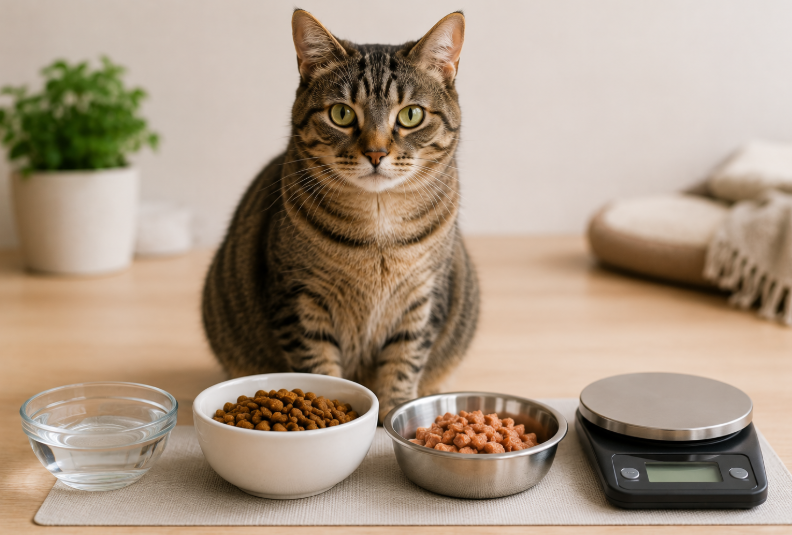
One of the most common questions cat owners ask is how much should cats eat each day. While feeding may seem straightforward, determining the right amount of food can be surprisingly challenging. Every cat has unique nutritional requirements based on age, weight, activity level, health condition, and lifestyle. As a result, relying on guesswork can lead to overfeeding, underfeeding, or nutritional imbalances.
Many owners simply follow package recommendations without considering individual differences. Although feeding guidelines provide a useful starting point, they cannot account for every cat’s specific needs. Consequently, some cats gain excess weight while others fail to receive adequate nutrition.
Maintaining the proper daily food intake is one of the most important factors influencing feline health. Appropriate feeding supports healthy body weight, muscle maintenance, energy levels, and overall well-being. Furthermore, consistent nutrition helps reduce the risk of obesity and related health concerns.
Understanding the factors that influence food requirements allows owners to make informed decisions rather than relying on assumptions. With the right approach, feeding becomes easier, more accurate, and more beneficial for long-term health.
Why Daily Food Requirements Vary
To answer the question how much should cats eat, it is important to understand why nutritional needs differ between individuals. No single feeding amount works for every cat because several factors influence calorie requirements.
Age plays a significant role. Kittens require more calories relative to body weight because they are growing rapidly. Adult cats generally need stable maintenance nutrition, while senior cats may require adjustments based on activity levels and health changes.
Body size also affects feeding requirements. Larger cats naturally require more calories than smaller cats. However, weight alone does not determine nutritional needs because body composition matters as well.
Activity level is another important consideration. Highly active cats burn more energy through play, exploration, and exercise. Consequently, they often require more calories than sedentary cats.
Health status can further influence feeding needs. Medical conditions, recovery from illness, pregnancy, and lactation may all affect calorie requirements.
Because so many variables contribute to nutritional needs, individualized feeding plans generally produce the best results.
Understanding Calories Instead of Cup Measurements
Many discussions about how much should cats eat focus on cups, cans, or scoops of food. However, calories provide a more accurate way to evaluate nutritional intake.
Different foods contain different calorie densities. A cup of one food may contain significantly more calories than a cup of another. Consequently, relying solely on volume measurements can create confusion.
Wet food and dry food illustrate this difference clearly. Dry food contains less moisture and typically provides more calories per ounce. Wet food contains more water and often delivers fewer calories in the same volume.
Reading food labels helps owners understand calorie content. Most commercial pet foods provide calorie information that can be used to calculate daily intake more accurately.
Using calories rather than volume allows for better comparisons between products and feeding methods. It also simplifies adjustments when changing foods.
While measuring portions remains important, understanding calorie intake provides a clearer picture of whether a cat is receiving appropriate nutrition.
How Age Affects Feeding Amounts
The answer to how much should cats eat changes significantly throughout a cat’s life. Nutritional needs evolve as cats move through different life stages.
Kittens require frequent meals and increased calorie intake to support growth. Their developing bodies need substantial energy for building muscles, bones, and organs. Therefore, feeding schedules often include multiple meals throughout the day.
Adult cats generally require balanced maintenance nutrition. At this stage, the goal is supporting healthy body condition while preventing excess weight gain. Portion control becomes particularly important during adulthood.
Senior cats may experience changes in metabolism, activity levels, and body composition. Some older cats require fewer calories because they become less active. Others need additional nutritional support due to age-related health concerns.
Life stage-specific diets often help meet these changing requirements. These products are formulated to support the unique needs associated with different ages.
Adjusting feeding plans as cats age helps ensure they continue receiving appropriate nutrition throughout life.
Body Weight and Body Condition Matter
When considering how much should cats eat, body condition often provides more useful information than body weight alone. Two cats with identical weights may have very different nutritional needs.
Body condition scoring evaluates fat coverage, muscle mass, and overall body composition. Healthy cats should have a visible waist when viewed from above and a slight abdominal tuck when viewed from the side.
Overweight cats generally require careful calorie management. Excess body fat increases the risk of diabetes, arthritis, and other health problems. Consequently, portion control becomes especially important.
Underweight cats may need additional calories to support healthy weight gain and muscle maintenance. However, sudden increases in food intake should be approached carefully.
Regular weight monitoring helps identify trends before significant changes occur. Small adjustments are often easier and safer than drastic dietary modifications.
Evaluating both weight and body condition provides a more complete understanding of nutritional status and feeding needs.
Activity Level Influences Daily Intake
Activity level is one of the most significant factors affecting how much should cats eat. Cats that burn more energy generally require more calories to maintain healthy body condition.
Indoor cats often have lower activity levels than outdoor cats. They may spend more time resting and less time exploring or hunting. Consequently, many indoor cats require fewer calories.
Active indoor cats can still have substantial energy requirements if they participate in frequent play sessions and enrichment activities. Therefore, assumptions based solely on living environment may be misleading.
Outdoor cats often expend considerable energy through climbing, running, and territorial patrols. These activities increase calorie needs significantly.
Monitoring behavior helps determine whether current feeding levels are appropriate. Healthy energy levels, stable weight, and good muscle tone often indicate that nutritional intake matches activity demands.
Adjusting food intake based on lifestyle supports healthier weight management and overall wellness.
Meal Frequency and Feeding Schedules
Another important aspect of how much should cats eat involves how food is distributed throughout the day. Meal frequency can influence appetite control, digestion, and feeding behavior.
Many adult cats do well with two meals daily. This schedule provides consistency while allowing owners to monitor appetite changes easily.
Some cats prefer multiple smaller meals throughout the day. Automated feeders can help support this approach while maintaining portion control.
Kittens generally require more frequent feeding because of their rapid growth and higher energy demands. Consequently, three or four meals daily are often recommended during early life stages.
Free-feeding is another option, particularly with dry food. However, it can make portion control more difficult and increase the risk of weight gain in some cats.
Consistency remains important regardless of feeding frequency. Predictable schedules help regulate appetite and support healthy eating habits.
Avoiding Common Feeding Mistakes
Many owners struggle with how much should cats eat because common feeding mistakes create confusion. Recognizing these errors can improve feeding accuracy significantly.
One common mistake is estimating portions instead of measuring them. Small inaccuracies repeated daily can contribute to substantial weight changes over time.
Another issue involves relying solely on begging behavior. Cats often request food for reasons unrelated to hunger, including boredom, habit, or a desire for attention.
Treats represent another source of hidden calories. Many owners overlook treats when calculating daily intake, leading to unintentional overfeeding.
Failing to adjust portions after switching foods can also cause problems. Because calorie density varies between products, identical serving sizes may not provide equivalent nutrition.
Regular monitoring and careful measurement help prevent these mistakes and support healthier feeding practices.
Using Food Labels Effectively
Understanding food labels helps answer the question how much should cats eat more accurately. Labels provide valuable information about calorie content, feeding recommendations, and nutritional composition.
Feeding guidelines serve as useful starting points. However, they are based on averages and may require adjustment depending on the individual cat.
Calorie information is particularly important when comparing products. Higher-calorie foods require smaller portions, while lower-calorie foods may require larger servings.
Ingredient lists and nutritional analyses provide additional insight. Although feeding amounts are important, food quality also influences overall health outcomes.
Owners should review labels whenever switching products. This practice helps maintain consistent calorie intake and reduces the likelihood of accidental overfeeding or underfeeding.
Using label information thoughtfully supports more informed nutritional decisions and better long-term results.
Monitoring and Adjusting Over Time
The most reliable way to determine how much should cats eat is through ongoing observation and adjustment. Nutritional needs change throughout life, making periodic reassessment essential.
Regular weigh-ins provide objective feedback regarding feeding effectiveness. Small weight fluctuations are normal, but consistent trends may indicate the need for adjustments.
Body condition assessments complement weight measurements by evaluating overall body composition. Together, these tools provide a more complete picture of health.
Appetite, energy levels, coat condition, and activity patterns also offer valuable information. Changes in these areas sometimes suggest that nutritional needs have shifted.
Veterinary examinations provide additional guidance. Professionals can evaluate weight, body condition, and health status while recommending appropriate feeding adjustments.
Rather than relying on fixed feeding amounts indefinitely, successful nutrition management involves flexibility and ongoing evaluation.
Creating a Feeding Plan Without Guesswork
Successfully answering how much should cats eat requires combining several pieces of information into a practical feeding plan. The goal is providing enough nutrition to support health while avoiding excess calorie intake.
Start by reviewing the cat’s age, weight, activity level, and health status. Then use food label recommendations as an initial guideline rather than a final answer.
Measure portions accurately and monitor body condition regularly. These habits provide objective feedback and simplify future adjustments.
Maintain consistency in feeding schedules and avoid excessive treats. Predictable routines support appetite regulation and make nutritional management easier.
Most importantly, remember that feeding plans should evolve over time. Life stage changes, health conditions, and activity levels all influence nutritional requirements.
A thoughtful approach removes much of the uncertainty from daily feeding and helps support long-term wellness.
Conclusion
Understanding how much should cats eat is one of the most important aspects of responsible feline care. Daily food requirements vary based on age, weight, activity level, body condition, and overall health. Because no single feeding amount works for every cat, individualized evaluation remains essential.
By focusing on calorie intake, monitoring body condition, measuring portions accurately, and adjusting feeding plans as needed, owners can eliminate much of the guesswork associated with nutrition. Consistent feeding habits support healthy weight, strong muscles, stable energy levels, and improved overall well-being.
The best feeding plan is one that evolves alongside the cat’s changing needs. With careful observation and thoughtful adjustments, owners can provide nutrition that supports a healthier and happier life at every stage.
FAQ
1. How often should an adult cat eat each day?
Most healthy adult cats do well with two meals daily, although some benefit from smaller, more frequent meals.
2. Is it okay to leave food out all day?
Free-feeding works for some cats, but it can make portion control more difficult and may contribute to weight gain.
3. Do indoor cats need less food than outdoor cats?
Many indoor cats require fewer calories because they often have lower activity levels than outdoor cats.
4. Should feeding amounts change with age?
Yes. Nutritional needs evolve throughout life, and feeding plans should adjust accordingly.
5. What is the best way to monitor feeding success?
Regular weight checks, body condition assessments, and observation of energy levels provide valuable feedback.


