
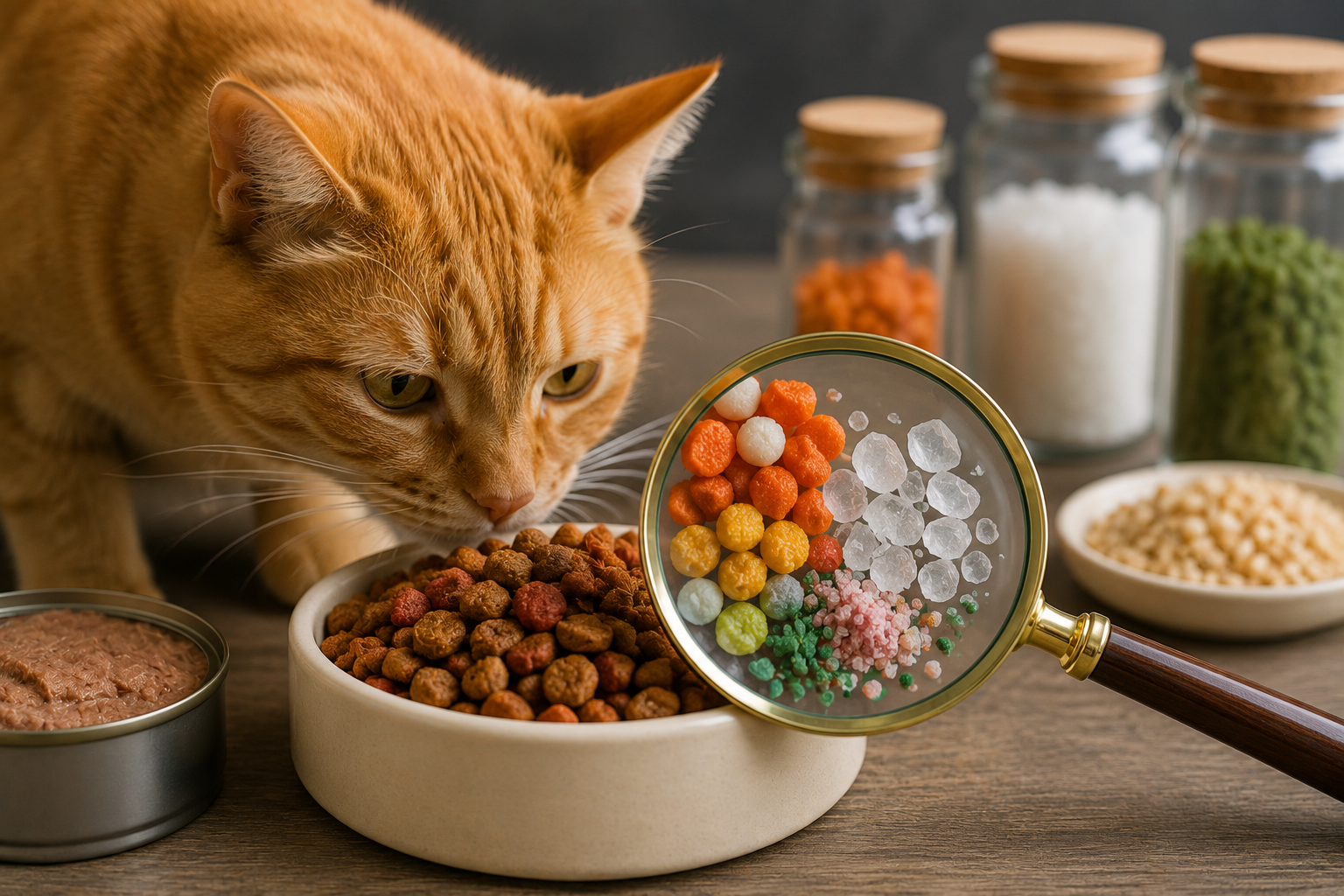
Many pet owners spend time comparing brands, reading labels, and searching for nutritious meals for their feline companions. However, even the most careful shoppers may overlook ingredients hidden within long and confusing ingredient lists. Understanding hidden additives cat food products may contain is an important step toward protecting your cat’s health and making informed purchasing decisions.
Manufacturers often include additives to improve flavor, color, texture, shelf life, or appearance. While some additives serve useful purposes, others may offer little nutritional value. As a result, cat owners should learn how to identify ingredients that deserve closer attention. Reading labels carefully can reveal much more than attractive packaging claims.
Cats are obligate carnivores, which means they rely heavily on animal-based nutrients for optimal health. Therefore, foods packed with unnecessary additives may not always align with their natural dietary needs. Although not every additive is harmful, understanding their purpose helps you evaluate overall food quality more effectively.
The challenge is that many additives appear under unfamiliar names. Consequently, owners often assume these ingredients are harmless or necessary. By learning what these additives do and why manufacturers use them, you can make better decisions when selecting food for your pet.
Why Additives Are Used in Cat Food
Before examining specific ingredients, it helps to understand why manufacturers add them in the first place. Most additives serve practical purposes related to production, storage, or consumer appeal. Some preserve freshness, while others enhance taste or maintain product consistency.
Many examples of hidden additives cat food formulas contain are designed to extend shelf life. Dry kibble often remains on store shelves for months. Without preservatives, fats could become rancid and reduce product quality. Therefore, manufacturers use stabilizers to maintain freshness.
Flavor enhancers are another common category. Cats can be selective eaters, so manufacturers sometimes include ingredients that increase palatability. These additions encourage cats to eat the product consistently.
Color additives are also used in some foods. Interestingly, cats do not care about food color the way humans do. Yet colorful kibble may appear more appealing to pet owners. Consequently, some products contain dyes that offer no nutritional benefit.
Texture modifiers help maintain a consistent appearance and mouthfeel. Wet foods frequently contain gums, starches, and thickening agents to improve texture. While many are considered safe, understanding their role remains important.
Knowing why additives exist allows you to distinguish between ingredients that support quality and those that simply enhance marketing appeal.
Artificial Preservatives That Raise Concerns
Preservatives help prevent spoilage, but some synthetic options have generated debate among pet owners and researchers. Although regulations permit their use within established limits, many consumers prefer foods preserved with natural alternatives.
Among the hidden additives cat food labels may contain, artificial preservatives often attract the most attention. Ingredients such as BHA, BHT, and ethoxyquin have been discussed for years due to questions about long-term exposure. While regulatory agencies consider approved amounts safe, some owners choose to avoid them whenever possible.
Natural preservatives have become increasingly popular. Mixed tocopherols, which are forms of vitamin E, are commonly used instead of synthetic options. Rosemary extract also appears in some products as a natural preservation method.
Choosing foods with natural preservatives may provide peace of mind for owners seeking simpler ingredient lists. However, it remains important to evaluate the entire formula rather than focusing on one ingredient alone.
A balanced perspective is essential. Not every synthetic ingredient poses a significant risk, yet understanding what is present allows you to make informed choices based on your personal preferences and comfort level.
Artificial Colors and Unnecessary Dyes
Color additives rarely benefit cats directly. In fact, cats have limited color perception compared to humans. Therefore, brightly colored kibble generally appeals more to pet owners than to the animals themselves.
Some hidden additives cat food products contain include artificial dyes such as Red 40, Yellow 5, or Blue 2. These ingredients create visually appealing shapes and colors but contribute little to nutritional value.
Manufacturers often use dyes to create product consistency across batches. However, many premium brands avoid artificial coloring altogether because it serves no practical purpose for feline nutrition.
Owners who prefer minimally processed foods often choose products without artificial dyes. This approach simplifies ingredient lists and eliminates unnecessary additives. Furthermore, it aligns more closely with a natural feeding philosophy.
While occasional exposure to food dyes may not cause obvious problems for most cats, many consumers see little reason to include ingredients that provide no health benefit.
Flavor Enhancers and Palatability Boosters
Cats can be picky eaters, which creates challenges for manufacturers. To increase acceptance, some companies add flavor enhancers designed to make food more attractive.
When examining hidden additives cat food formulas may include, look for terms such as animal digest, natural flavors, or flavor coatings. These ingredients can improve taste and encourage consistent consumption.
Animal digest is commonly used in pet food production. It consists of processed animal tissues that create concentrated flavors. Although it can enhance palatability, ingredient sourcing may vary significantly between manufacturers.
Natural flavors may sound simple, but the term often covers a broad range of ingredients. Therefore, transparency from manufacturers becomes important when evaluating food quality.
Palatability matters because cats need adequate nutrition. However, food should ideally rely on high-quality protein ingredients rather than excessive flavor enhancers to attract interest.
Brands that emphasize meat-based ingredients often require fewer additives because the natural flavor of animal proteins appeals strongly to cats.
Thickeners and Texture Modifiers
Wet cat foods frequently contain ingredients that improve texture and consistency. These additives help create the smooth or chunky appearance consumers expect.
Several hidden additives cat food products contain include carrageenan, guar gum, xanthan gum, and various starches. These ingredients serve technical functions rather than nutritional ones.
Carrageenan has received particular attention among pet owners. Derived from seaweed, it acts as a thickening agent in many canned foods. While approved for use in pet food, some consumers prefer products that avoid it due to ongoing discussions about digestive sensitivity.
Other gums generally help stabilize moisture and maintain texture. In moderate amounts, they are commonly considered safe. Nevertheless, highly processed formulas may contain multiple texture-modifying ingredients.
Choosing foods with fewer additives often means selecting products that rely more heavily on meat content and less on fillers or thickening agents. As a result, ingredient lists may appear shorter and easier to understand.
Sweeteners and Added Sugars
Cats do not have the same preference for sweetness as humans. Therefore, added sugars generally offer little benefit from a nutritional standpoint.
Some examples of hidden additives cat food manufacturers may use include corn syrup, molasses, dextrose, or other sweetening agents. These ingredients occasionally appear in treats and certain wet food formulas.
Sugar can improve texture, preservation, and flavor perception. However, excessive consumption contributes unnecessary calories. For cats already struggling with weight management, additional sugars may complicate dietary goals.
Fortunately, many modern premium cat foods avoid added sweeteners entirely. Instead, they focus on animal-based ingredients that better reflect a cat’s biological needs.
When reviewing labels, pay attention to ingredients that contribute calories without supplying meaningful nutrition. These additions often increase processing while offering limited benefits.
Understanding Ingredient Splitting
Not all additives appear obvious at first glance. Manufacturers sometimes use ingredient splitting, which can make formulas appear more meat-focused than they actually are.
For example, corn may appear as corn gluten meal, corn flour, and ground corn. Individually, each ingredient occupies a lower position on the list. Combined, however, they may represent a significant portion of the formula.
This practice often appears alongside various hidden additives cat food brands use to improve product characteristics. Understanding ingredient splitting helps you evaluate the overall composition more accurately.
Reading beyond the first few ingredients provides a clearer picture of food quality. Additionally, comparing protein sources with carbohydrate sources can reveal whether the formula prioritizes animal nutrition appropriately.
Consumers who recognize ingredient splitting become more confident when assessing labels and identifying marketing tactics.
How to Read Labels More Effectively
Learning to interpret labels is one of the best ways to avoid unwanted ingredients. Start by examining the first several ingredients because they represent the largest portions of the formula.
When reviewing hidden additives cat food labels, focus on ingredient quality rather than marketing claims on the front of the package. Attractive phrases can be helpful, but the ingredient panel provides more meaningful information.
Look for clearly identified protein sources such as chicken, turkey, salmon, or beef. These ingredients should ideally appear near the beginning of the list. Meanwhile, excessive fillers, artificial colors, and vague flavoring terms deserve closer examination.
Pay attention to guaranteed analysis information as well. Protein, fat, moisture, and fiber levels provide additional insight into nutritional value. Together, these details help create a more complete understanding of the product.
Researching manufacturers can also be beneficial. Companies that provide transparent sourcing and production information often demonstrate greater commitment to quality standards.
Choosing Healthier Alternatives
The goal is not necessarily to avoid every additive. Instead, focus on selecting foods that use ingredients purposefully and responsibly. Many additives serve legitimate functions and contribute to food safety.
When evaluating hidden additives cat food products, prioritize formulas that emphasize animal-based proteins, transparent ingredient sourcing, and limited unnecessary additives. Foods with shorter ingredient lists often make evaluation easier.
Natural preservation methods, clearly identified protein sources, and minimal artificial coloring can indicate a more thoughtful formulation. Additionally, choosing reputable brands helps reduce uncertainty about ingredient quality.
Consulting your veterinarian can provide valuable guidance, especially if your cat has allergies, digestive sensitivities, or chronic health conditions. Professional recommendations help ensure nutritional needs remain the top priority.
Ultimately, healthier choices come from understanding ingredients rather than reacting to marketing messages alone. Knowledge empowers owners to make decisions that support long-term feline wellness.
Conclusion
Understanding hidden additives cat food manufacturers use can help you become a more informed and confident pet owner. While many additives serve practical purposes, others contribute little nutritional value and may simply improve appearance, texture, or shelf life. Learning to recognize artificial preservatives, dyes, flavor enhancers, sweeteners, and texture modifiers allows you to evaluate products more effectively.
The best approach is balance. Rather than fearing every unfamiliar ingredient, focus on understanding why it is included and whether it benefits your cat. By reading labels carefully, prioritizing quality protein sources, and choosing transparent brands, you can reduce unnecessary additives while supporting your cat’s overall health. In the end, informed decisions create a stronger foundation for a long, healthy, and happy life.
FAQ
1. Are all food additives harmful to cats?
No. Many additives help preserve freshness, maintain texture, or improve food safety. The key is understanding their purpose and quality.
2. Which preservatives are commonly avoided by pet owners?
Many owners prefer to avoid BHA, BHT, and ethoxyquin, choosing products preserved with natural alternatives instead.
3. Why do some cat foods contain artificial colors?
Artificial colors mainly appeal to consumers. Cats generally do not benefit from colored food because appearance matters little to them.
4. How can I identify unnecessary ingredients on a label?
Look for artificial dyes, added sugars, vague flavor descriptions, and long lists of fillers or texture modifiers.
5. What should be the first ingredient in a quality cat food?
A clearly identified animal protein source, such as chicken, turkey, salmon, or beef, is usually a strong starting point for a quality formula.


