
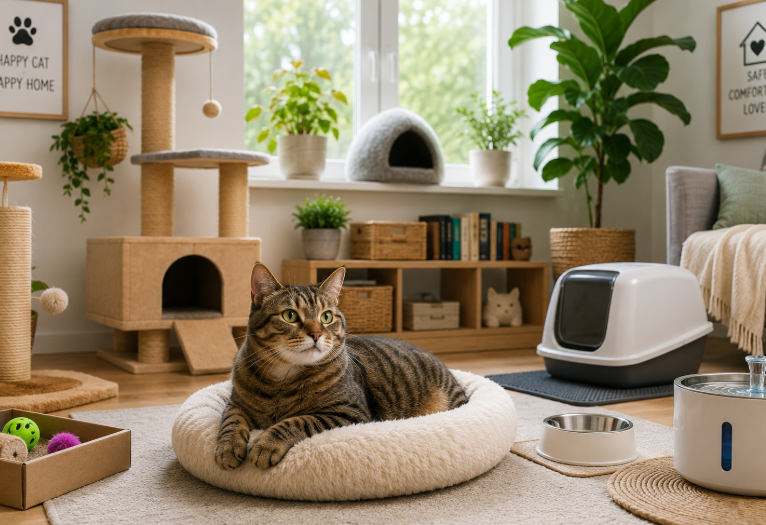
Creating a safe and supportive home is one of the most important responsibilities cat owners have today. Healthy Home Environment Cats thrive in provides more than food and shelter alone. Cats need clean spaces, emotional security, mental stimulation, and proper routines to stay physically and emotionally healthy. As more cats live indoors full-time, the quality of the home environment plays a much bigger role in long-term feline wellness.
Many people assume cats are independent enough to manage their own comfort without much help. While cats are adaptable animals, they are also highly sensitive to stress, noise, routine changes, and environmental quality. Consequently, even small household problems can affect a cat’s behavior, appetite, sleep, and overall health.
Indoor cats especially rely completely on their environment for exercise, stimulation, and emotional stability. Without enough enrichment or proper care, cats may become anxious, overweight, bored, or destructive. Therefore, creating a healthier living space supports both physical health and emotional balance.
Veterinarians increasingly encourage preventative wellness strategies for indoor cats. A carefully designed home environment helps reduce stress-related illnesses, obesity, and behavioral issues while improving overall quality of life. Understanding what cats truly need indoors helps owners create happier and healthier homes for their feline companions.
Why Environment Matters for Indoor Cats
Cats experience the world differently from humans. Their senses are sharper, and they respond strongly to environmental changes that people may barely notice. Loud sounds, unfamiliar scents, cluttered spaces, or unpredictable routines can create stress surprisingly quickly.
Unlike outdoor cats, indoor cats cannot leave uncomfortable situations easily. As a result, environmental quality directly affects their daily comfort and emotional well-being. Cats living in stressful homes often display behavioral changes such as hiding, aggression, excessive grooming, or litter box problems.
Physical health also depends heavily on environmental conditions. Poor air quality, dirty litter boxes, and lack of movement can contribute to illness over time. Consequently, creating clean and stimulating indoor spaces becomes essential for long-term wellness.
Healthy Home Environment Cats require includes safe resting spaces, mental enrichment, proper hygiene, and opportunities for natural behaviors. Cats instinctively climb, scratch, hunt, observe, and hide. Indoor environments should support these instincts whenever possible.
Temperature and lighting matter too. Cats prefer warm comfortable areas where they feel secure. Access to natural sunlight often improves mood and encourages healthy sleep patterns as well.
Consistency is another important factor. Cats feel safer when feeding, playtime, and household routines remain predictable. Sudden disruptions may increase anxiety even in confident cats. Therefore, stable environments help support emotional balance throughout daily life.
The Importance of Cleanliness and Hygiene
Cleanliness plays a major role in feline health. Cats naturally prefer tidy environments and may become stressed if their surroundings feel dirty or unpleasant. Maintaining proper hygiene helps prevent illness while supporting emotional comfort.
Litter box cleanliness is especially important. Most cats dislike using dirty litter boxes and may avoid them entirely if conditions become unacceptable. Consequently, poor litter maintenance often leads to accidents outside the box.
Experts generally recommend one litter box per cat plus an extra box in multi-cat households. Placement matters as well. Boxes should remain in quiet, low-traffic areas where cats feel safe and undisturbed.
Food and water areas also require regular cleaning. Dirty bowls can harbor bacteria and discourage proper hydration or eating habits. Stainless steel or ceramic bowls usually work better than plastic because they resist bacteria buildup more effectively.
Healthy Home Environment Cats benefit from also includes proper air quality. Dust, smoke, strong cleaning chemicals, and scented products may irritate sensitive respiratory systems. Therefore, using pet-safe cleaning products and maintaining ventilation supports healthier indoor living.
Regular vacuuming helps reduce fur, dander, and allergens throughout the home. In addition, grooming cats consistently helps maintain healthier skin and coats while reducing hair accumulation indoors.
Clean spaces support emotional well-being too. Cats generally feel more relaxed in organized environments where resources remain easy to access and consistently maintained.
How Enrichment Supports Emotional Health
Mental stimulation is essential for indoor cats. Without enough enrichment, many cats experience boredom, frustration, or anxiety. Consequently, emotional stress may lead to destructive behaviors, overeating, or excessive sleeping.
Cats naturally enjoy activities that mimic hunting instincts. Interactive toys, climbing structures, scratching posts, and puzzle feeders help satisfy these instincts safely indoors. Therefore, enrichment should become part of daily routines rather than occasional entertainment.
Vertical space is especially valuable. Cats often feel safer when they can climb and observe surroundings from elevated areas. Cat trees, shelves, and window perches provide both exercise and emotional security.
Healthy Home Environment Cats thrive in usually includes several enrichment options spread throughout the home. Rotating toys regularly also helps maintain interest and curiosity over time.
Interactive play strengthens relationships between cats and owners as well. Feather toys, laser pointers, and moving objects encourage healthy physical activity while stimulating natural behaviors. Short daily play sessions often improve mood and reduce stress significantly.
Window access offers additional enrichment. Watching birds, insects, and outdoor movement provides mental stimulation that indoor cats naturally enjoy. Some owners even install secure outdoor enclosures called catios for safe fresh-air experiences.
Boredom affects physical health too. Mentally stimulated cats generally stay more active and maintain healthier body weight. Consequently, enrichment supports both emotional balance and long-term wellness.
Creating Safe Spaces for Comfort and Security
Cats need areas where they feel protected and relaxed. Even social cats occasionally seek quiet spaces away from noise or activity. Providing secure resting areas helps reduce stress and supports emotional stability.
Many cats prefer enclosed or elevated sleeping spots because these areas feel safer instinctively. Soft beds, covered hideouts, and elevated shelves often become favorite resting locations quickly.
Multi-cat households especially require multiple safe spaces. Without enough personal territory, cats may compete for preferred resting spots. Consequently, tension and stress may increase within the household.
Healthy Home Environment Cats need often includes quiet zones away from loud appliances, children, or heavy foot traffic. Cats appreciate having control over when they interact socially and when they rest privately.
Noise management matters too. Frequent shouting, loud televisions, or sudden disruptions may create anxiety in sensitive cats. Therefore, calmer environments usually support healthier feline behavior.
Safe spaces also help during stressful situations such as visitors, storms, or home repairs. Cats often cope better with change when they have familiar retreat areas available consistently.
Temperature comfort should not be overlooked either. Cats generally prefer warmer resting areas and may seek sunlight naturally throughout the day. Providing comfortable blankets and heated beds during colder months often improves comfort significantly.
Nutrition and Hydration Inside the Home
Diet and hydration strongly influence feline health. Indoor cats often have lower activity levels compared to outdoor cats, making proper nutrition even more important for maintaining healthy weight and energy levels.
Portion control remains essential because obesity is extremely common among indoor cats. Many owners unintentionally overfeed through treats or free feeding. Consequently, structured meal routines often work better for long-term weight management.
Water access also deserves attention. Cats naturally have low thirst drives, which increases risks for dehydration and urinary issues. Therefore, multiple clean water stations throughout the home help encourage better hydration.
Healthy Home Environment Cats benefit from includes stress-free feeding areas. Some cats prefer eating in quiet locations away from other pets or loud household activity. Consequently, separate feeding zones often improve appetite and comfort.
Wet food may support hydration better than dry food alone because of its higher moisture content. However, nutritional needs vary depending on age, activity level, and health conditions. Veterinary guidance helps owners choose appropriate diets more effectively.
Food puzzles and slow feeders also provide mental stimulation while encouraging healthier eating habits. These tools slow rapid eating and reduce boredom-related food behaviors simultaneously.
Monitoring appetite changes remains important as well. Sudden decreases or increases in eating may indicate stress or medical problems requiring veterinary attention.
Reducing Stress Inside the Household
Stress affects cats more deeply than many owners realize. Even subtle environmental tension may influence behavior, digestion, sleep, and immune function. Therefore, reducing stress inside the home supports better long-term health.
Routine provides emotional security for most cats. Feeding, playtime, and cleaning schedules should remain reasonably consistent whenever possible. Predictability helps cats feel safer and more relaxed.
Introducing changes gradually also helps minimize stress. New pets, furniture rearrangements, or visitors can overwhelm some cats if transitions happen too suddenly. Consequently, patience becomes extremely important during household changes.
Healthy Home Environment Cats require often includes careful social management in multi-pet homes. Resource competition involving food bowls, litter boxes, or resting areas frequently increases tension between pets.
Pheromone diffusers sometimes help reduce anxiety as well. These products mimic calming feline scent signals and may improve emotional comfort in stressful environments.
Owners should also respect personal boundaries. Some cats enjoy frequent handling, while others prefer more independent interaction. Understanding personality differences helps build trust more effectively.
Environmental predictability combined with enrichment often creates calmer household behavior overall. Consequently, emotionally secure cats usually display healthier eating, grooming, and sleeping patterns.
The Long-Term Benefits of a Healthier Home
Creating a supportive indoor environment offers significant long-term advantages for feline health and happiness. Cats living in enriched and low-stress homes generally experience fewer behavioral problems and better overall wellness.
Healthy cats typically maintain stronger immune systems, healthier body weight, and better mobility throughout aging. Consequently, preventative environmental care may reduce future medical complications significantly.
Healthy Home Environment Cats thrive in also supports stronger emotional bonds with owners. Relaxed cats often become more social, playful, and affectionate because they feel secure in their surroundings.
Behavioral problems frequently decrease when environmental needs are met properly. Scratching, aggression, inappropriate urination, and excessive vocalization often improve once stress and boredom reduce.
Older cats especially benefit from stable and supportive homes. Senior cats may require softer bedding, easier litter box access, and quieter resting areas as mobility changes over time.
Preventative wellness ultimately improves quality of life for both cats and owners. Creating a healthy home environment does require effort, yet the rewards include happier behavior, reduced stress, and stronger long-term companionship.
As awareness about feline emotional health continues growing, more owners recognize that indoor wellness involves much more than simply providing food and shelter. Environment shapes nearly every aspect of a cat’s physical and emotional experience daily.
Conclusion
Indoor cats depend entirely on their environment for safety, comfort, stimulation, and emotional balance. Healthy Home Environment Cats need should support natural instincts while reducing stress and encouraging physical activity.
Cleanliness, enrichment, proper nutrition, safe resting areas, and predictable routines all contribute to healthier feline lives. Without these elements, indoor cats may struggle with obesity, anxiety, boredom, or behavioral issues over time.
Fortunately, creating a healthier home does not require extreme changes. Small improvements such as cleaner litter boxes, interactive play, vertical climbing spaces, and quiet resting areas often make meaningful differences quickly.
Owners who prioritize environmental wellness usually notice happier behavior, stronger bonds, and improved overall health in their cats. Indoor living can absolutely support long and fulfilling feline lives when homes are designed thoughtfully around a cat’s natural needs.
A healthy environment provides more than comfort alone. It creates the foundation for emotional security, physical wellness, and lifelong happiness for feline companions.
FAQ
1. Why is enrichment important for indoor cats?
Enrichment prevents boredom, supports natural instincts, and improves both emotional and physical health.
2. How often should litter boxes be cleaned?
Most litter boxes should be scooped daily and cleaned thoroughly on a regular schedule.
3. What causes stress in indoor cats?
Loud noise, sudden changes, overcrowding, dirty spaces, and lack of stimulation commonly increase feline stress.
4. Do cats need climbing spaces indoors?
Yes. Vertical spaces help cats feel secure while encouraging exercise and mental stimulation.
5. How can I improve my cat’s indoor lifestyle?
Provide clean spaces, structured routines, enrichment toys, healthy nutrition, and quiet resting areas consistently.


