
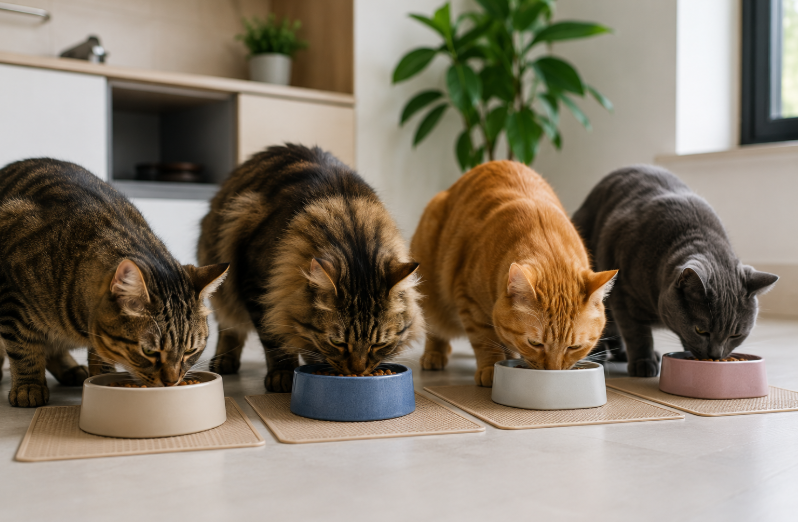
Living with multiple cats can be rewarding, but feeding time often becomes one of the biggest challenges for pet owners. Feed Multiple Cats Confidence methods are important because every cat has unique eating habits, personalities, and nutritional needs. Some cats eat too quickly, others steal food, and certain cats may become anxious or territorial around meals. As a result, feeding multiple cats without a clear strategy can quickly turn stressful.
Many households struggle with portion control, weight management, and food competition between pets. Indoor cats especially may develop unhealthy eating patterns if meals are not structured properly. Consequently, owners need feeding routines that support both physical health and emotional comfort.
Cats naturally prefer routine and predictability. Therefore, consistent feeding systems help reduce stress and improve behavior. A well-organized feeding setup also prevents overeating, bullying, and nutritional imbalance among cats living together.
Veterinarians increasingly encourage structured feeding rather than free feeding in multi-cat homes. Controlled routines allow owners to monitor appetite changes, identify health problems earlier, and maintain healthier weights. Understanding how cats behave around food is the first step toward creating calmer and more successful feeding experiences.
Why Feeding Multiple Cats Becomes Difficult
Feeding one cat is usually simple. However, feeding several cats together creates social and behavioral challenges. Cats are naturally territorial animals, even when they live peacefully together most of the time. Food can trigger competition quickly because cats instinctively protect resources they consider important.
Some cats eat aggressively and finish meals within seconds. Others prefer slow grazing or cautious eating. Consequently, fast eaters often steal food from slower cats before owners even notice the problem.
Different nutritional needs also complicate feeding routines. Kittens require more calories than adult cats, while senior cats may need specialized diets. Additionally, overweight cats often need portion control while thinner cats require increased calorie intake.
Stress affects appetite as well. Nervous cats may avoid food if dominant cats stand nearby during meals. As a result, some cats eat too little while others consume excessive amounts.
Feed Multiple Cats Confidence strategies help owners manage these challenges more effectively. Structured feeding routines create fairness, reduce conflict, and support healthier eating habits across the household.
Medical conditions may also influence feeding behavior. Certain cats require prescription diets or medications mixed with food. Therefore, separating cats during meals often becomes necessary for health management.
Without proper organization, feeding time can create daily frustration for both cats and owners. Fortunately, thoughtful planning can solve most common problems.
The Importance of Scheduled Feeding
Scheduled feeding provides one of the most effective solutions for multi-cat households. Instead of leaving food available all day, owners provide meals at consistent times. This approach creates structure while allowing better monitoring of each cat’s eating behavior.
Cats generally adapt well to routines. When meals happen predictably, anxiety around food often decreases. Consequently, cats become calmer and more cooperative during feeding time.
Portion control also improves significantly with scheduled meals. Owners can measure food accurately rather than guessing how much each cat consumes daily. This method helps prevent obesity, which remains a major health concern among indoor cats.
Scheduled feeding allows owners to notice appetite changes quickly as well. A cat refusing food or eating less than usual may signal illness or stress. Therefore, controlled feeding routines help detect health issues earlier.
Feed Multiple Cats Confidence routines work best when meals occur in quiet environments with minimal distractions. Cats feel more secure when they can eat peacefully without feeling threatened or rushed.
Consistency matters greatly. Feeding cats at roughly the same times every day supports digestive health and reduces begging behaviors. In addition, structured routines create more predictable household dynamics overall.
Some owners worry that scheduled feeding feels restrictive. However, many cats actually become more relaxed once they understand when food will arrive regularly.
How Separate Feeding Areas Reduce Conflict
Separate feeding stations can dramatically improve harmony in multi-cat homes. Cats often feel safer eating when they have personal space away from other pets. Consequently, territorial tension decreases significantly during meals.
Distance between bowls matters more than many owners realize. Placing food dishes too close together may increase stress even among friendly cats. Therefore, feeding cats in different corners or separate rooms often produces better results.
Vertical feeding spaces sometimes help as well. Certain cats feel more comfortable eating on elevated surfaces like shelves or counters. This setup can reduce competition while supporting natural feline instincts.
Feed Multiple Cats Confidence techniques frequently involve individualized feeding zones tailored to each cat’s personality. Timid cats may prefer quiet private areas, while confident cats often tolerate busier environments more comfortably.
Microchip feeders provide another useful solution for households with dietary restrictions. These devices open only for specific cats wearing compatible microchips or collars. As a result, owners can control exactly who accesses certain foods.
Visual barriers may also reduce stress. Some cats eat more comfortably when they cannot see other cats during meals. Consequently, simple room dividers or separate feeding rooms can improve eating behavior dramatically.
Creating peaceful feeding environments helps cats associate meals with safety rather than competition. Over time, calmer routines often reduce food aggression and anxiety naturally.
Managing Portion Control Successfully
Portion control remains essential in homes with multiple cats. Indoor cats especially tend to gain weight easily when food intake is not monitored carefully. Unfortunately, overfeeding often happens unintentionally in busy households.
Measuring meals accurately prevents confusion and supports healthier body weight. Many owners estimate portions visually, yet small inaccuracies accumulate over time. Therefore, measuring cups or kitchen scales provide much better consistency.
Cats have different calorie requirements depending on age, size, activity level, and health status. A young active cat may require significantly more food than a senior indoor cat. Consequently, individualized feeding plans often work best.
Treats also affect calorie intake substantially. Multiple family members may offer treats throughout the day without realizing how quickly calories increase. Feed Multiple Cats Confidence methods encourage clear household rules regarding treats and portion limits.
Wet food can help portion control because it often increases fullness while supporting hydration. Some cats also prefer smaller, more frequent wet food meals compared to constant dry food access.
Veterinary guidance becomes important when weight problems develop. Obesity increases risks for diabetes, joint pain, and heart disease. Therefore, maintaining healthy weight through proper feeding routines remains one of the most valuable long-term investments in feline health.
Consistency matters as much as quantity. Sudden feeding changes may create digestive upset or behavioral stress. Gradual adjustments help cats adapt more comfortably to new routines.
Understanding Cat Personalities Around Food
Every cat approaches feeding differently. Some cats remain calm and patient, while others become highly competitive around meals. Understanding individual personalities helps owners create more successful feeding systems.
Confident cats often dominate shared feeding areas naturally. These cats may push timid cats away from bowls or attempt to eat multiple portions. Consequently, shy cats sometimes fail to consume enough food unless protected during meals.
Food motivation also varies greatly between cats. Certain cats stop eating when full, while others continue eating whenever food remains available. Therefore, free feeding often works poorly in mixed-personality households.
Stress-sensitive cats may hide during feeding time if environments feel chaotic. Loud noises, crowded spaces, or aggressive interactions can reduce appetite significantly. Feed Multiple Cats Confidence routines help create calmer experiences tailored to each cat’s comfort level.
Some cats eat faster because of past experiences involving food insecurity or competition. Others naturally prefer slower eating patterns. Puzzle feeders and slow-feeding bowls can help manage rapid eating while increasing mental stimulation.
Owners should also monitor social dynamics carefully. Relationships between cats sometimes change over time, especially after introducing new pets or moving homes. Consequently, feeding routines may require adjustments periodically.
Patience remains important throughout the process. Cats often need time to adapt to new feeding systems, particularly if old habits existed for years previously.
How Enrichment Improves Feeding Behavior
Mental stimulation plays an important role in healthy eating habits. Bored indoor cats often overeat simply because food becomes their primary source of entertainment. Therefore, enrichment activities help reduce unhealthy food obsession.
Puzzle feeders encourage cats to work for meals naturally. These devices stimulate hunting instincts while slowing eating speed. Consequently, cats remain mentally engaged and physically active during feeding.
Interactive toys and climbing structures also support healthier energy balance. Active cats typically maintain better body condition and experience fewer boredom-related eating behaviors.
Feed Multiple Cats Confidence strategies often combine nutrition with environmental enrichment. This approach supports both physical and emotional well-being simultaneously.
Rotating toys regularly helps maintain interest and curiosity. Window perches, scratching posts, and climbing shelves also create more stimulating indoor environments. As a result, cats rely less heavily on food for excitement.
Some owners even scatter portions of dry food around safe areas to encourage natural foraging behavior. This activity increases movement while making mealtime more engaging.
Enrichment benefits nervous cats especially. Mentally stimulated cats often display reduced stress and fewer territorial behaviors around food. Therefore, creating dynamic environments supports more peaceful feeding routines overall.
The Benefits of Building Consistent Feeding Habits
Consistency creates stability in multi-cat households. Cats thrive when daily routines remain predictable, especially regarding meals. Structured habits reduce confusion while helping cats feel secure in their environment.
Owners who follow reliable feeding schedules often notice calmer household behavior overall. Begging, food stealing, and aggressive competition frequently decrease once cats trust that meals will arrive consistently.
Feed Multiple Cats Confidence routines also strengthen relationships between pets and owners. Calm feeding experiences create positive associations and reduce stress for everyone involved.
Long-term health benefits become significant as well. Cats maintaining healthy body weight generally experience better mobility, stronger immune function, and lower risks of chronic disease. Consequently, structured feeding supports both quality of life and longevity.
Regular monitoring remains important throughout a cat’s life. Appetite changes, weight fluctuations, or altered behavior may signal medical problems requiring veterinary attention. Controlled feeding routines make these warning signs easier to detect quickly.
Multi-cat feeding does require extra planning compared to caring for one cat. However, the effort becomes worthwhile once routines feel balanced and predictable. Over time, both owners and cats usually experience much less stress surrounding meals.
Conclusion
Feeding several cats successfully requires more than simply filling multiple bowls. Feed Multiple Cats Confidence strategies focus on structure, portion control, environmental management, and understanding feline behavior.
Cats living together often have different personalities, activity levels, and nutritional needs. Without proper routines, feeding time can create stress, overeating, and unhealthy competition. Fortunately, scheduled meals, separate feeding spaces, and consistent portion control help solve many common problems.
Enrichment activities also play an important role by reducing boredom and encouraging healthier eating habits. Interactive feeding methods support natural instincts while improving emotional well-being.
Owners who create calm and predictable routines usually notice better behavior, healthier weight management, and stronger household harmony over time. Although multi-cat feeding requires patience and organization, the benefits are significant for both physical health and emotional comfort.
With thoughtful planning and consistency, feeding multiple cats can become far less stressful and much more rewarding. Healthy routines help cats feel secure, satisfied, and supported throughout every stage of life.
FAQ
1. Should cats eat together or separately?
Many cats benefit from separate feeding areas because it reduces stress and food competition during meals.
2. How can I stop one cat from stealing food?
Scheduled feeding, separate rooms, and microchip feeders often prevent food stealing effectively.
3. Is free feeding bad for multiple cats?
Free feeding may increase overeating, obesity, and competition in homes with several cats.
4. Why does one cat eat much faster than another?
Eating speed varies because of personality, stress levels, past experiences, and natural behavior differences.
5. Are puzzle feeders useful for indoor cats?
Yes. Puzzle feeders encourage mental stimulation, slower eating, and healthier activity levels.


