
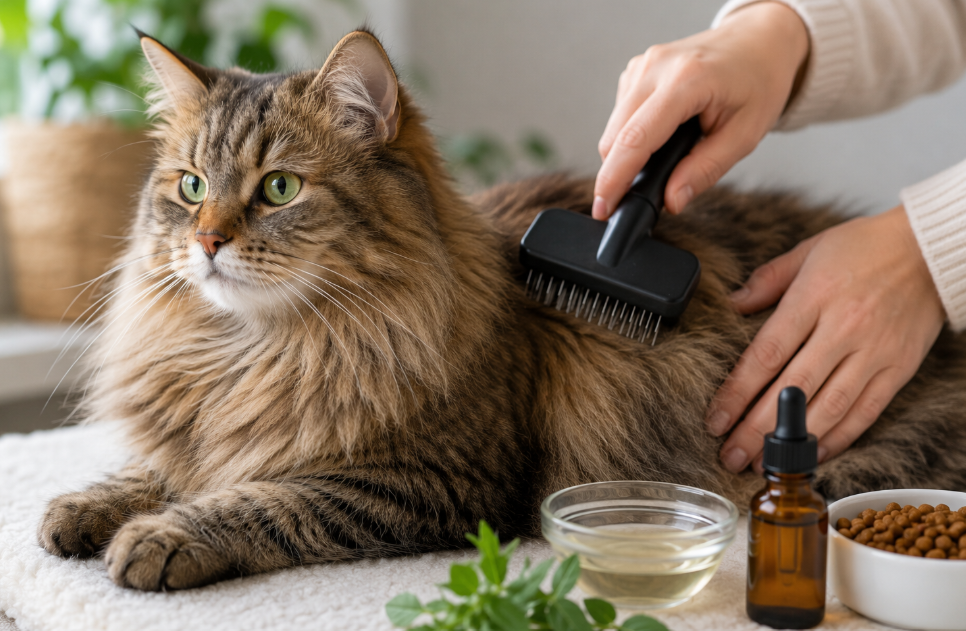
A healthy cat coat and skin condition often reflects a cat’s overall wellness. Soft fur, healthy skin, and steady grooming habits usually signal that a cat receives proper nutrition and balanced care. On the other hand, dry skin, dull fur, excessive shedding, or constant scratching may indicate underlying issues that need attention.
Many cat owners focus mainly on feeding and litter care while overlooking the importance of skin and coat health. However, the condition of a cat’s fur often provides valuable clues about hydration, digestion, allergies, stress levels, and even internal health problems. Because cats spend a large part of their day grooming, changes in their coat usually become noticeable fairly quickly.
Fortunately, improving coat condition often involves simple daily habits rather than complicated treatments. Proper nutrition, regular grooming, hydration, and stress management all contribute to healthier skin and softer fur over time. In addition, small routine adjustments can make a significant difference in how a cat looks and feels.
Understanding how to support cat coat and skin health naturally helps owners improve comfort, reduce irritation, and maintain long-term wellness for their pets.
Why Coat and Skin Health Matter So Much
A cat’s skin acts as an important protective barrier. It helps regulate body temperature, protects against infection, and supports overall comfort. Meanwhile, the coat shields the skin while helping maintain warmth and cleanliness.
When skin becomes unhealthy, cats often experience discomfort quickly. Dryness, itching, flaking, and irritation may lead to excessive scratching or overgrooming. In some cases, damaged skin can even increase infection risk if bacteria enter through irritated areas.
Coat quality also affects emotional well-being. Cats naturally take pride in grooming themselves, so unhealthy fur may interfere with normal behavior and comfort. Matted fur, excessive shedding, or greasy texture sometimes create frustration and stress.
Many internal health problems appear first through coat changes. Poor nutrition, dehydration, digestive imbalance, allergies, or illness may all affect fur texture and shine. Because of this, owners should pay close attention to sudden changes in appearance or grooming habits.
Seasonal shedding is normal for most cats. However, excessive hair loss, bald patches, or flaky skin may signal deeper concerns requiring attention.
Maintaining healthy cat coat and skin condition supports not only appearance but also physical comfort, hygiene, and overall health.
Nutrition and Its Impact on Fur Quality
Nutrition remains one of the biggest factors affecting feline skin and coat condition. Cats require balanced diets rich in protein, healthy fats, vitamins, and minerals to maintain strong skin and glossy fur.
High-quality animal protein is especially important. Since cats are obligate carnivores, their bodies rely heavily on animal-based nutrients for tissue repair, muscle support, and coat maintenance. Low-protein diets may contribute to dull or brittle fur over time.
Healthy fats also play a major role in skin moisture and coat softness. Omega-3 and omega-6 fatty acids help support healthy skin barriers while reducing dryness and irritation. Foods containing fish oil or other balanced fatty acid sources often improve coat texture noticeably.
Hydration matters as well. Cats that consume mostly dry food sometimes receive less moisture than they need, which may contribute to dry skin. Wet food often supports hydration while helping maintain softer fur and healthier skin condition.
Vitamin deficiencies occasionally affect fur quality too. Nutrients such as vitamin E, zinc, and biotin help support skin repair and coat growth. However, supplements should only be used carefully because excessive amounts may create health risks.
Balanced nutrition supports stronger cat coat and skin health from the inside out, making diet one of the most effective long-term improvements owners can make.
How Grooming Supports Healthier Fur
Regular grooming does much more than improve appearance. Brushing helps remove loose fur, distribute natural oils, reduce shedding, and stimulate healthy circulation beneath the skin.
Long-haired cats often require daily brushing because tangles and mats develop quickly. However, short-haired cats benefit from grooming too. Even brief brushing sessions help reduce hair buildup while supporting healthier coat texture.
Grooming also allows owners to inspect the skin closely. During brushing, it becomes easier to notice fleas, bumps, bald spots, dryness, or irritation before problems become more severe.
Many cats enjoy gentle brushing because it mimics social grooming behavior. In addition, regular grooming sessions strengthen bonding between cats and owners while helping cats relax.
Choosing the right brush matters as well. Soft-bristle brushes work well for sensitive cats, while de-shedding tools help remove excess undercoat during shedding seasons.
Bathing usually remains unnecessary for healthy cats because they groom themselves effectively. However, certain medical conditions or severe dirt buildup may occasionally require bathing with cat-safe shampoo.
Consistent grooming remains one of the easiest ways to improve cat coat and skin condition while reducing mats, shedding, and discomfort.
The Connection Between Hydration and Skin Health
Many owners underestimate how strongly hydration affects skin and fur condition. Cats naturally evolved from desert animals and often drink less water than expected. Because of this, mild dehydration sometimes develops gradually without obvious symptoms.
Dry skin commonly appears when moisture intake remains too low. Fur may also lose softness and become rough or brittle over time. Improving hydration often helps restore healthier texture and appearance.
Wet food provides one of the easiest ways to increase moisture intake naturally. Since canned food contains substantial water content, many cats receive better hydration support through mixed feeding routines.
Fresh water availability remains extremely important too. Some cats prefer running water because it feels fresher and cleaner. Pet fountains may encourage increased drinking by keeping water moving continuously.
Bowl placement can influence drinking habits as well. Cats often prefer water stations away from litter boxes and noisy areas. Wide bowls also help because some cats dislike their whiskers touching narrow edges.
Adding small amounts of water to wet food may improve hydration further for cats recovering from illness or experiencing dry skin.
Supporting hydration helps maintain healthier cat coat and skin condition while benefiting digestion, kidney health, and overall wellness.
Common Causes of Skin Irritation in Cats
Several issues may trigger skin irritation or poor coat condition in cats. Identifying the underlying cause helps owners choose the most effective solution.
Allergies remain one of the most common reasons for skin problems. Cats may react to food ingredients, environmental allergens, flea bites, or cleaning products. Symptoms often include itching, redness, excessive grooming, or hair loss.
Parasites also create significant irritation. Fleas, mites, and ticks may trigger intense scratching and inflammation. Even indoor cats sometimes encounter parasites through other pets or contaminated items.
Stress can affect grooming behavior too. Some cats overgroom when anxious, leading to bald patches or irritated skin. Changes in routine, loud environments, or multi-pet tension may contribute to stress-related grooming.
Poor nutrition sometimes weakens skin health as well. Diets lacking essential nutrients may reduce natural oil production and contribute to dry or flaky skin.
Seasonal changes occasionally affect coat condition. Indoor heating during colder months may dry the air and contribute to skin irritation in sensitive cats.
Certain medical conditions may also affect fur quality. Hormonal imbalances, infections, and digestive disorders sometimes appear first through skin or coat changes.
Understanding these triggers helps owners protect cat coat and skin health more effectively while responding quickly when symptoms appear.
Reducing Shedding Naturally
Shedding is completely normal for most cats, especially during seasonal transitions. However, excessive shedding may create frustration for owners while sometimes signaling deeper health concerns.
Regular brushing remains the best way to reduce loose fur. Brushing removes dead hair before it spreads around the home or forms hairballs during self-grooming.
Hydration and nutrition also influence shedding levels. Cats with balanced diets and proper moisture intake often maintain healthier coat cycles with less excessive hair loss.
Stress reduction may help as well. Cats experiencing anxiety sometimes groom excessively, which increases visible shedding significantly.
Maintaining clean indoor air can support skin comfort too. Dry air occasionally worsens shedding and irritation, especially during colder seasons. Humidifiers may improve comfort for sensitive cats in dry environments.
Some owners overbathe cats while trying to reduce fur loss. However, excessive bathing may strip natural oils and worsen dryness. Gentle grooming usually works far better than frequent washing.
Seasonal shedding typically improves naturally with consistent grooming and balanced care routines. Supporting cat coat and skin health holistically often reduces shedding over time without requiring drastic treatments.
How Stress Affects Fur and Grooming Habits
Cats are highly sensitive animals, and emotional stress frequently affects physical appearance. Many stressed cats develop grooming changes that directly impact skin and fur condition.
Some cats begin overgrooming when anxious. Excessive licking may create bald patches, skin irritation, or thinning fur. In severe cases, cats may even develop sores from constant grooming behavior.
Other cats reduce grooming altogether during stressful periods. Their coats may appear greasy, tangled, or dull because self-cleaning routines decline.
Environmental stability plays an important role in emotional wellness. Cats generally prefer predictable routines, quiet resting areas, and safe spaces where they feel secure.
Multi-cat households sometimes create tension as well. Competition over food, territory, or litter boxes may increase stress levels and affect grooming behavior.
Interactive play helps relieve stress naturally. Daily activity sessions encourage mental stimulation and allow cats to release nervous energy in healthy ways.
Owners should also pay attention to sudden behavioral changes. Increased hiding, irritability, or appetite shifts may accompany grooming problems when stress becomes significant.
Managing emotional well-being supports healthier cat coat and skin condition because physical and emotional health remain closely connected.
When to Seek Veterinary Help
While many coat issues improve with better nutrition and grooming, some symptoms require professional veterinary evaluation. Persistent irritation or sudden coat changes may indicate underlying medical conditions that need treatment.
Severe itching, open sores, or widespread hair loss should never be ignored. These symptoms sometimes signal infections, allergies, parasites, or autoimmune conditions requiring medical care.
Strong odor, greasy fur, or thick skin flakes may also indicate infection or underlying disease. Veterinary examinations help identify the exact cause more accurately than home treatments alone.
Rapid changes in coat condition often deserve attention too. Sudden dullness, thinning fur, or excessive shedding may reveal hormonal imbalance, digestive problems, or nutritional deficiencies.
Weight loss, appetite changes, or lethargy alongside skin issues increase concern further because these symptoms sometimes indicate internal illness.
Veterinarians may recommend allergy testing, parasite prevention, bloodwork, or specialized diets depending on the situation. Early diagnosis often improves treatment success significantly.
Protecting cat coat and skin health sometimes requires professional support, especially when symptoms persist or worsen despite routine care.
Creating a Long-Term Coat Care Routine
Healthy fur and skin usually result from consistent daily habits rather than quick fixes. Building sustainable routines helps maintain long-term improvements while reducing future problems.
Balanced nutrition should remain the foundation of coat care. High-quality protein, healthy fats, and hydration all support stronger skin barriers and healthier fur growth over time.
Routine brushing prevents mats, reduces shedding, and helps distribute natural oils evenly throughout the coat. Even short grooming sessions several times weekly create noticeable benefits.
Hydration support remains equally important. Wet food, clean water stations, and encouraging regular drinking habits all contribute to better skin condition.
Environmental comfort matters too. Calm routines, stress reduction, and clean living spaces help maintain healthier grooming behavior naturally.
Regular veterinary checkups allow owners to detect health concerns early before skin or coat problems become severe. Preventive care often keeps minor issues from developing into more complicated conditions.
Consistency creates the best results. Small habits maintained daily usually improve cat coat and skin condition far more effectively than occasional intensive treatments.
Conclusion
Healthy skin and fur reflect far more than appearance alone. Coat condition often provides important insight into a cat’s nutrition, hydration, emotional well-being, and overall health. Because of this, maintaining strong coat care habits supports comfort and wellness throughout a cat’s life.
Balanced nutrition, regular grooming, hydration, and stress management all work together to improve fur softness, reduce irritation, and maintain healthier skin. In addition, attentive observation allows owners to recognize problems early before discomfort becomes severe.
Most coat improvements happen gradually rather than overnight. However, consistent care usually produces noticeable results over time. Softer fur, reduced shedding, healthier skin, and more relaxed grooming habits often follow simple routine adjustments.
Supporting cat coat and skin health naturally helps cats feel more comfortable while improving overall quality of life. With patience and proper care, owners can maintain healthier, shinier coats that reflect long-term wellness from the inside out.
FAQ
1. What foods help improve feline fur quality?
High-protein foods with healthy fats and omega fatty acids often support softer fur and healthier skin.
2. How often should cats be brushed?
Most cats benefit from brushing several times weekly, while long-haired breeds may require daily grooming.
3. Why does my cat have dry flaky skin?
Dry skin may result from dehydration, allergies, poor nutrition, parasites, or environmental dryness.
4. Can stress cause hair loss in cats?
Yes, stressed cats sometimes overgroom, which may lead to thinning fur or bald patches.
5. When should I worry about excessive shedding?
Severe shedding combined with itching, bald spots, or skin irritation may require veterinary evaluation.


