
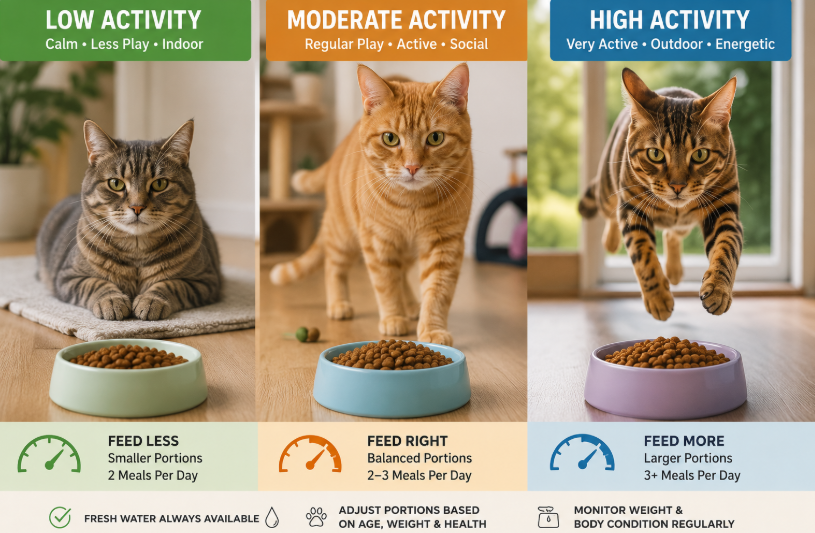
Providing the right nutrition involves more than choosing a high-quality food. A successful feeding plan considers how much energy a cat uses each day, how active it is, and the environment in which it lives. Understanding cat feeding by lifestyle helps owners make smarter decisions about portion sizes, feeding frequency, and food selection. Because no two cats live exactly the same way, their nutritional needs often differ significantly.
Some cats spend their days climbing, running, and exploring, while others enjoy a quieter indoor lifestyle. Age, health, body condition, and personality also influence calorie requirements. As a result, feeding every cat the same amount can lead to unwanted weight gain or weight loss over time.
Many owners focus only on food quality and overlook lifestyle factors. However, activity level plays a major role in determining how many calories a cat needs. Feeding too much can contribute to obesity, while feeding too little may leave a cat lacking energy and essential nutrients.
Fortunately, tailoring nutrition to lifestyle does not have to be complicated. With careful observation and regular adjustments, owners can create feeding routines that support long-term health and overall well-being.
Why Lifestyle Matters When Feeding Cats
The concept of cat feeding by lifestyle is based on a simple principle: energy intake should match energy expenditure. Cats that burn more calories generally require more food, while less active cats often need fewer calories to maintain a healthy weight.
Lifestyle influences many aspects of feline health. Indoor cats typically have different activity patterns than outdoor cats. Likewise, working cats on farms or properties may expend far more energy than pets living entirely indoors.
Environmental enrichment also affects calorie use. Cats that engage in frequent play sessions, climb cat trees, chase toys, and explore large spaces often burn more calories throughout the day. Meanwhile, cats that spend much of their time resting require fewer calories.
Stress levels can influence nutritional needs as well. Some cats eat less during stressful periods, while others consume more food than usual. Consequently, lifestyle extends beyond physical activity and includes emotional and environmental factors.
Recognizing these differences allows owners to move beyond generic feeding recommendations and create plans tailored to individual needs.
Feeding Indoor Cats Effectively
Indoor cats represent a large portion of the pet population. While living indoors offers many safety benefits, it often results in lower activity levels. Therefore, proper nutrition becomes especially important.
A thoughtful approach to cat feeding by lifestyle helps prevent obesity in indoor cats. Because these cats typically burn fewer calories, overfeeding can quickly lead to weight gain. Even small calorie surpluses can accumulate over time.
Portion control is one of the most effective tools available. Measuring food accurately rather than estimating serving sizes helps maintain consistency. Additionally, scheduled meals often work better than unlimited free-feeding because they allow owners to monitor intake more closely.
Interactive feeding methods can also be beneficial. Puzzle feeders encourage movement and mental stimulation while slowing eating speed. As a result, indoor cats remain more engaged during mealtime.
Play sessions should complement feeding routines. Regular activity helps increase calorie expenditure and supports healthy weight management. Even ten to fifteen minutes of daily interactive play can make a meaningful difference.
By balancing nutrition and activity, owners can help indoor cats maintain healthy body condition throughout life.
Meeting the Needs of Outdoor Cats
Outdoor cats often have very different nutritional requirements. They typically spend more time walking, climbing, hunting, and exploring. Consequently, they may require additional calories to support their activity levels.
Successful cat feeding by lifestyle for outdoor cats begins with recognizing increased energy demands. These cats often burn significantly more calories than indoor pets, particularly during periods of high activity.
Weather conditions can also influence nutritional needs. During colder months, outdoor cats may require additional energy to maintain body temperature. Therefore, seasonal adjustments sometimes become necessary.
Monitoring body condition remains important. Although outdoor cats are generally more active, they can still experience weight fluctuations. Regular assessments help ensure calorie intake remains appropriate.
Hydration deserves attention as well. Outdoor cats may spend long periods away from home, making access to clean water especially important. Wet food can contribute additional moisture and support hydration needs.
Owners should remember that every outdoor cat is different. Some spend hours exploring, while others remain close to home. Careful observation helps determine the most appropriate feeding strategy.
How Activity Levels Influence Calorie Requirements
One of the most important aspects of cat feeding by lifestyle is understanding how activity affects calorie needs. Active cats use more energy throughout the day and often require increased nutritional support.
Highly active cats may participate in frequent play, exploration, climbing, and social interaction. These activities increase calorie expenditure and may justify larger food portions or higher-calorie diets.
Conversely, sedentary cats often spend much of the day sleeping or resting. Because energy expenditure remains lower, excessive calorie intake can lead to gradual weight gain.
The challenge is that activity levels can change over time. A cat that was highly active as a young adult may become less energetic during middle age. Consequently, feeding plans should evolve as behavior changes.
Regular weight monitoring helps determine whether calorie intake matches activity levels appropriately. If weight increases despite stable feeding amounts, reduced activity may be contributing. Likewise, unexpected weight loss may indicate increased energy demands or underlying health concerns.
Matching calorie intake to activity helps maintain healthy body condition while supporting overall wellness.
Feeding Multi-Cat Households
Managing nutrition becomes more complicated when multiple cats share a home. Individual cats often have different activity levels, ages, and nutritional requirements.
A personalized approach to cat feeding by lifestyle is especially valuable in multi-cat households. One cat may be highly active and lean, while another prefers resting and requires fewer calories.
Separate feeding stations can help ensure each cat receives appropriate portions. Without individual monitoring, food sharing may lead to overfeeding some cats and underfeeding others.
Microchip feeders and supervised mealtimes provide additional control. These tools help prevent food competition while supporting individualized nutrition plans.
Observing behavior during feeding sessions can reveal important information. Some cats eat quickly, while others prefer taking their time. Understanding these patterns helps owners create more effective routines.
By recognizing individual differences rather than treating all cats identically, owners can support healthier outcomes across the entire household.
Adjusting Nutrition During Different Life Stages
Age significantly influences nutritional needs. Therefore, effective cat feeding by lifestyle should account for both activity level and life stage.
Kittens require more calories relative to body weight because they are growing rapidly. Their active behavior and developmental needs demand nutrient-dense foods that support healthy growth.
Adult cats generally require balanced maintenance diets designed to support daily activity without promoting excess weight gain. Activity level becomes a major factor during this stage because calorie needs vary widely among individuals.
Senior cats often experience reduced activity levels. Consequently, calorie requirements may decrease. However, some older cats lose weight due to medical conditions or changes in metabolism. Therefore, regular monitoring becomes increasingly important.
Life stage transitions provide opportunities to reassess feeding routines. Adjusting nutrition proactively helps prevent common issues such as obesity and unintended weight loss.
When age-related health concerns arise, veterinary guidance can help ensure dietary adjustments support both nutritional needs and medical management.
Recognizing Signs That Feeding Needs Adjustment
Even carefully planned feeding routines require periodic review. Monitoring health indicators helps determine whether nutritional strategies remain effective.
One goal of cat feeding by lifestyle is maintaining healthy body condition over time. Therefore, changes in weight often provide the clearest signal that adjustments may be necessary.
Weight gain may indicate excessive calorie intake relative to activity level. Conversely, weight loss can suggest insufficient calories, increased activity, or underlying health concerns.
Energy levels offer additional clues. Cats receiving appropriate nutrition generally maintain consistent energy and normal daily behavior. Reduced activity, excessive hunger, or noticeable lethargy may indicate a need for reassessment.
Coat condition also reflects overall health. A healthy coat often signals adequate nutrition, while dullness or excessive shedding may warrant closer evaluation.
Appetite changes deserve attention as well. Sudden increases or decreases in food consumption can indicate both behavioral and medical issues.
By observing these indicators regularly, owners can identify concerns before they become significant problems.
Creating a Long-Term Feeding Strategy
Long-term success depends on flexibility and consistency. While general guidelines provide a useful starting point, individual needs often require ongoing adjustments.
A sustainable approach to cat feeding by lifestyle begins with understanding your cat’s habits. Observe activity patterns, monitor weight regularly, and evaluate body condition frequently. These observations provide valuable information for decision-making.
Consistency remains important. Feeding at predictable times supports routine and allows owners to monitor appetite effectively. At the same time, flexibility is necessary because needs can change over time.
Quality nutrition forms the foundation of any feeding strategy. Regardless of lifestyle, cats benefit from balanced diets rich in animal-based proteins and essential nutrients.
Regular veterinary examinations complement home monitoring efforts. Professional evaluations help identify subtle changes and provide guidance when adjustments become necessary.
Ultimately, successful feeding plans evolve alongside the cat. By remaining attentive and willing to adapt, owners can support lifelong health and well-being.
Conclusion
Understanding cat feeding by lifestyle allows owners to move beyond one-size-fits-all nutrition strategies and create feeding plans that truly match individual needs. Activity level, environment, age, and daily habits all influence how many calories a cat requires. By considering these factors, owners can support healthy weight management, maintain energy levels, and promote long-term wellness.
Whether caring for an indoor companion, an adventurous outdoor explorer, or a multi-cat household, personalized nutrition provides important benefits. Regular monitoring, thoughtful adjustments, and high-quality food choices help ensure that calorie intake remains aligned with energy expenditure. Over time, this balanced approach contributes to better health, improved quality of life, and a happier feline companion.
FAQ
1. Do indoor cats need fewer calories than outdoor cats?
Yes. Indoor cats are often less active and typically require fewer calories to maintain a healthy weight.
2. How can I tell if my cat is getting too much food?
Weight gain, loss of waist definition, and reduced mobility may indicate excessive calorie intake.
3. Should active cats eat more frequently?
Some highly active cats benefit from additional meals or slightly larger portions to support their energy needs.
4. How often should I adjust my cat’s feeding plan?
Review nutrition regularly and make adjustments whenever activity levels, weight, or health conditions change.
5. Are puzzle feeders helpful for less active cats?
Yes. Puzzle feeders encourage movement, provide mental stimulation, and can help prevent boredom-related overeating.


