
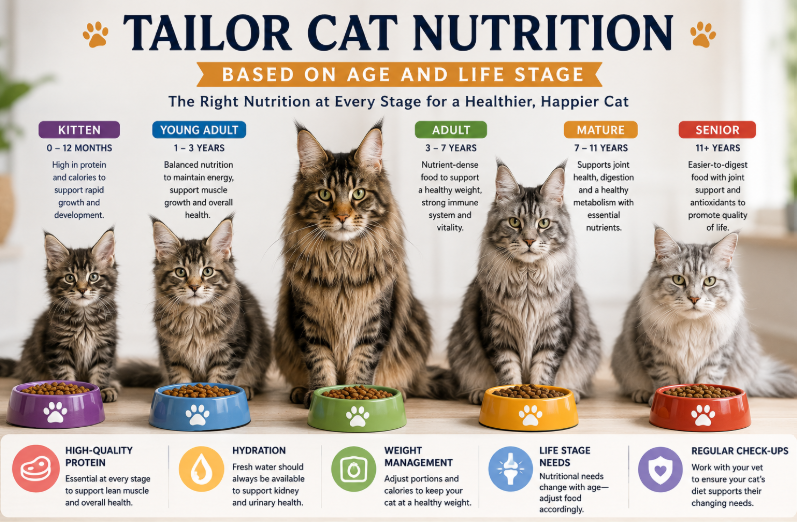
Providing the right nutrition is one of the most important responsibilities of cat ownership. While many people focus on buying quality food, they often overlook the fact that nutritional needs change over time. Understanding cat nutrition by age helps ensure that your feline companion receives the nutrients required for healthy growth, development, maintenance, and aging. A diet that works perfectly for a playful kitten may not be appropriate for a mature adult or senior cat.
Cats experience several life stages, and each one brings unique nutritional requirements. Growth rates, activity levels, metabolism, and health concerns all change as cats age. Therefore, adjusting food choices to match those changes can have a significant impact on long-term health. Proper nutrition supports healthy muscles, strong bones, a healthy immune system, and optimal organ function throughout life.
Many health problems can be influenced by diet. Obesity, diabetes, digestive issues, and kidney concerns often become more manageable when nutrition aligns with a cat’s current needs. Consequently, learning how to adapt feeding practices over time is an investment in your cat’s future well-being.
A thoughtful approach to nutrition does more than provide calories. It supports overall quality of life and helps cats remain active, comfortable, and healthy at every age.
Why Nutritional Needs Change Throughout Life
The concept of cat nutrition by age is based on the reality that a cat’s body changes continuously. Growth and development require different nutrients than maintenance and aging. As metabolism shifts and activity levels fluctuate, dietary adjustments become necessary.
Young kittens grow rapidly and need higher levels of protein, fat, vitamins, and minerals. Their bodies are building muscles, bones, and organs at an impressive rate. As a result, they require nutrient-dense foods that support development.
Adult cats enter a maintenance phase. Growth slows, and nutritional goals focus on sustaining healthy body condition and supporting daily activity. During this period, balanced nutrition becomes the priority.
Senior cats often experience changes in metabolism, muscle mass, and organ function. Consequently, nutrient requirements may shift once again. Some older cats need fewer calories to prevent weight gain, while others require additional nutritional support due to medical conditions.
Environmental factors also influence nutritional needs. Indoor cats may require different calorie levels than highly active outdoor cats. Likewise, reproductive status, stress levels, and health conditions can affect dietary requirements.
Recognizing these changes allows owners to make informed decisions rather than relying on the same feeding strategy for a cat’s entire life.
Supporting Healthy Growth During Kittenhood
Kittenhood is one of the most important periods for nutrition. During the first year of life, a kitten’s body develops rapidly, making proper nutrition essential for long-term health.
A strong cat nutrition by age plan begins with feeding foods specifically formulated for kittens. These products contain higher levels of protein and fat to support growth and energy needs. Additionally, they provide important nutrients such as calcium and phosphorus, which help build strong bones and teeth.
Kittens typically require multiple meals throughout the day because their stomachs are small and their energy demands are high. Frequent feeding supports steady growth and helps maintain stable energy levels.
Protein quality is especially important during this stage. Animal-based proteins provide essential amino acids needed for muscle development and overall health. Taurine, an amino acid that cats cannot produce sufficiently on their own, must be supplied through food.
Hydration also deserves attention. Wet food can help increase moisture intake while introducing kittens to different textures. Furthermore, offering both wet and dry foods may encourage dietary flexibility later in life.
Proper nutrition during kittenhood establishes the foundation for healthy adulthood. Therefore, this stage should never be overlooked.
Maintaining Health During the Adult Years
Once growth is complete, nutritional priorities shift toward maintaining ideal body condition and supporting long-term wellness. Adult cats generally require fewer calories than kittens, although individual needs vary significantly.
Understanding cat nutrition by age helps owners avoid common mistakes during adulthood. Overfeeding is one of the most frequent challenges because calorie requirements often decrease after the growth phase ends.
Adult cat foods are designed to provide balanced nutrition without the excess calories needed during kittenhood. High-quality protein remains essential because it supports muscle maintenance and healthy body composition. Healthy fats continue to provide energy while supporting skin and coat condition.
Portion control becomes increasingly important during this stage. Many indoor cats lead relatively sedentary lifestyles, which means excess calories can quickly contribute to weight gain. Consequently, regular weight monitoring helps ensure nutritional intake remains appropriate.
Meal routines also contribute to overall health. Consistent feeding schedules support digestion and help prevent overeating. Additionally, scheduled meals allow owners to monitor appetite changes that may indicate health concerns.
The adult years offer an opportunity to establish healthy habits that support wellness throughout the remainder of a cat’s life.
Addressing Special Needs During Middle Age
Middle-aged cats often experience subtle changes that affect nutritional requirements. Activity levels may decline slightly, and metabolism can begin slowing. Although these changes are gradual, they deserve attention.
A successful cat nutrition by age strategy includes periodic evaluations of body condition and dietary needs. Cats that remain highly active may continue thriving on their current feeding plans, while less active individuals may require adjustments.
Weight management becomes particularly important during middle age. Excess weight increases the risk of arthritis, diabetes, and cardiovascular concerns. Therefore, maintaining an appropriate calorie balance supports both mobility and overall health.
Digestive sensitivity may also develop. Some cats benefit from foods containing easily digestible ingredients or added fiber. These modifications can support digestive comfort while promoting regular bowel function.
Routine veterinary examinations become increasingly valuable during this stage. Regular assessments help identify changes that may require nutritional modifications. Early intervention often produces better outcomes than waiting until problems become more advanced.
By remaining attentive to evolving needs, owners can help middle-aged cats maintain excellent health and quality of life.
Meeting the Needs of Senior Cats
Senior cats often require more individualized nutritional care. While some remain active and healthy well into their later years, others develop age-related conditions that influence dietary requirements.
The importance of cat nutrition by age becomes especially clear during the senior years. Aging can affect digestion, muscle mass, appetite, and kidney function. Consequently, nutrition must adapt to support these changes.
Protein remains important for older cats because it helps preserve lean muscle tissue. However, the quality of that protein becomes increasingly significant. Highly digestible animal proteins often provide the best support.
Some senior cats experience reduced appetite. In these situations, highly palatable foods may encourage adequate food intake. Others gain weight due to reduced activity levels and may require calorie adjustments.
Hydration becomes even more critical as cats age. Many senior cats benefit from increased wet food consumption because it contributes additional moisture. This support can be especially valuable for urinary and kidney health.
Dental health may also influence food choices. Cats experiencing dental discomfort often prefer softer textures that are easier to chew. Therefore, monitoring eating behavior can provide clues about changing needs.
Thoughtful nutritional adjustments help older cats remain comfortable, active, and engaged throughout their senior years.
How Lifestyle Influences Nutrition
Although age is important, lifestyle factors also play a significant role in dietary planning. Therefore, the best approach combines life stage considerations with an understanding of individual circumstances.
An effective cat nutrition by age plan accounts for activity level, environment, and daily routines. Indoor cats generally burn fewer calories than outdoor cats. Consequently, their diets often require careful portion control.
Multi-cat households present additional challenges. Some cats eat too quickly, while others may have difficulty accessing food. Individual feeding strategies help ensure every cat receives appropriate nutrition.
Stress can also influence nutritional needs. Cats experiencing environmental changes or anxiety may alter their eating habits. Monitoring behavior helps owners recognize these changes before they affect health significantly.
Spayed and neutered cats frequently experience shifts in metabolism as well. Adjusting calorie intake after these procedures often helps maintain healthy body weight.
By considering both age and lifestyle, owners can create feeding plans that support overall wellness more effectively.
Choosing Quality Food for Every Life Stage
Food quality remains important regardless of age. While nutritional requirements change over time, certain principles remain consistent throughout life.
A strong cat nutrition by age strategy emphasizes high-quality animal proteins, balanced nutrients, and appropriate calorie levels. Ingredient labels provide valuable insight into food quality. Named animal proteins such as chicken, turkey, salmon, or beef are generally preferred.
Artificial additives and excessive fillers may contribute little nutritional value. Therefore, simpler ingredient lists often make product evaluation easier.
Nutritional adequacy statements also help identify whether a food is formulated for kittens, adults, seniors, or all life stages. Selecting products that match a cat’s current stage supports more precise nutrition.
Veterinary guidance can be particularly valuable when health conditions are present. Specialized diets may provide benefits for cats with kidney disease, food sensitivities, diabetes, or digestive concerns.
Ultimately, quality nutrition depends on both the ingredients used and the suitability of the formula for the individual cat.
Making Smooth Dietary Transitions
As cats move between life stages, dietary changes should occur gradually. Abrupt transitions can upset digestion and create unnecessary stress.
The success of cat nutrition by age often depends on how well owners manage these transitions. Mixing small amounts of new food with the current diet allows the digestive system to adapt comfortably. Gradually increasing the proportion of new food over one to two weeks typically works well.
Observation is important during this process. Changes in appetite, stool quality, or energy levels may indicate that adjustments are needed. Most cats adapt smoothly when transitions occur slowly and consistently.
Patience helps ensure long-term success. Although changing diets requires effort, the benefits often include improved health, better weight management, and increased comfort.
Each life stage presents new opportunities to support wellness through nutrition. By remaining flexible and attentive, owners can provide the care their cats need as they grow and age.
Conclusion
Understanding cat nutrition by age is essential for supporting lifelong health and wellness. Nutritional needs evolve from kittenhood through adulthood and into the senior years. By recognizing these changes and adapting feeding practices accordingly, owners can help their cats maintain healthy body weight, strong muscles, proper organ function, and a high quality of life.
The best nutritional strategies combine life stage considerations with individual factors such as activity level, health status, and lifestyle. Regular evaluations, high-quality food choices, and gradual dietary adjustments create a strong foundation for long-term wellness. When nutrition aligns with age and changing needs, cats are better equipped to thrive throughout every stage of life.
FAQ
1. How often should a kitten eat each day?
Most kittens benefit from three to four small meals daily to support their rapid growth and high energy needs.
2. When should cats transition from kitten food to adult food?
Most cats transition around one year of age, although larger breeds may benefit from extended kitten nutrition.
3. Do senior cats need different food than adult cats?
Many older cats benefit from diets designed to support aging bodies, muscle maintenance, and hydration needs.
4. Can indoor and outdoor cats eat the same diet?
They can, but calorie requirements often differ because outdoor cats typically burn more energy.
5. What is the most important nutrient for feline health?
High-quality animal protein is one of the most important nutritional components because cats rely heavily on it for overall health and body function.


