
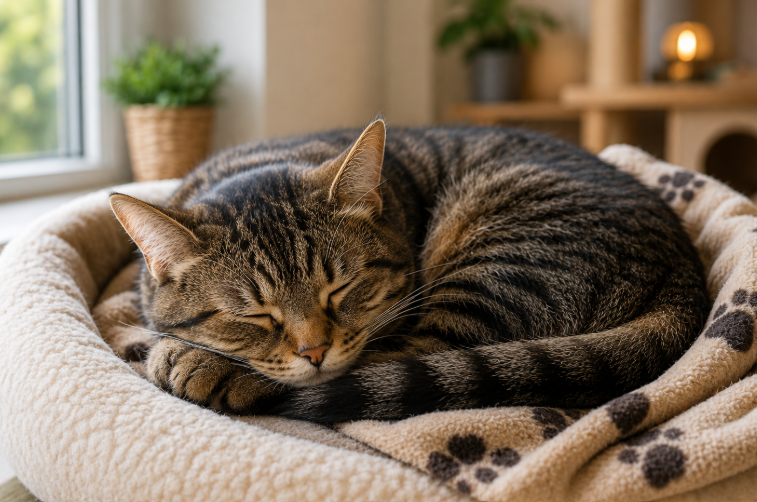
Cats spend a large portion of their lives sleeping, yet many owners underestimate how important rest truly is for feline wellness. Healthy sleep supports physical recovery, emotional balance, immune strength, and daily energy levels. When cat sleep health improves, owners often notice positive changes in mood, appetite, mobility, and behavior. Rest allows the body and mind to recover properly, making sleep one of the most important parts of a cat’s overall routine.
Although cats naturally sleep longer than humans, their rest patterns still depend heavily on comfort, environment, and lifestyle. Stress, noise, poor routines, illness, and lack of safe sleeping spaces may all interfere with quality sleep. Consequently, interrupted rest can affect energy levels and long-term health over time.
Sleep also influences mental well-being. Cats that rest comfortably usually feel more secure and relaxed throughout the day. In contrast, poor sleep may contribute to irritability, anxiety, or reduced activity. Fortunately, simple changes at home often help cats enjoy deeper and healthier rest naturally.
Why Sleep Matters So Much For Cats
Cats evolved as hunters that conserve energy between periods of activity. Therefore, sleeping for long hours is completely normal behavior. However, quality matters just as much as quantity when it comes to cat sleep health.
During sleep, the body repairs muscles, regulates hormones, and supports immune function. Additionally, the brain processes stimulation and emotional experiences during rest periods. Without proper sleep, cats may become physically exhausted or emotionally stressed.
Kittens and senior cats usually sleep the most because their bodies require extra recovery time. Growing kittens use sleep to support development, while older cats rely on rest to maintain comfort and energy.
Poor sleep can contribute to:
- Low energy levels
- Increased irritability
- Reduced appetite
- Weakened immunity
- Less playful behavior
- Stress-related habits
- Poor grooming
- Reduced mobility
Because cats naturally hide discomfort, sleep changes may become one of the earliest signs of stress or illness. Owners should pay attention to sudden shifts in sleeping habits, especially in older cats.
How Environment Affects Feline Rest
The environment strongly influences cat sleep health. Cats feel safest when they have quiet, secure, and comfortable spaces for resting. Loud noise, constant interruptions, or chaotic surroundings often reduce sleep quality.
Most cats prefer elevated or enclosed sleeping areas because these locations feel protected. Cat trees, covered beds, blankets, and window perches commonly provide a sense of safety and comfort. Additionally, warm sleeping spots often attract cats because they naturally seek heat for relaxation.
Location matters as well. Sleeping areas placed near loud televisions, heavy foot traffic, or barking dogs may create stress and interrupted rest. Therefore, quiet corners of the home usually work best.
Lighting can influence sleep patterns too. Soft natural lighting during the day and calmer evening environments help maintain healthy rhythms. While cats can sleep almost anywhere, deeper rest often happens in peaceful surroundings.
Owners hoping to improve cat sleep health should also respect resting time. Constant waking or handling may increase anxiety and reduce relaxation over time.
The Connection Between Sleep And Energy
Rest directly affects how energetic cats feel during waking hours. Cats that sleep comfortably usually appear more playful, alert, and physically active. In contrast, poor rest may cause sluggish behavior and reduced interest in exercise.
Energy balance depends on recovery. During sleep, muscles repair and the nervous system resets after activity. Therefore, active cats especially need uninterrupted rest to maintain healthy stamina.
Interactive play sessions during the day can also improve nighttime sleep quality. Cats that receive mental and physical stimulation often settle more comfortably afterward. Consequently, structured routines help balance both energy and relaxation.
Cat sleep health becomes especially important for indoor cats because they rely heavily on environmental enrichment. Without stimulation, boredom may disrupt natural activity and sleep patterns.
Healthy sleep often supports:
- Better mood
- Improved mobility
- Stronger immunity
- Increased playfulness
- Sharper mental focus
- Healthier digestion
Cats with balanced sleep routines generally adapt better to daily changes and stress. Therefore, proper rest supports both physical and emotional wellness simultaneously.
Why Older Cats Need Better Sleep Support
Senior cats often experience sleep changes as they age. Joint stiffness, reduced vision, hearing changes, and medical conditions may affect comfort during rest. Because of this, cat sleep health becomes increasingly important in older felines.
Arthritis may make it difficult for senior cats to climb into favorite sleeping areas. Therefore, soft and accessible beds help reduce strain on aging joints. Heated beds or warm blankets may also improve comfort during colder months.
Older cats sometimes wake more frequently during the night as well. Additionally, cognitive changes may affect sleep cycles in some seniors. Calm routines and familiar sleeping spaces often help reduce confusion and stress.
Hydration and nutrition influence sleep quality too. Cats that feel physically uncomfortable due to dehydration or digestive upset may struggle to rest properly.
Owners should monitor significant sleep pattern changes carefully. Excessive restlessness, vocalization, or sleeping far more than usual may indicate underlying health concerns requiring veterinary attention.
Stress Can Disrupt Healthy Sleep
Stress affects feline sleep just as it affects humans. Cats experiencing anxiety may struggle to relax deeply, even if they appear tired. Household tension, loud noises, new pets, or sudden routine changes often interfere with cat sleep health.
Anxious cats may hide more, sleep lightly, or wake frequently throughout the day. Additionally, stress sometimes increases nighttime activity because cats remain more alert to their surroundings.
Creating predictable routines helps reduce anxiety naturally. Feeding, playtime, and quiet periods scheduled consistently each day create a stronger sense of security.
Safe spaces also matter during stressful situations. Every cat should have access to quiet areas where they can retreat without interruption. Enclosed beds, shelves, or cozy blankets often help cats feel calmer.
Calming pheromone diffusers may benefit especially nervous cats as well. These products mimic natural feline comfort signals and may encourage relaxation.
Owners should avoid punishing nighttime behavior harshly because fear increases stress levels further. Instead, improving daytime stimulation and bedtime routines usually creates better long-term results.
How Daily Routines Influence Sleep Patterns
Cats thrive on consistency. Predictable routines help regulate both activity and rest cycles naturally. Therefore, structured schedules often improve cat sleep health significantly.
Feeding routines play a major role because cats naturally sleep after eating. Serving meals at consistent times helps regulate energy patterns and relaxation. Additionally, play sessions before meals may mimic natural hunting cycles, which encourages calmer rest afterward.
Daytime stimulation matters too. Cats that spend the entire day inactive sometimes become restless at night. Interactive toys, climbing spaces, and puzzle feeders help maintain balanced activity levels.
Owners should also avoid overstimulation before bedtime. Loud activity, rough play, or chaotic environments may increase nighttime alertness. Instead, calm interaction and quiet surroundings encourage relaxation.
Sunlight exposure during the day can support healthy rhythms as well. Window access provides natural stimulation while helping maintain more balanced sleep cycles.
Nutrition And Sleep Are Closely Connected
Diet influences far more than physical health. Nutritional balance also affects comfort, digestion, and overall sleep quality. Cats experiencing stomach discomfort or poor digestion may struggle to relax fully during rest.
High-quality protein supports muscle recovery and energy balance, both of which contribute to better cat sleep health. Additionally, hydration remains essential because dehydration can cause discomfort and restlessness.
Some cats sleep better after smaller evening meals because digestion feels easier overnight. However, feeding routines should always match the cat’s individual needs and veterinary guidance.
Excessive treats or poor-quality foods may contribute to weight gain and reduced activity. Overweight cats sometimes experience lower energy levels and discomfort while resting.
Owners should also ensure fresh water remains available throughout the day. Water fountains often encourage better hydration because many cats prefer moving water sources.
Recognizing Signs Of Poor Sleep Quality
Sleep problems in cats do not always appear obvious. Since cats naturally sleep many hours daily, subtle changes may go unnoticed initially. However, behavioral patterns often reveal underlying issues affecting cat sleep health.
Signs of poor sleep quality may include:
- Increased irritability
- Nighttime vocalization
- Excessive hiding
- Restlessness
- Reduced activity
- Sudden aggression
- Poor appetite
- Excessive daytime sleeping
Frequent waking or inability to settle comfortably may indicate pain or anxiety. Similarly, dramatic increases in sleep duration sometimes signal illness rather than healthy rest.
Medical conditions such as arthritis, thyroid disease, or kidney problems can also affect sleep patterns. Therefore, veterinary evaluation becomes important when significant changes occur suddenly.
Observing where and how a cat sleeps provides useful clues too. Cats that constantly change sleeping spots may feel uncomfortable or stressed in their environment.
Creating The Perfect Sleep Space
Comfortable sleeping areas encourage deeper rest and emotional security. Soft bedding, warmth, and quiet surroundings help support healthy relaxation naturally.
Cats usually prefer sleeping spaces that feel protected. Elevated beds, enclosed hideaways, and soft blankets commonly create a stronger sense of safety. Additionally, placing beds away from noisy appliances helps reduce interruptions.
Temperature matters because cats naturally seek warmth during rest. Heated beds or sunny window areas often become favorite sleeping locations.
Owners improving cat sleep health should also provide multiple sleeping options throughout the home. Some cats prefer high perches during the day and cozy enclosed spaces at night.
Cleanliness remains important too. Fresh bedding and clean sleeping areas encourage comfort while reducing allergens and odors.
Respecting personal space during sleep also strengthens trust. Cats feel safer when they know their resting areas remain undisturbed.
Conclusion
Supporting cat sleep health is one of the simplest yet most effective ways to improve feline wellness. Healthy sleep supports energy, emotional balance, immune strength, and overall physical recovery throughout every stage of life. Cats that rest comfortably often appear calmer, more playful, and physically healthier over time.
Simple adjustments such as creating quiet sleeping areas, maintaining routines, encouraging daytime activity, and reducing stress can dramatically improve sleep quality. Additionally, proper nutrition and hydration help support relaxation and nighttime comfort naturally.
Cats rely heavily on their environment for security and well-being. Therefore, providing safe and peaceful spaces for rest helps them feel protected and emotionally balanced. Small improvements in daily routines often lead to better energy, stronger health, and happier behavior for years to come.
FAQ
1. How many hours do healthy cats sleep each day?
Most healthy adult cats sleep between twelve and sixteen hours daily, depending on age and activity levels.
2. Why does my cat become active at night?
Cats are naturally more active during dawn and dusk, especially when they lack daytime stimulation.
3. Can stress affect feline sleeping habits?
Yes. Anxiety and environmental changes often disrupt relaxation and reduce sleep quality in cats.
4. Do older cats sleep more than younger cats?
Senior cats usually sleep longer because aging bodies require more recovery and energy conservation.
5. What type of bed helps cats sleep comfortably?
Soft, warm, and quiet sleeping spaces usually provide the best comfort and security for resting cats.


