
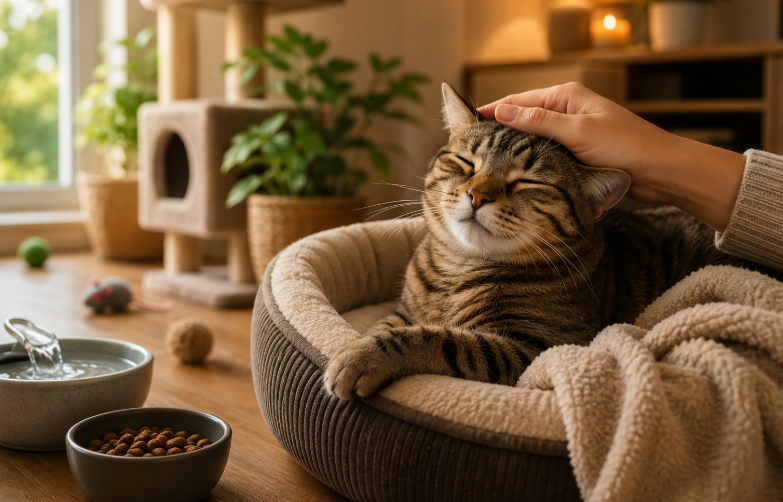
Cats may appear calm and independent, yet many quietly struggle with stress every day. Loud noises, changes in routine, poor diet, boredom, and lack of safe spaces can all affect feline wellness. When owners learn how to reduce stress cat health problems, they often notice positive changes in behavior, energy, appetite, and affection. A relaxed cat usually sleeps better, grooms normally, and interacts more confidently with people and other pets.
Stress in cats does not always look dramatic. Some cats hide under beds, while others become aggressive or overly vocal. In many cases, the signs develop slowly, so owners miss them at first. Because of this, understanding emotional wellness is just as important as providing food and water. A calm environment supports digestion, immune health, and overall comfort. More importantly, small adjustments at home can make a major difference over time.
Why Stress Affects Cats So Deeply
Cats thrive on predictability. Unlike dogs, many cats dislike sudden changes in their environment. Even moving furniture can create anxiety in sensitive pets. When stress continues for long periods, it may weaken the immune system and increase the risk of illness. That is why many veterinarians encourage owners to reduce stress cat health concerns before they become serious.
Stress hormones affect the body in several ways. Some cats stop eating, while others overeat from anxiety. In addition, stressed cats may develop digestive issues, urinary problems, or excessive grooming. Over time, chronic anxiety can lower quality of life and shorten a cat’s healthy years.
Indoor cats are especially vulnerable because they rely completely on their surroundings for stimulation and safety. If their environment feels boring or unpredictable, frustration can build quickly. Therefore, owners should pay close attention to behavioral changes, especially after household disruptions.
Common signs of stress include:
- Hiding more than usual
- Sudden aggression
- Refusing food
- Overgrooming
- Excessive meowing
- Litter box accidents
- Reduced activity
- Restlessness at night
Although these symptoms may seem minor, they often indicate emotional discomfort. Early action helps reduce stress cat health complications before they worsen.
Create A Calm And Predictable Environment
A peaceful home is one of the best ways to support feline wellness. Cats feel safest when routines remain consistent. Feeding your cat at the same time daily creates a sense of security. Likewise, keeping litter boxes in quiet locations helps cats feel comfortable while using them.
Safe spaces are equally important. Every cat should have a quiet retreat away from noise and activity. Some cats prefer tall cat trees, while others enjoy enclosed beds or hidden corners. Giving cats control over their environment lowers anxiety naturally.
Lighting and sound also matter. Loud televisions, shouting, or constant commotion can overwhelm sensitive pets. Soft music and calmer surroundings often help anxious cats relax faster. In busy households, separate resting zones may prevent overstimulation.
Owners who want to reduce stress cat health issues should also avoid sudden changes whenever possible. If a move or renovation is necessary, introduce changes gradually. Familiar blankets, toys, and scents help cats adjust more comfortably.
Another helpful strategy involves vertical space. Cats instinctively feel safer when they can climb and observe their surroundings from above. Shelves, cat trees, and window perches provide security and mental stimulation at the same time.
The Role Of Nutrition In Emotional Wellness
Diet affects more than physical health. It also influences mood, energy, and stress response. Poor nutrition may contribute to irritability and digestive discomfort, especially in sensitive cats. Therefore, balanced meals are essential for emotional stability.
High-quality protein supports muscle health and brain function. In contrast, foods packed with fillers may leave cats unsatisfied and sluggish. Hydration matters too because dehydration increases physical stress on the body.
Owners trying to reduce stress cat health concerns should pay attention to feeding habits. Some cats prefer several smaller meals throughout the day. Others feel calmer with puzzle feeders that encourage natural hunting behavior. These tools provide mental stimulation while slowing down eating.
Certain calming supplements may also help. Ingredients like L-theanine, chamomile, and tryptophan are commonly used in feline calming products. However, owners should always consult a veterinarian before introducing supplements.
Fresh water access is another critical factor. Many cats prefer moving water, which explains why cat fountains are so popular. Encouraging hydration supports kidney function and reduces urinary stress.
Healthy treats can strengthen the bond between owner and cat as well. Positive interaction during feeding creates trust and emotional comfort. As a result, consistent nutrition routines often improve overall behavior.
Playtime Is Essential For Mental Health
Many people underestimate the importance of play. Cats are natural hunters with strong instincts to chase, stalk, and pounce. Without enough stimulation, boredom and frustration often appear. Interactive activities help reduce stress cat health problems by releasing pent-up energy.
Daily play sessions do not need to last hours. Even fifteen minutes of focused interaction can improve mood significantly. Wand toys, laser pointers, and motion toys encourage exercise while satisfying hunting instincts.
Variety matters because repetitive activities quickly become boring. Rotating toys every few days keeps cats curious and mentally engaged. Additionally, hiding treats around the home creates fun enrichment opportunities.
Window access also provides entertainment. Watching birds, insects, and outdoor movement stimulates a cat’s mind naturally. Bird feeders outside windows can create hours of visual enrichment for indoor cats.
Playtime strengthens trust between owners and pets too. Cats that feel emotionally connected often show lower anxiety levels. Furthermore, exercise supports healthy weight management, which contributes to better long-term wellness.
For multi-cat homes, individual play sessions may prevent competition and tension. Some cats become stressed when dominant pets control toys or space. Personal interaction helps shy cats build confidence safely.
How Human Behavior Influences Cats
Cats observe human emotions closely. Loud arguments, chaotic schedules, or tension in the household can affect feline behavior more than many owners realize. Calm interactions create a sense of safety and stability.
Gentle communication matters. Sudden grabbing or forced affection often increases anxiety. Instead, owners should allow cats to approach naturally. Respecting boundaries builds trust over time.
Consistency is equally important. Cats become confused when rules change constantly. For example, allowing furniture access one day and punishing it the next creates mixed signals. Predictable expectations help cats feel secure.
Owners hoping to reduce stress cat health concerns should avoid punishment-based discipline. Yelling or spraying water may increase fear and damage trust. Redirecting unwanted behavior works much better in most situations.
Routine grooming sessions can also strengthen emotional bonds. Brushing helps many cats relax while reducing shedding and hairballs. However, sessions should remain short and positive to avoid overstimulation.
Even scent plays a role in comfort. Cats recognize familiar smells easily, so maintaining familiar bedding and resting areas can ease anxiety during stressful periods.
Managing Stress During Major Changes
Life changes often trigger anxiety in cats. New pets, babies, visitors, or moving homes can disrupt routines dramatically. During these transitions, owners should focus on gradual introductions and consistency.
When introducing a new pet, separate spaces are essential at first. Slow scent swapping allows cats to adjust safely before face-to-face meetings. Rushing introductions often creates fear and territorial conflict.
Travel can also create stress. Car rides, loud environments, and unfamiliar smells overwhelm many cats quickly. Comfortable carriers, familiar blankets, and calming sprays may help reduce anxiety during trips.
If construction or loud events occur at home, creating a quiet room for the cat can provide relief. Include food, water, toys, and hiding spots to maintain comfort.
Older cats often struggle with change even more than younger ones. Senior cats rely heavily on familiar routines because aging sometimes reduces confidence and adaptability. Therefore, extra patience becomes especially important with elderly pets.
Owners who actively reduce stress cat health triggers during transitions usually notice faster emotional recovery afterward.
The Connection Between Stress And Physical Illness
Stress does not stay emotional for long. Eventually, the body begins reacting physically. Chronic anxiety has been linked to urinary tract problems, digestive disorders, and weakened immunity in cats.
Feline idiopathic cystitis, a painful bladder condition, often worsens during stressful periods. Similarly, digestive upset may appear after environmental disruptions or conflict between pets.
Overgrooming is another common issue. Some stressed cats lick excessively until bald spots develop. Others stop grooming entirely, leading to poor coat condition.
Because physical symptoms may resemble medical illness, veterinary checkups remain essential. Owners should never assume behavioral changes are purely emotional without professional guidance.
Preventive care supports emotional wellness too. Regular vet visits, vaccinations, and parasite prevention reduce discomfort that may contribute to anxiety. Healthy cats usually cope with stress more effectively.
Sleep quality also affects overall health. Cats need significant rest each day to regulate mood and energy. Quiet sleeping areas help improve recovery and relaxation.
Simple Daily Habits That Support Feline Calmness
Healthy routines do not need to feel complicated. In fact, small habits often create the biggest improvements over time. Owners who consistently reduce stress cat health risks usually focus on stability, comfort, and interaction.
Helpful daily habits include:
- Feeding meals consistently
- Cleaning litter boxes daily
- Providing quiet sleeping areas
- Offering interactive playtime
- Rotating enrichment toys
- Maintaining fresh water access
- Respecting personal space
- Using gentle handling techniques
Additionally, spending quiet time near your cat strengthens emotional trust. Some cats enjoy sitting silently beside their owners more than active cuddling. Understanding individual personality makes care more effective.
Calming pheromone diffusers may also support relaxation in anxious households. These products mimic natural feline comfort signals and can help during stressful situations.
Patience is critical because emotional improvement takes time. Cats rarely change behavior overnight. However, consistent support gradually builds confidence and emotional stability.
Conclusion
Learning how to reduce stress cat health problems can transform your pet’s quality of life. Cats depend heavily on their environment, routines, and emotional security. Even small disruptions may affect behavior, appetite, sleep, and physical wellness. Fortunately, simple daily habits often create meaningful improvements.
A calm home, balanced nutrition, regular playtime, and respectful interaction all support feline mental health naturally. In addition, recognizing stress signals early helps prevent long-term complications. Cats may not express emotions the same way humans do, yet their behavior clearly reflects how they feel.
When owners provide stability and understanding, cats become more relaxed, affectionate, and confident. Over time, these positive changes strengthen the bond between pet and owner while supporting healthier and happier lives.
FAQ
1. What are the first signs of anxiety in cats?
Early signs often include hiding, reduced appetite, excessive grooming, vocalization, or sudden litter box problems.
2. Can indoor cats experience emotional stress more often?
Yes. Indoor cats sometimes face boredom and frustration without enough enrichment or stimulation.
3. Does routine really help feline wellness?
Consistent routines create security and predictability, which naturally helps cats feel calmer and safer.
4. What toys help nervous cats relax most?
Interactive wand toys, puzzle feeders, and motion toys often help anxious cats release energy positively.
5. Should I visit a vet if my cat suddenly changes behavior?
Yes. Sudden behavioral changes may indicate illness, pain, or emotional distress that requires professional evaluation.


