
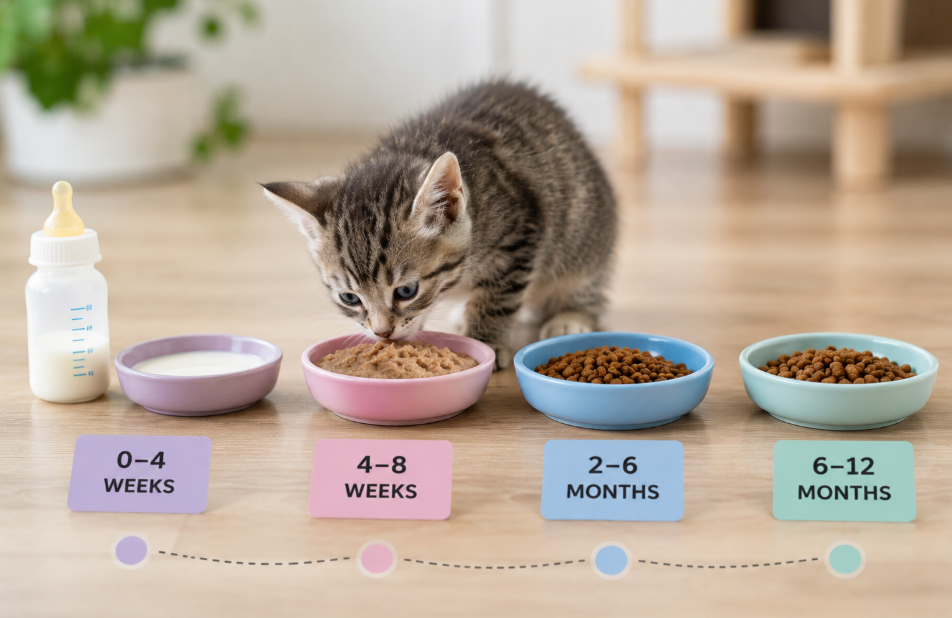
Creating the right kitten feeding schedule is one of the most important parts of raising a healthy young cat. Kittens grow rapidly during their first year, and their bodies require consistent nutrition to support strong bones, healthy muscles, brain development, and overall energy levels. Because kittens develop so quickly, feeding habits during these early months can influence their long-term health and wellness.
Many new cat owners feel unsure about how often kittens should eat or how portions should change with age. Some kittens seem hungry constantly, while others eat small amounts throughout the day. Fortunately, understanding the basics of age-based feeding makes the process much easier and less stressful.
Unlike adult cats, kittens need frequent meals because they burn energy rapidly. Their stomachs remain small, so they cannot consume large portions at once. Therefore, younger kittens require several meals spread throughout the day to maintain healthy growth and stable energy.
Consistency also matters greatly. A structured routine helps kittens feel secure while supporting better digestion and appetite regulation. In addition, scheduled feeding allows owners to monitor eating habits closely and notice potential health concerns earlier.
Learning how to build a balanced kitten feeding schedule creates a strong foundation for healthy development and long-term feline wellness.
Why Kittens Need Different Feeding Routines Than Adult Cats
Kittens experience intense growth during their first year of life. Their bodies require significantly more calories, protein, and nutrients than adult cats because nearly every system develops rapidly during this stage.
Muscle growth, bone development, immune support, and brain function all depend on proper nutrition. Therefore, kittens cannot thrive on the same feeding patterns commonly used for mature cats. They need more frequent meals and nutrient-dense foods designed specifically for growth.
Young kittens also have smaller stomach capacity. Although they need substantial calories, they cannot eat large portions comfortably in a single sitting. Because of this, multiple smaller meals work far better than one or two large feedings.
Blood sugar stability becomes another important factor. Long gaps between meals may leave young kittens weak or lethargic because their bodies use energy quickly. Regular feeding helps maintain healthy energy levels throughout the day.
Behavioral development benefits from routine as well. Scheduled meals help kittens feel secure and establish predictable daily habits. In addition, feeding routines create valuable opportunities for bonding and social interaction with owners.
Hydration support matters too. Many kittens naturally consume limited water, so wet food often helps maintain better moisture intake during growth.
A carefully structured kitten feeding schedule supports healthy development while helping owners establish positive lifelong feeding habits early.
Feeding Newborn Kittens During the First Weeks
Newborn kittens depend entirely on milk during the first weeks of life. Ideally, they receive milk from their mother because it provides complete nutrition and important immune support. Nursing kittens typically feed every two to three hours during the earliest stages.
When the mother cat cannot nurse, kitten milk replacer becomes necessary. Cow’s milk should never replace kitten formula because it lacks proper nutrients and often causes digestive upset.
Bottle-fed kittens require very frequent feedings. During the first week, many kittens need meals around the clock, including nighttime feedings. Although this schedule feels demanding, proper nutrition during these early days remains critical for survival and healthy growth.
Body temperature matters during feeding as well. Young kittens cannot regulate heat effectively, so they should stay warm before feeding begins. Cold kittens often struggle to digest food safely.
Monitoring weight gain provides important health insight. Healthy kittens usually gain weight steadily each day. Slow growth or refusal to nurse may indicate illness or feeding problems requiring veterinary attention.
As kittens approach four weeks old, gradual introduction to soft foods can begin. However, milk remains their primary nutrition source during the early transition period.
Building a healthy kitten feeding schedule from birth supports stronger development and helps prevent early nutritional complications.
Transitioning Kittens to Solid Food
The weaning stage usually begins around four weeks of age. During this period, kittens gradually move from milk to solid food while still nursing occasionally if their mother remains available.
Soft wet kitten food mixed with warm water or formula often works best during the transition. The texture should remain smooth and easy to lick initially because kittens are still learning how to eat independently.
Messy feeding sessions are completely normal at this age. Young kittens often step into food, lick awkwardly, and require time to adjust to new textures and smells. Patience remains very important during this learning process.
Small portions offered multiple times daily support smoother transitions. Most kittens between four and eight weeks old benefit from four or five meals each day because their calorie needs remain high.
Wet food usually feels easier to chew and digest during weaning. In addition, moisture-rich meals support hydration while kittens gradually reduce milk intake.
Dry kitten food can be introduced slowly by softening it with warm water. As kittens grow stronger, the food can gradually become less softened over time.
Owners should monitor stool quality and appetite during dietary changes. Sudden food transitions may create digestive upset, so gradual adjustments usually work best.
A consistent kitten feeding schedule during weaning helps kittens adapt more comfortably to independent eating habits.
Best Feeding Routine for Kittens Two to Six Months Old
Between two and six months of age, kittens experience rapid physical development and extremely high energy levels. During this stage, nutrition plays a major role in supporting healthy growth.
Most kittens in this age group require three to four meals daily. Frequent feeding supports stable energy and helps prevent excessive hunger between meals. Since kittens remain highly active, they typically burn calories very quickly.
Kitten-specific foods remain essential during this period because they contain higher protein, fat, and nutrient levels than adult cat foods. These nutrients support healthy bones, muscles, and immune development.
Wet food often provides important hydration benefits. However, many owners successfully combine wet and dry kitten food together for variety and convenience. The key is maintaining balanced portions rather than overfeeding.
Portion sizes should gradually increase as kittens grow. However, owners should avoid assuming kittens need unlimited food access constantly. Monitoring body condition helps ensure healthy growth without excessive weight gain.
Fresh water should always remain available as well. Although kittens obtain moisture from food, consistent water access supports kidney health and hydration habits.
Playtime becomes especially important during these months. Active kittens require both proper nutrition and regular movement to support balanced development.
A reliable kitten feeding schedule between two and six months helps create stable routines while supporting strong physical growth.
Adjusting Feeding Habits for Older Kittens
As kittens approach six months old, their growth rate gradually slows. While they still require kitten food, meal frequency often decreases slightly because stomach capacity increases and metabolism becomes more stable.
Many older kittens transition comfortably to three meals daily. Some eventually move toward two meals each day as they approach adulthood, although highly active kittens may still benefit from additional smaller meals.
Appetite changes commonly occur during adolescence. Some kittens appear constantly hungry, while others become more selective eaters. Monitoring weight and body condition usually provides more accurate guidance than appetite alone.
Spaying or neutering may affect calorie needs too. After these procedures, some kittens become slightly less active, which may require portion adjustments to prevent excess weight gain.
Owners should continue avoiding excessive treats during this stage. Although rewards support bonding and training, balanced nutrition should remain the primary focus during development.
Dental health habits can also begin forming around this age. Introducing dental-friendly foods, chew toys, or gentle brushing routines early often improves long-term oral health later.
Consistency still matters greatly. Stable feeding times help older kittens maintain healthy digestion and emotional comfort throughout adolescence.
Continuing a balanced kitten feeding schedule during later growth stages supports smoother transitions into healthy adulthood.
Choosing the Best Food for Growing Kittens
Food quality strongly influences kitten development. Since kittens rely heavily on nutrition for growth, choosing balanced and nutrient-rich food remains extremely important.
High-quality animal protein should remain the primary ingredient. Cats are obligate carnivores, which means they require meat-based nutrients for healthy development. Protein supports muscle growth, tissue repair, and overall energy.
Healthy fats also play an important role. Fat provides concentrated calories necessary for active kittens while supporting brain and vision development.
Wet food offers several advantages because it supports hydration naturally and often feels easier to digest. Many kittens also find wet food more appealing due to its stronger aroma and softer texture.
Dry food can still provide balanced nutrition when selected carefully. However, portion measurement becomes important because dry foods are usually more calorie-dense.
Avoid feeding adult cat food too early. Adult formulas typically lack the higher calorie and nutrient levels kittens require for proper development.
Owners should also avoid frequent food switching unless medically necessary. Sudden changes sometimes create digestive upset and may make kittens more selective eaters later.
Selecting proper nutrition strengthens any kitten feeding schedule while supporting healthy growth and immune development.
Common Feeding Mistakes New Kitten Owners Make
Many kitten owners unintentionally create feeding problems despite having good intentions. Fortunately, most mistakes become easy to correct once recognized.
One common issue involves underfeeding. Some owners assume kittens should follow adult cat portions, which may not provide enough calories for rapid growth. Young kittens generally require more frequent meals and higher calorie intake.
Overfeeding creates problems too. Although kittens need substantial nutrition, constant unrestricted feeding may encourage unhealthy habits and digestive upset in some cats.
Using inappropriate milk products is another frequent mistake. Cow’s milk often causes diarrhea because many kittens cannot digest lactose properly. Kitten formula remains the safest replacement when nursing support becomes necessary.
Inconsistent schedules may also create stress. Random feeding times sometimes lead to excessive begging or digestive irregularity. Structured routines usually improve comfort and appetite stability.
Ignoring hydration can affect health as well. Some kittens naturally drink very little water, especially if fed mostly dry food. Wet food and accessible water bowls help improve moisture intake.
Owners sometimes introduce treats too early or too often. Excess treats may interfere with balanced nutrition and encourage picky eating behavior.
Avoiding these mistakes helps create a healthier kitten feeding schedule while supporting smoother development overall.
Signs Your Kitten’s Diet May Need Adjustment
Even with a good routine, kittens sometimes require dietary changes as they grow. Monitoring physical condition and behavior helps owners identify potential concerns early.
Healthy kittens usually appear energetic, curious, and playful. Consistent growth, shiny coats, and regular appetite often indicate balanced nutrition.
Poor weight gain may signal underfeeding, illness, or digestive problems. Meanwhile, excessive weight gain sometimes suggests portions need adjustment.
Digestive issues such as diarrhea, vomiting, or constipation may indicate food intolerance or overly rapid dietary changes. Gradual food transitions often reduce these problems.
Low energy, dull fur, or poor appetite may also suggest nutritional imbalance or illness requiring veterinary evaluation.
Hydration status matters too. Dehydrated kittens may appear lethargic or develop dry gums. Increasing wet food intake often improves hydration naturally.
Owners should also watch for sudden appetite changes. Refusal to eat, especially in young kittens, may become serious quickly because kittens require steady nutrition for healthy development.
Monitoring these signs helps ensure the kitten feeding schedule continues meeting changing nutritional needs appropriately.
Creating Lifelong Healthy Feeding Habits
The habits formed during kittenhood often influence adult behavior later. Therefore, early feeding routines should focus on balance, consistency, and positive associations with food.
Scheduled meals help prevent overeating and support healthier digestion long term. Cats raised with structured routines often adapt better to portion control as adults.
Positive feeding environments matter too. Quiet spaces without stress or competition encourage relaxed eating behavior and better appetite regulation.
Interactive feeding can also support mental stimulation. Puzzle feeders and food toys encourage natural hunting instincts while slowing eating speed slightly.
Moderation remains important even during growth stages. Balanced nutrition and measured portions usually support healthier development than unrestricted feeding alone.
Owners should continue adapting routines gradually as kittens mature. Calorie needs, meal frequency, and activity levels naturally change throughout development.
A thoughtful kitten feeding schedule not only supports healthy growth but also builds healthier lifelong eating habits that benefit cats well into adulthood.
Conclusion
Feeding kittens properly during their first year lays the foundation for lifelong health and wellness. Because kittens grow rapidly and burn energy quickly, they require balanced nutrition, frequent meals, and consistent feeding routines to support healthy development.
Age-based adjustments help ensure kittens receive the right amount of calories, protein, hydration, and nutrients during every growth stage. In addition, careful monitoring allows owners to recognize changes in appetite, weight, or digestion before problems become serious.
Although feeding schedules may seem complicated at first, simple routines often work best. Consistency, high-quality food, portion awareness, and regular veterinary care all contribute to healthier outcomes.
A balanced kitten feeding schedule helps young cats grow into stronger, healthier, and more active adults. With patience and proper nutrition, owners can support confident development during every stage of kittenhood.
FAQ
1. How often should newborn kittens eat?
Newborn kittens usually need feeding every two to three hours during the first weeks of life.
2. When can kittens start eating solid food?
Most kittens begin transitioning to soft solid foods around four weeks of age.
3. Is wet food better for kittens than dry food?
Wet food supports hydration and may feel easier to digest, although many kittens do well with balanced combinations.
4. How many meals should older kittens eat daily?
Most older kittens between six months and adulthood do well with three meals daily.
5. Should kittens eat adult cat food?
No, kittens require specially formulated kitten food because it contains higher nutrients needed for growth.


