
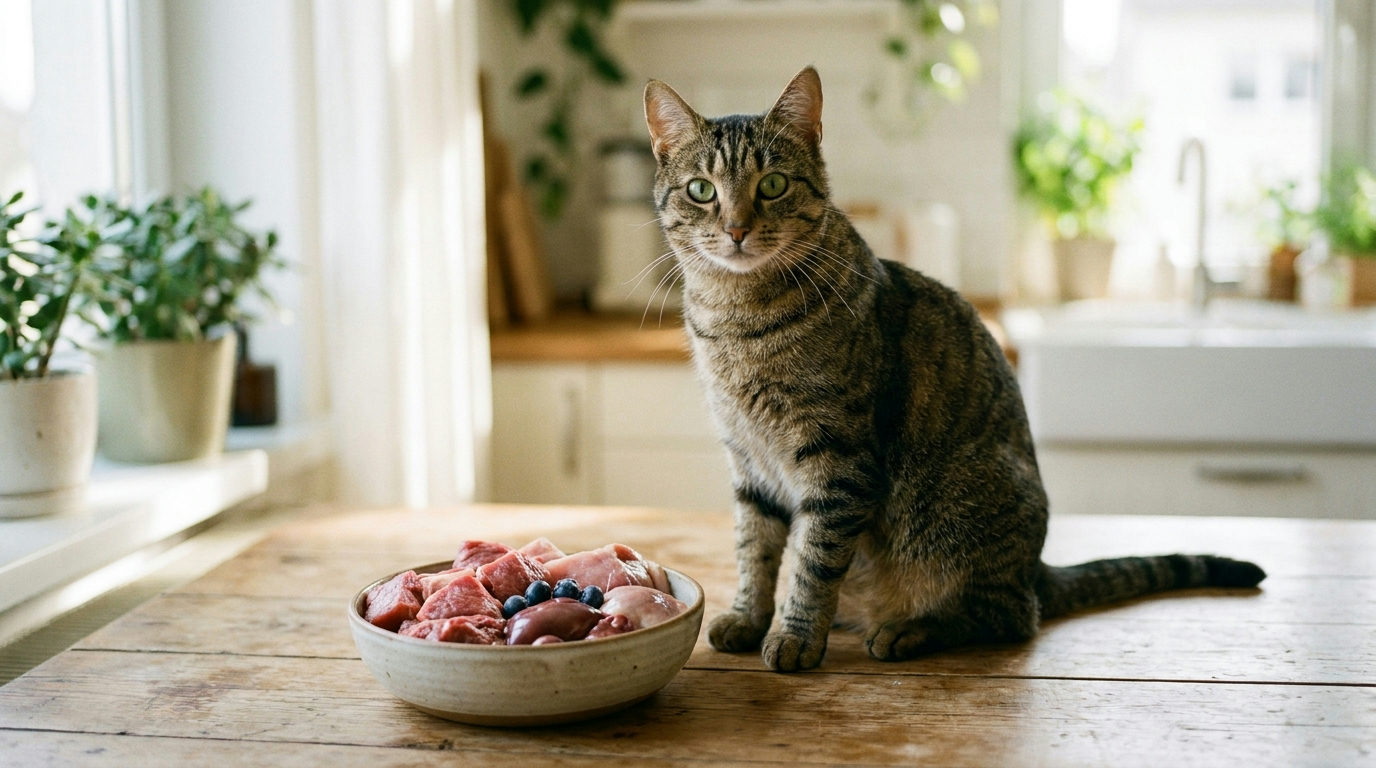
If you read cat food labels, you have probably seen taurine listed near the bottom. Taurine for cats is not a trendy extra, though. It is an essential nutrient, and cats must get it from their diet every day.
Disclosure: Cat Nutrition Guide may earn a commission from qualifying purchases made through links on this page, at no extra cost to you.
In this article, we explain what taurine does, where it comes from, and how to make sure your cat gets enough. As a result, you can read labels with more confidence.
What Is Taurine?
Taurine is an amino acid. Unlike many amino acids, however, it is not used to build proteins. Instead, it plays several jobs around the body. For example, it helps with bile production, which supports fat digestion.
Many animals, including dogs and people, can make enough taurine on their own. Cats, by contrast, make very little. That is why taurine is considered essential for cats. In other words, it must come from food.
Why Taurine for Cats Is Essential
Taurine supports several important systems. First, it helps the heart muscle work normally. Second, it supports healthy vision, especially the retina. Third, it plays a role in reproduction and in normal kitten growth.
When cats do not get enough taurine over time, problems can follow. Research in the late 1980s linked taurine deficiency to a type of heart muscle disease in cats. Since then, pet food makers have added taurine to commercial recipes. Today, deficiency is much less common in cats that eat a complete and balanced diet.
Natural Sources of Taurine for Cats
Taurine is found mainly in animal tissue. Consequently, a meat-based diet is the natural way cats get it. Good sources include:
- Heart muscle, such as chicken or beef heart
- Dark meat from poultry
- Fish and shellfish
- Organ meats, in appropriate amounts
Plant foods contain little or no taurine. This is one reason cats are called obligate carnivores. You can read more in our guide to species appropriate cat food.
Does Commercial Food Have Enough Taurine?
In most cases, yes. Foods labeled “complete and balanced” must meet minimum nutrient levels, including taurine. In the United States, these levels come from the AAFCO cat food nutrient profiles.
That said, cooking and processing can reduce taurine. For this reason, manufacturers often add more than the minimum. So, a reputable brand that follows these standards should cover your cat’s needs. Our article on understanding cat food labels shows you where to look.
Taurine for Cats on Homemade or Raw Diets
Homemade and raw diets carry more risk. Grinding meat and freezing it may lower taurine levels. Likewise, cooking can reduce it further. Without a carefully built recipe, a homemade diet may fall short.
If you feed homemade meals, work with a board-certified veterinary nutritionist. They can design a recipe that includes the right taurine source. Our guide to homemade cat food recipes covers safety basics.
Should You Give a Taurine Supplement?
Most healthy cats on complete commercial food do not need an extra supplement. However, a vet may suggest one in certain cases. For example, a cat on a special homemade diet may benefit. Similarly, a cat with specific health concerns might need testing first.
Taurine is generally considered safe, since excess is usually passed in urine. Even so, always ask your vet before adding any supplement. For a broader look, see our piece on cat nutritional supplements.
Signs Your Cat May Need a Diet Review
Low taurine can develop slowly, and early signs are easy to miss. Therefore, pay attention to changes such as:
- Less energy or reluctance to play
- Changes in breathing
- Vision problems or bumping into objects
- Poor growth in kittens
These signs can have many causes. So, see your vet promptly rather than guessing.
Final Thoughts on Taurine for Cats
To sum up, taurine for cats is a must-have nutrient, not an optional extra. A complete and balanced, meat-based diet usually supplies enough. Meanwhile, homemade and raw diets need expert planning. Above all, talk with your vet if you have any doubts about your cat’s diet.
This article is for general information only and is not a substitute for advice from a licensed veterinarian. Always consult your vet about your cat’s specific needs.


