
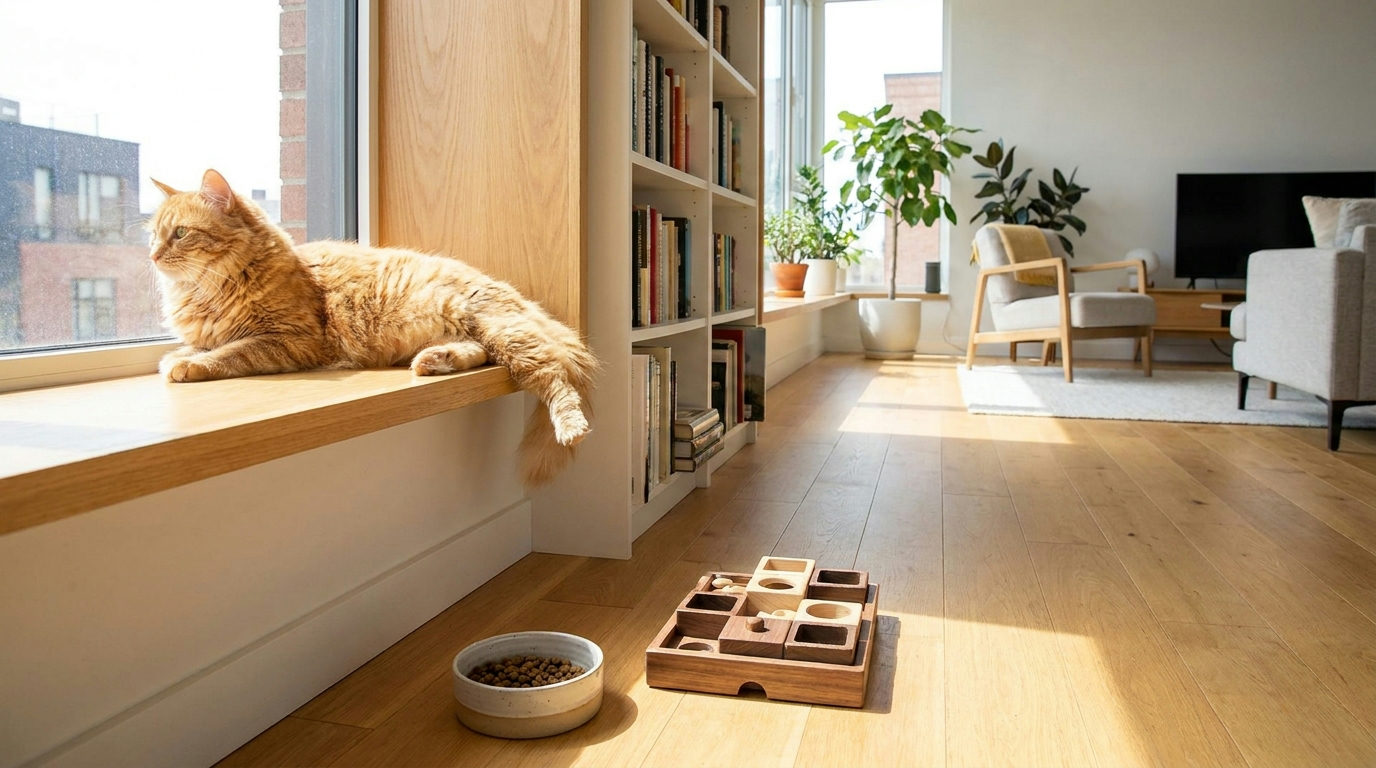
Indoor cats live safer lives in many ways. However, their lifestyle also changes their nutrition needs. Indoor cat food formulas aim to match those needs. This guide explains what makes them different and whether your cat needs one.
Disclosure: Cat Nutrition Guide may earn a commission from qualifying purchases made through links on this page, at no extra cost to you.
How Indoor Life Changes a Cat’s Needs
Indoor cats often move less than outdoor cats. As a result, they may burn fewer calories. Over time, the same portion that suits an active cat can lead to weight gain in a quieter one.
In addition, indoor cats may groom more out of boredom. This can mean more hairballs. They may also drink less if water is not appealing. Therefore, diet and daily routine both matter.
What Is in Indoor Cat Food?
There is no official definition of “indoor” on pet food labels. Even so, most indoor cat food formulas share a few features:
- Fewer calories: Lower fat or calorie density may help manage weight.
- Added fiber: Fiber may help with fullness and hairball control.
- High-quality protein: Protein supports lean muscle, even with fewer calories.
- Controlled minerals: Some recipes aim to support urinary health.
Because the term is not regulated, check the calorie content and guaranteed analysis rather than relying on the name. Our guide to understanding cat food labels can help.
Does Your Cat Need Indoor Cat Food?
Not always. An indoor cat at a healthy weight may do fine on a standard complete and balanced adult food. On the other hand, a cat that gains weight easily may benefit from a lower-calorie option. So, your cat’s body condition is the best guide.
Portion control matters more than the label. Read our article on how much to feed a cat to set the right amount.
Supporting Indoor Cats Beyond the Bowl
Food is only part of the picture. Indoor cats also benefit from activity and mental challenges. Consider these ideas:
- Use puzzle feeders to slow eating and add a hunting-like challenge.
- Schedule short play sessions twice a day.
- Offer climbing spaces and window perches.
- Place water bowls or fountains in several spots.
The International Cat Care charity shares more ideas for enriching indoor life.
Choosing a Good Indoor Cat Food
Look for a “complete and balanced” statement based on AAFCO profiles. Also, check that a named animal protein appears near the top of the ingredient list. Finally, compare calories per cup or can between brands. Then, switch slowly over about a week.
Final Thoughts
To sum up, indoor cat food can help less active cats stay trim and comfortable. However, the name alone is not a guarantee. Focus on calories, protein, portion size, and daily activity. Your vet can help you decide which approach fits your cat best.
This article is for general information only and is not a substitute for advice from a licensed veterinarian. Always consult your vet about your cat’s specific needs.


