
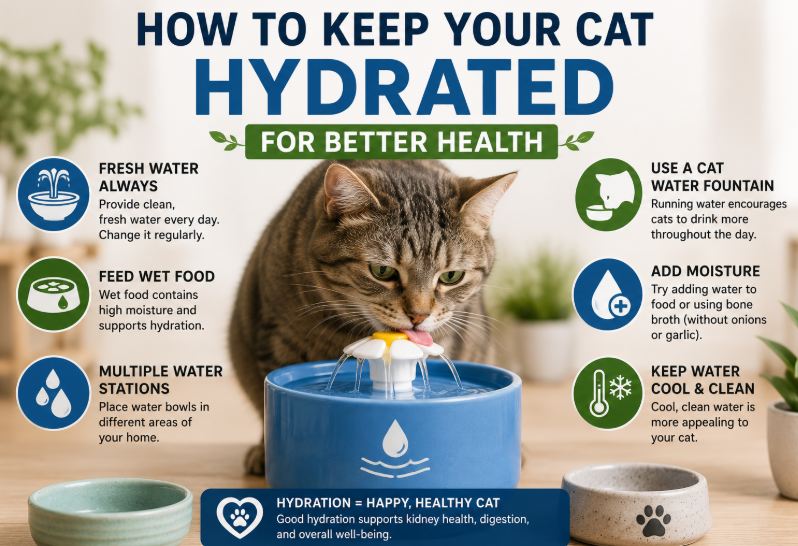
Water is one of the most important nutrients a cat needs, yet it is often overlooked by pet owners. Learning how to keep your cat hydrated can have a significant impact on overall health, energy levels, digestion, and urinary tract function. While many owners focus on food quality and exercise, hydration plays an equally important role in maintaining a healthy and happy cat.
Cats evolved from desert-dwelling ancestors and developed a naturally low thirst drive. As a result, many cats do not drink as much water as their bodies actually need. This characteristic may have helped wild cats survive in dry environments, but it can create challenges for modern house cats that rely heavily on dry food and indoor lifestyles.
When cats consume insufficient water, they may face increased risks of urinary tract issues, kidney problems, constipation, and other health concerns. Fortunately, there are many simple ways to encourage better hydration without causing stress or major lifestyle changes.
Understanding your cat’s hydration needs and creating habits that support healthy water intake can provide lasting benefits throughout every stage of life.
Why Hydration Matters for Feline Health
Understanding why it is important to keep your cat hydrated starts with recognizing how water supports essential bodily functions. Every organ system relies on adequate hydration to operate effectively.
Water helps regulate body temperature, transport nutrients, support digestion, and remove waste products from the body. It also plays a critical role in maintaining healthy blood circulation and organ function. Without sufficient hydration, these processes become less efficient.
Urinary health is particularly dependent on proper water intake. Concentrated urine can increase the likelihood of urinary crystals and other urinary tract concerns. Therefore, encouraging consistent hydration may help support a healthier urinary system.
Kidney function also benefits from adequate water consumption. The kidneys rely on water to filter waste and maintain fluid balance. As cats age, supporting kidney health becomes increasingly important.
Additionally, hydration contributes to healthy digestion. Water helps move food through the digestive tract and supports normal bowel function. Consequently, properly hydrated cats may experience fewer digestive difficulties.
These benefits highlight why water should be considered an essential part of every cat’s wellness plan.
Signs Your Cat May Not Be Drinking Enough
One of the best ways to keep your cat hydrated is by recognizing early signs of inadequate water intake. Although some symptoms can be subtle, careful observation often reveals important clues.
Reduced energy levels may indicate dehydration. Cats that are not drinking enough water sometimes appear less active or less interested in normal activities. While many factors influence energy levels, hydration should not be overlooked.
Dry or sticky gums can also suggest inadequate fluid intake. Healthy gums generally feel moist and smooth. Therefore, changes in moisture levels may warrant closer attention.
Constipation sometimes develops when cats do not consume enough water. Because water supports digestive movement, inadequate hydration can make bowel movements more difficult.
Changes in urination habits deserve attention as well. Less frequent urination or unusually concentrated urine may indicate that a cat needs more fluids.
Skin elasticity provides another clue. Gently lifting the skin between the shoulders and observing how quickly it returns to normal position can sometimes reveal hydration status. However, veterinary evaluation remains the most reliable method for assessing dehydration.
Recognizing these signs early helps owners respond before more serious problems develop.
Fresh Water Should Always Be Available
One of the simplest ways to keep your cat hydrated is by ensuring constant access to fresh, clean water. Although this may seem obvious, many cats are surprisingly selective about their drinking environment.
Water bowls should be cleaned regularly to prevent the buildup of bacteria, debris, and unpleasant odors. Cats often prefer clean water and may drink less if bowls become dirty.
Location also matters. Water stations placed in quiet, accessible areas often encourage more frequent drinking. Many cats prefer water sources located away from litter boxes and food dishes.
Providing multiple water stations throughout the home can increase opportunities for hydration. This approach is especially helpful in larger homes or multi-level living spaces.
Some cats have strong preferences regarding bowl design. Wide, shallow bowls often appeal to cats because they reduce whisker contact with the bowl’s sides. Consequently, changing bowl styles may improve water intake.
Small environmental adjustments can have a surprisingly positive effect on drinking habits and overall hydration.
The Benefits of Wet Food
Including wet food in the diet is one of the most effective ways to keep your cat hydrated. Unlike dry kibble, wet food contains substantial moisture that contributes directly to daily fluid intake.
Many wet foods contain between 70 and 80 percent water. Consequently, cats receive hydration every time they eat. This additional moisture can be especially valuable for cats that rarely drink from water bowls.
Wet food may support urinary health by increasing total fluid consumption and promoting more diluted urine. Additionally, some cats find wet food more appealing because of its aroma and texture.
Owners do not necessarily need to eliminate dry food completely. Many cats benefit from mixed feeding routines that combine both wet and dry options. This approach can provide hydration benefits while maintaining flexibility.
The key is ensuring that moisture-rich foods contribute meaningfully to overall fluid intake. Even partial incorporation of wet food can improve hydration levels for many cats.
As part of a balanced diet, wet food offers an effective and practical way to support long-term wellness.
Why Many Cats Prefer Running Water
To successfully keep your cat hydrated, it helps to understand feline preferences. Many cats show greater interest in moving water than stagnant water.
This preference may be rooted in instinct. In nature, flowing water is often fresher and less likely to contain contaminants than standing water. Consequently, many cats are naturally attracted to moving water sources.
Pet fountains take advantage of this behavior. By circulating water continuously, fountains often encourage cats to drink more frequently. The movement, sound, and freshness can make water more appealing.
Not every cat prefers a fountain, but many respond positively when one is introduced. Some owners notice immediate increases in water consumption after switching from traditional bowls.
Regular cleaning remains important because fountains can accumulate debris over time. Maintaining cleanliness helps preserve water quality and encourages continued use.
If a cat shows little interest in traditional bowls, a fountain may provide an effective solution for improving hydration.
Adding Moisture in Creative Ways
There are several creative strategies to keep your cat hydrated beyond simply offering water bowls and wet food. Small additions to meals can sometimes increase fluid intake significantly.
Some owners add a small amount of water to wet food. This creates a softer texture while increasing moisture content. Many cats accept this adjustment without hesitation.
Low-sodium broth formulated for pets may also encourage drinking. However, ingredients should always be reviewed carefully to avoid additives that are unsuitable for cats.
Ice cubes can provide enrichment while contributing hydration. Some cats enjoy batting ice cubes across hard floors before licking the melting water.
Flavoring water lightly with safe, cat-friendly options may appeal to certain individuals. However, plain fresh water should always remain available as the primary source.
Experimenting with different approaches allows owners to discover what works best for their specific cat. Individual preferences often vary considerably.
Hydration Needs Change With Age
As cats grow older, efforts to keep your cat hydrated become increasingly important. Age-related changes can affect drinking habits and overall hydration status.
Kittens often obtain substantial hydration through their food and generally adapt well to various water sources. However, establishing healthy hydration habits early in life remains beneficial.
Adult cats may require encouragement if they consume primarily dry food or lead sedentary lifestyles. Monitoring water intake during adulthood helps identify potential concerns early.
Senior cats often face additional challenges. Aging can influence kidney function, thirst perception, and overall health. Consequently, older cats may benefit from increased hydration support and closer monitoring.
Certain medical conditions become more common with age and may affect fluid requirements. Therefore, regular veterinary evaluations become particularly important for senior cats.
Adjusting hydration strategies as cats age helps ensure their changing needs continue to be met effectively.
Common Hydration Mistakes Owners Make
Even dedicated owners sometimes make mistakes when trying to keep your cat hydrated. Understanding these common issues can improve results significantly.
One frequent mistake is assuming that a full water bowl guarantees adequate hydration. While access is essential, some cats simply do not drink enough even when water is available.
Another issue involves neglecting bowl cleanliness. Cats often notice odors and residues that humans overlook. Consequently, dirty bowls may discourage drinking.
Some owners place water bowls too close to food or litter boxes. Many cats prefer separation between these resources and may avoid water that feels poorly positioned.
Ignoring changes in drinking habits can also be problematic. Increased or decreased water consumption sometimes signals underlying health concerns that require veterinary attention.
Finally, relying exclusively on dry food may limit opportunities for additional hydration. Incorporating moisture-rich foods often helps support healthier fluid intake.
Avoiding these common mistakes can improve hydration efforts and contribute to better overall wellness.
Creating a Long-Term Hydration Routine
The most effective way to keep your cat hydrated is by creating consistent daily habits. Long-term success rarely depends on a single strategy. Instead, it comes from combining several supportive practices.
Start by ensuring constant access to clean water. Then evaluate whether additional water stations, fountains, or wet food might encourage greater fluid intake.
Monitor drinking habits regularly. Changes in water consumption can provide valuable insights into health and well-being. Early awareness often leads to better outcomes.
Maintain flexibility as well. Cats may develop new preferences over time, and adjusting hydration strategies accordingly helps sustain success.
Routine veterinary care complements home efforts by providing professional assessment and guidance. Veterinarians can identify underlying issues that influence hydration and recommend appropriate solutions.
When hydration becomes a consistent priority, cats often experience benefits that extend far beyond simple thirst satisfaction.
Conclusion
Learning how to keep your cat hydrated is one of the most valuable steps you can take to support long-term feline health. Proper hydration contributes to healthy kidneys, urinary tract function, digestion, circulation, and overall wellness. Because many cats naturally drink less water than they need, owners often play an important role in encouraging healthy fluid intake.
Simple strategies such as providing fresh water, offering wet food, using fountains, and monitoring hydration habits can make a significant difference. By combining these approaches and adapting them to your cat’s preferences, you can help create a healthier and more comfortable life. Consistent hydration support is a small effort that delivers meaningful benefits throughout every stage of your cat’s journey.
FAQ
1. How much water should a cat drink each day?
Water needs vary based on size, diet, activity level, and health status, but regular hydration is essential for overall wellness.
2. Is wet food enough to meet hydration needs?
Wet food contributes significant moisture, but cats should still have access to fresh drinking water at all times.
3. Why do some cats avoid water bowls?
Cats may dislike bowl location, cleanliness, water freshness, or bowl design. Small changes can often improve drinking habits.
4. Are water fountains beneficial for cats?
Many cats prefer moving water, and fountains often encourage increased water consumption.
5. When should I worry about changes in drinking habits?
Sudden increases or decreases in water intake should be discussed with a veterinarian because they may indicate underlying health concerns.


