
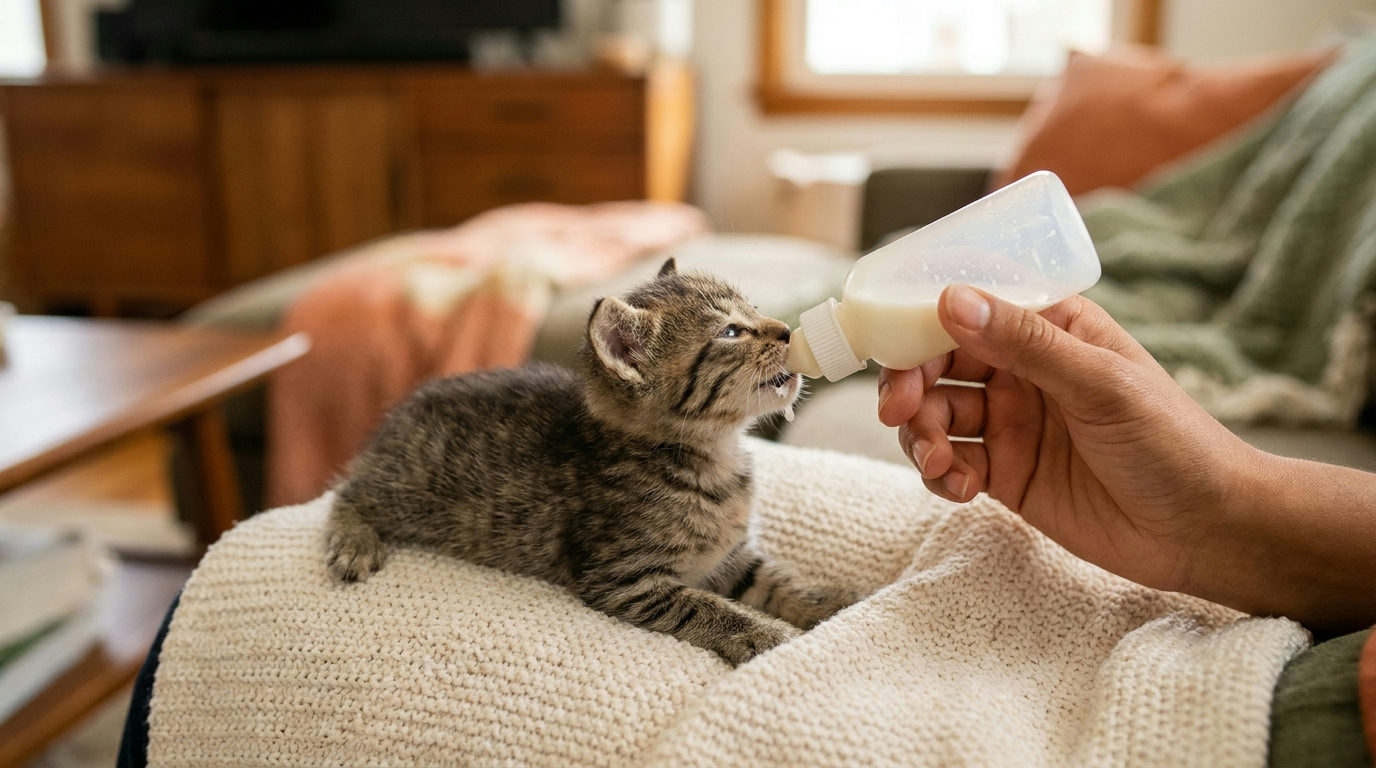
Learning how to bottle feed a kitten usually happens in a hurry. Someone finds a litter in a shed, a mother cat stops nursing, or a shelter asks for a foster. Very young kittens can’t eat solid food, can’t keep themselves warm, and can’t even go to the bathroom without help. This guide walks through the basics so you know what to prepare, how a feed should look, and when to call a vet. Treat it as a starting point, and bring your vet or a local shelter’s foster team into the loop as early as you can.
By Cat Nutrition Guide Editorial. This article is general information, not veterinary advice.
First, Make Sure the Kittens Really Are Orphaned
A litter alone in a box is not always a litter without a mother. Mother cats often leave to find food. The Atlanta Humane Society advises watching from a safe distance to see whether she comes back, because a mother’s care gives young kittens the best chance. Kittens that look clean, alert and well fed are usually being looked after.
Step in sooner if the kittens look cold, weak or thin, or if they are in immediate danger. Those kittens need a vet first, then a feeding plan.
What You Need Before You Bottle Feed a Kitten
Gather these supplies before you start. Pet stores and many shelters carry them.
- Commercial kitten milk replacer. This is the only suitable everyday food for a nursing-age kitten.
- Kitten nursing bottles and spare nipples. Small bottles are easier to control.
- A digital kitchen scale that reads in grams.
- A safe heat source, such as a heat disc or a hot water bottle wrapped in a towel.
- Soft cloths or cotton balls for cleaning and toileting.
- A notebook or phone log for weights, feeds and bathroom notes.
Why not cow’s milk?
It’s tempting to reach for whatever is in the fridge. However, a vet-reviewed PetMD guide warns against cow’s milk, baby formula and homemade recipes, because they can make kittens seriously ill. VCA Animal Hospitals also notes that goat’s milk is far too low in protein and fat to be a long-term food. For more on adult cats and dairy, see our guide on whether cats can drink milk.
Warm the Kitten Before You Warm the Bottle
Warmth comes before food. Newborn kittens can’t regulate their own body temperature, and a cold kitten won’t feed or digest well, as the PetMD guide explains. If a kitten feels cool, warm it slowly first.
Maddie’s Fund suggests a heat disc, hot water bottle or rice pack wrapped in a towel, so the heat is gentle and can’t burn. Give the kittens room to crawl away from the heat if they get too warm.
The nest temperature should also change as kittens grow. VCA recommends a warmer environment in the first days of life, then a gradual drop over the following weeks. A quiet carrier or box lined with towels, in a draft-free room, works well.
How to Bottle Feed a Kitten, Step by Step
Once the kitten is warm, you’re ready to feed. If you’re still unsure how to bottle feed a kitten after reading this, ask your vet clinic to show you once. Go slowly. Feeding should feel calm, not rushed.
- Mix fresh formula. Follow the label exactly for the powder-to-water ratio. Maddie’s Fund recommends keeping mixed formula in the fridge for no more than 24 hours and discarding leftovers that have been warmed or sat out.
- Warm it in a water bath. Both PetMD and VCA suggest roughly body temperature, warmed in a water bath rather than a microwave, which can leave hot spots. A drop on your inner wrist should feel warm, not hot.
- Position the kitten belly-down. The kitten should lie on its stomach with its head slightly raised, the way it would nurse from its mother, as the Maddie’s Fund guidance describes. Never feed a kitten on its back.
- Offer the nipple and let the kitten work. Hold the bottle at an angle and let the kitten suck at its own pace. Never squeeze the bottle. Fast flow can push milk into the lungs, a risk PetMD flags as aspiration pneumonia.
- Stop when the kitten slows down. Most kittens turn away or fall asleep when full. Don’t force extra formula.
- Burp gently. Hold the kitten upright against your shoulder or on your lap and pat its back lightly.
Signs the feed is going wrong
Milk bubbling from the nose, coughing or noisy breathing can mean formula has gone down the wrong way. Maddie’s Fund advises getting urgent veterinary help if coughing lasts more than a few minutes or the kitten struggles to breathe.
How Often to Feed by Age
Young kittens have tiny stomachs, so they need small, frequent meals. The schedule loosens as they grow. The table below is a general outline drawn from VCA and PetMD. Your vet may adjust it for your kitten.
| Age | General feeding rhythm |
|---|---|
| First week | Very frequent feeds, around the clock |
| Weeks 1 to 2 | Frequent feeds, including overnight |
| Weeks 2 to 4 | Feeds spaced a little further apart |
| From about 3 to 4 weeks | Weaning begins alongside bottle feeds |
For exact amounts, ask your vet or use a published chart such as the stomach capacity chart that Maddie’s Fund references. Amounts depend on the kitten’s weight, not just its age.
Helping Kittens Pee and Poop
This step surprises many first-time carers. In the first weeks, a mother cat licks her kittens to trigger urination and bowel movements. Without her, you have to do it.
After each feed, gently rub the kitten’s genital and anal area with a warm, damp cloth or cotton ball. VCA describes this as necessary during the early weeks of life. Keep notes on what you see. Diarrhea, constipation or unusual stool color are all worth mentioning to your vet. PetMD notes that greenish-yellow stool may point to overfeeding.
Weigh Daily and Keep a Log
The scale is your best early-warning tool. Maddie’s Fund recommends weighing kittens every day. Weigh at the same time each day, before a feed, so the numbers are comparable.
A healthy kitten should gain steadily. PetMD gives a typical range of 10 to 15 grams a day. A kitten that stalls, loses weight or seems weaker needs a vet check promptly, since young kittens can decline fast.
A simple log might include:
- Date, time and weight
- How much formula was taken
- Urine and stool after toileting
- Anything unusual, such as crying, sneezing or refusing the bottle
Bring this log to every vet visit. It turns “she seems fine” into information your vet can actually use.
Starting the Move to Solid Food
Bottle feeding doesn’t last forever. VCA suggests weaning starts at around 3 to 4 weeks of age. Signs of readiness include chewing on the nipple or seeming hungrier than usual.
A common approach is to mix milk replacer with a wet kitten food to make a thin gruel. Offer it on a shallow saucer. Over the next couple of weeks, make the mix gradually thicker, while still offering the bottle until the kitten is eating well on its own. Expect mess. Kittens often walk through their food before they figure out how to eat it.
Once your kitten is fully on solid food, our kitten feeding guide covers what comes next.
When to Call a Vet Right Away
Orphaned kittens are fragile, so it’s better to call too early than too late. Based on guidance from Maddie’s Fund and PetMD, contact a vet if a kitten:
- Won’t take the bottle for several hours
- Coughs, sputters or breathes with effort after feeding
- Is losing weight or not gaining
- Has diarrhea, or strains without passing stool
- Feels cold, seems limp or cries constantly
Many shelters and rescues run foster programs and can offer supplies, advice and backup. If you’ve taken in a litter unexpectedly, they can be a lifeline.
The Bottom Line
Knowing how to bottle feed a kitten comes down to a few habits: confirm the kittens truly need you, keep them warm, use kitten milk replacer, feed belly-down at the kitten’s pace, help them toilet, and weigh every day. Bring in a vet early and keep a log. It’s demanding work, but it gives a vulnerable kitten a real chance.
This article is general information, not veterinary advice. Always follow the guidance of a veterinarian who has examined your kitten.


