
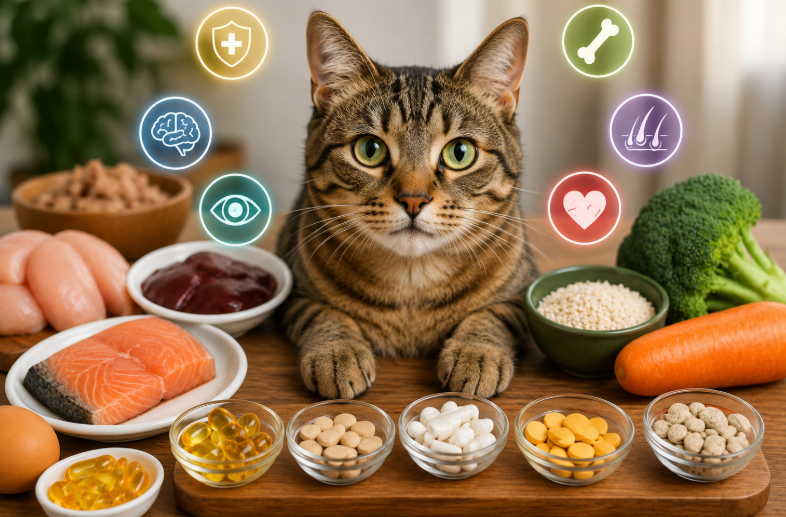
Cats rely on proper nutrition for far more than simple energy. Their bodies need a precise balance of nutrients to support growth, organ function, immune strength, and daily activity. Understanding cat vitamins and minerals helps owners make smarter choices about food, treats, and supplements. While many commercial diets contain balanced nutrients, not all foods provide the same quality or nutritional value. Therefore, learning which nutrients matter most can improve your cat’s health and quality of life.
Unlike humans or dogs, cats are obligate carnivores. This means they depend heavily on animal-based nutrients to survive and thrive. Their bodies process vitamins and minerals differently, so deficiencies may develop when diets lack essential nutrients. In some cases, poor nutrition leads to dull coats, weak muscles, digestive upset, or low energy. However, a balanced feeding routine often supports healthier skin, stronger immunity, and improved longevity.
Owners often focus on protein first, yet micronutrients deserve equal attention. Vitamins and minerals work together to maintain healthy systems throughout the body. From supporting vision to strengthening bones, these nutrients influence nearly every aspect of feline wellness. More importantly, consistent nutritional balance prevents many avoidable health problems later in life.
Why Proper Nutrition Matters For Cats
Nutrition affects every stage of a cat’s life. Kittens need nutrients for development, while adult cats require support for maintenance and energy. Senior cats often need additional nutritional support to maintain mobility and organ function. Because of these changing needs, cat vitamins and minerals become increasingly important over time.
Cats naturally receive many nutrients from meat-based foods. However, processing methods and ingredient quality may affect nutritional value in commercial products. Some lower-quality foods contain fillers that reduce overall nutrient density. Therefore, ingredient labels deserve careful attention.
Healthy nutrition supports:
- Strong bones and teeth
- Better immune function
- Healthy skin and coat
- Muscle maintenance
- Brain and eye health
- Improved digestion
- Balanced energy levels
- Healthy organ function
Additionally, proper nutrition helps cats recover faster from illness or stress. A well-fed cat often appears more active, alert, and emotionally balanced. Owners may also notice shinier coats and healthier body weight when diets remain nutritionally complete.
Because deficiencies sometimes develop slowly, symptoms can remain unnoticed for months. That is why preventative nutrition matters so much in feline care.
Vitamin A Supports Vision And Immunity
Vitamin A is one of the most essential nutrients for feline health. Cats cannot efficiently convert plant-based beta-carotene into active vitamin A the way humans can. As a result, they must obtain it directly from animal sources.
This vitamin supports healthy vision, immune strength, skin repair, and reproductive health. Additionally, it plays a role in cellular growth and tissue maintenance. Without enough vitamin A, cats may develop poor coat condition, weakness, or eye problems.
Liver is one of the richest natural sources of vitamin A for cats. Many high-quality commercial foods also include safe amounts to meet dietary requirements. However, excessive supplementation can become dangerous because vitamin A accumulates in the body over time.
Owners interested in improving cat vitamins and minerals intake should avoid giving random supplements without veterinary advice. Balanced nutrition works best when nutrients remain in proper proportion.
Vitamin D Helps Maintain Strong Bones
Vitamin D supports calcium absorption and bone strength. Unlike humans, cats cannot produce enough vitamin D through sunlight exposure alone. Therefore, dietary intake becomes critical.
This nutrient works closely with phosphorus and calcium to maintain skeletal health. Additionally, it supports muscle function and immune balance. Cats with vitamin D deficiencies may experience weakness, bone issues, or poor growth.
Fish oils, liver, and fortified cat foods commonly provide vitamin D. Since both deficiency and excess can create health problems, moderation remains important. Commercial diets designed for feline nutrition usually provide safe levels already.
Hydration also supports nutrient absorption. Cats that eat primarily dry food sometimes consume less water, which may affect overall wellness. Wet food often provides additional moisture alongside balanced nutrition.
The Importance Of Vitamin E For Cellular Health
Vitamin E acts as a powerful antioxidant. It protects cells from damage caused by free radicals and supports immune health. Furthermore, this vitamin helps maintain healthy skin and coat condition.
Cats consuming diets rich in fish oils especially need enough vitamin E because fats increase oxidative stress. Without adequate protection, cellular damage may occur over time.
Signs of deficiency can include muscle weakness, poor coat quality, and inflammation. Fortunately, many balanced cat foods contain sufficient vitamin E from added nutrients or natural ingredients.
Owners focused on cat vitamins and minerals often notice coat improvements when diets contain balanced antioxidant support. Healthy skin usually reflects internal wellness, making nutrition a major factor in appearance.
B Vitamins Support Energy And Metabolism
B vitamins perform several critical functions in feline health. They help convert food into usable energy while supporting nerve function, digestion, and brain health. Because these vitamins are water-soluble, cats require consistent intake through diet.
Important B vitamins include:
- Thiamine
- Riboflavin
- Niacin
- Folate
- Biotin
- Vitamin B12
Thiamine deficiency can become especially dangerous for cats. It may cause neurological problems, poor appetite, or weakness. Raw fish diets sometimes contribute to thiamine loss because certain fish contain enzymes that destroy this vitamin.
Vitamin B12 plays a major role in digestive health and energy production. Cats with intestinal disorders may struggle to absorb enough B12 naturally. In those cases, veterinarians sometimes recommend supplementation.
Balanced commercial foods usually contain appropriate B vitamin levels. However, homemade diets often require careful formulation to avoid deficiencies.
Calcium And Phosphorus Work Together
Calcium and phosphorus are two of the most important minerals in feline nutrition. Together, they support bones, teeth, muscle movement, and nerve communication. However, balance matters more than quantity.
Too much phosphorus without enough calcium may weaken bones over time. Likewise, excessive calcium can create health concerns. Growing kittens are especially vulnerable to imbalances because their bones develop rapidly.
Raw diets sometimes create nutritional problems when owners fail to balance minerals correctly. While homemade feeding can work, veterinary guidance remains essential to ensure complete nutrition.
Many cat vitamins and minerals function together in interconnected ways. Therefore, focusing on only one nutrient rarely supports overall health properly. Balanced nutrition consistently produces better long-term outcomes.
Taurine Is Absolutely Essential For Cats
Although taurine is technically an amino acid rather than a vitamin, it deserves special attention. Cats cannot produce enough taurine naturally, so dietary intake becomes essential.
Taurine supports:
- Heart health
- Vision
- Reproductive function
- Nervous system health
- Digestion
Deficiency may lead to blindness, heart disease, or severe weakness. Fortunately, most quality cat foods contain added taurine because manufacturers understand its importance.
Animal tissues naturally provide taurine, especially organ meats and seafood. However, poor-quality diets sometimes contain inadequate levels. That is why premium nutrition often delivers better long-term health support.
Cats fed dog food regularly may develop taurine deficiencies because canine formulas do not meet feline nutritional needs.
Magnesium Supports Muscle And Nerve Function
Magnesium helps regulate muscles, nerves, and enzyme activity. Additionally, it contributes to bone health and energy production. However, excessive magnesium may increase urinary concerns in sensitive cats.
Balanced diets typically contain safe magnesium levels already. Therefore, supplementation is rarely necessary unless recommended by a veterinarian.
Hydration also influences urinary health significantly. Cats naturally have low thirst drives, so wet food and water fountains may encourage healthier fluid intake.
Owners researching cat vitamins and minerals should remember that hydration and nutrition work together closely. Even the best diet supports health more effectively when cats stay properly hydrated.
Iron Supports Healthy Blood Cells
Iron helps transport oxygen throughout the body. Without enough iron, cats may develop anemia, fatigue, or weakness. Blood loss, parasites, and poor nutrition sometimes contribute to deficiency.
Animal proteins naturally provide highly absorbable iron sources. Liver and red meat are especially rich in this mineral. Balanced cat foods usually include appropriate amounts for maintenance.
However, excessive iron supplementation can become toxic. Owners should avoid adding supplements without professional guidance. Nutritional balance always matters more than isolated nutrient focus.
Regular veterinary exams help detect deficiencies early before symptoms become severe. Preventative care combined with balanced feeding creates the strongest foundation for wellness.
How To Choose Nutritionally Balanced Cat Food
Choosing quality food can feel overwhelming because countless options exist. However, focusing on ingredient quality and nutritional completeness simplifies the process.
Look for foods that list animal protein as the primary ingredient. Additionally, check for statements confirming nutritional completeness according to recognized feline standards.
Helpful factors include:
- Named animal proteins
- Added taurine
- Balanced moisture content
- Limited artificial fillers
- Veterinary nutritional approval
Wet food often provides additional hydration benefits. However, many cats thrive on combinations of wet and dry food when portions remain balanced.
Owners trying to improve cat vitamins and minerals intake should avoid frequent diet changes unless necessary. Sudden food transitions may upset digestion and increase stress.
Treats also deserve attention because excessive treats can dilute overall nutrition. Healthy treats should complement balanced meals rather than replace them.
When Supplements May Be Necessary
Most healthy cats eating quality food do not require supplements. However, certain medical conditions, life stages, or dietary restrictions sometimes create additional nutritional needs.
Senior cats may benefit from joint-support nutrients or added antioxidants. Similarly, cats with digestive disorders may need B12 supplementation under veterinary supervision.
Homemade diets almost always require professional formulation because nutritional imbalances develop easily. Even small deficiencies can create serious health concerns over time.
Owners should never assume human supplements are safe for pets. Some ingredients become toxic when given incorrectly. Therefore, veterinary guidance remains the safest approach.
Monitoring your cat’s appearance and behavior can provide useful clues about nutritional wellness. Healthy cats typically maintain bright eyes, strong energy, clean coats, and stable body weight.
Conclusion
Understanding cat vitamins and minerals gives owners the knowledge needed to support long-term feline health. These nutrients influence everything from bone strength and digestion to immune function and energy levels. While protein remains essential, vitamins and minerals quietly support every major system inside the body.
Balanced nutrition helps cats stay active, emotionally stable, and physically strong throughout life. Additionally, proper nutrient intake may reduce the risk of common health problems linked to deficiencies or poor-quality diets. High-quality food, hydration, and routine veterinary care create the best foundation for wellness.
Cats rely entirely on their owners for nutritional support. Therefore, choosing balanced diets and understanding essential nutrients can make a meaningful difference in both lifespan and daily quality of life. Small nutritional improvements today often lead to healthier, happier years ahead.
FAQ
1. What nutrients are most important for feline wellness?
Cats need taurine, vitamin A, B vitamins, calcium, phosphorus, and healthy protein sources for overall health.
2. Can cats get enough nutrients from homemade food?
Yes, but homemade diets require careful veterinary guidance to prevent dangerous nutritional deficiencies.
3. Why is taurine critical for cats?
Taurine supports heart health, vision, digestion, and nervous system function in felines.
4. Should healthy cats take daily supplements?
Most healthy cats eating balanced commercial diets do not need additional supplementation.
5. How can I tell if my cat lacks proper nutrition?
Signs may include poor coat condition, low energy, digestive problems, weight changes, or weakness.


