
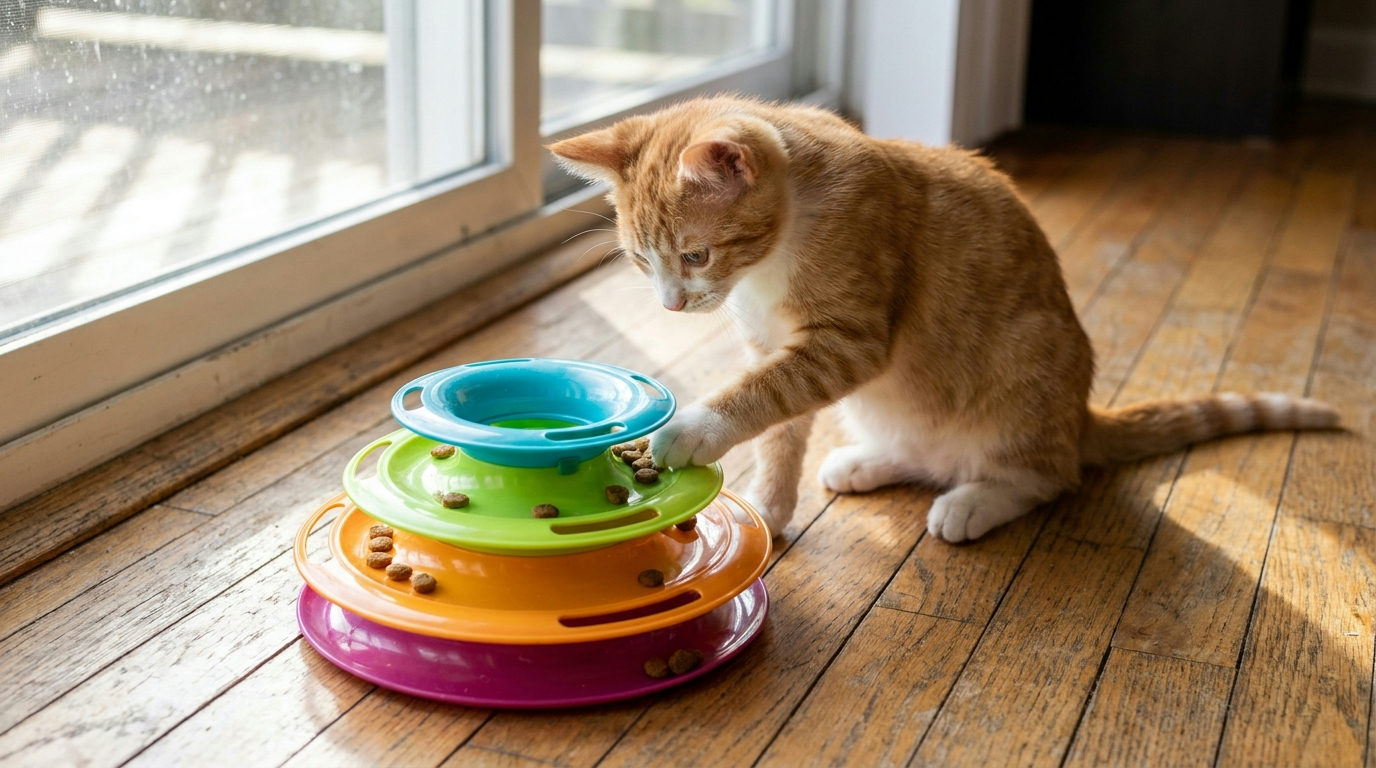
In the wild, cats hunt for many small meals each day. At home, though, food simply appears in a bowl. Cat puzzle feeders bring back some of that natural challenge. This guide explains how cat puzzle feeders may help, which types exist, and how to get started.
Disclosure: Cat Nutrition Guide may earn a commission from qualifying purchases made through links on this page, at no extra cost to you.
What Are Cat Puzzle Feeders?
A puzzle feeder is any toy or device that makes a cat work for its food. For example, a cat may roll a ball to release kibble, or paw treats out of small wells. Some are store-bought, while others are simple homemade options.
Possible Benefits
- Mental stimulation: Solving for food may reduce boredom, especially for indoor cats.
- Slower eating: Cats that gulp food may eat more slowly, which may reduce vomiting after meals.
- More activity: Moving and batting at a feeder adds gentle exercise.
- Weight support: Slower meals and more movement may help with weight management.
A review published by feline veterinarians has encouraged the use of food puzzles for indoor cats. The American Association of Feline Practitioners also shares enrichment resources for owners.
Types of Cat Puzzle Feeders
Stationary Feeders
These stay in one place. The cat uses its paws to fish food out of holes, tubes, or wells. They suit beginners and older cats.
Mobile Feeders
These roll or move. For instance, a treat ball drops kibble as the cat bats it across the floor. They suit active, playful cats.
Lick Mats and Wet Food Puzzles
Textured mats hold wet food or puree. Consequently, cats lick slowly, which can calm some cats. They are easy to wash, too.
How to Introduce a Puzzle Feeder
Start easy. At first, choose a simple design and place a few pieces of food where they are easy to reach. Once your cat succeeds, gradually make it harder. If a cat gets frustrated, go back a step.
In addition, use part of the daily food ration, not extra food. This keeps calories in check. Our guide on how much to feed a cat can help you plan portions. For indoor-specific needs, see our article on indoor cat food.
Easy DIY Ideas
- Cut holes in a toilet paper roll, fold the ends, and place kibble inside.
- Put kibble in an egg carton and let your cat fish it out.
- Scatter a few pieces of kibble around a room for a “hunt.”
Always supervise homemade feeders and remove any damaged parts.
Final Thoughts
To sum up, cat puzzle feeders can turn meals into a fun, natural activity. They may support slower eating, more movement, and less boredom. Start simple, use part of the normal ration, and watch your cat’s progress. If your cat has health issues, ask your vet first.
This article is for general information only and is not a substitute for advice from a licensed veterinarian.


