
Freeze dried cat food is a format you can check on a label, not a promise that one bowl fits every cat. This guide shows how to read the bag, how to tell a complete food from a topper, and which handling steps the U.S. Food and Drug Administration already published for raw pet food. It is general information, not veterinary advice, and it does not tell you how much to feed. If your cat is ill, not eating, or you are changing the main diet, ask a veterinarian who has seen the cat. If this page and the bag disagree, follow the bag. If the bag and your veterinarian disagree, follow the veterinarian.
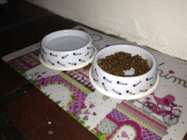
The photograph is Cat food (pellets and water).jpg by Deavmi, CC BY-SA 4.0, on Wikimedia Commons. It shows dry pellets beside a water bowl. It is not a generated picture and it is not a laptop keyboard. Cat Nutrition Guide may earn a commission from qualifying purchases made through links on this page, at no extra cost to you.
Freeze dried cat food starts with the words on the package
Before you add water, copy the product name, the manufacturer, the lot number, and the best-by date onto a note. The FDA explains why the lot number matters on its page about saving your pet food lot number. You are not guessing a calorie count. You are keeping the identity of the bag you actually opened.
Then read the front and the back for two different jobs. One job is form: does the label say the food is freeze dried, frozen, raw, cooked, a topper, or a treat? The other job is purpose: does it say the product is complete and balanced for a named life stage, or does it say it is only a topper or a treat? Those are different products. A topper is not a whole diet just because a cat likes the smell.
- Name and maker: copy them as printed, including the flavor line if there is one.
- Form: freeze dried, raw, cooked, or something else, using the label’s words.
- Role: complete food, topper, or treat, again using the label’s words.
- Life stage: only if the label names one. If it does not, leave the line blank.
- Serving note: copy the feeding directions if they are printed. Do not invent a portion.
The Association of American Feed Control Officials describes what a complete-and-balanced statement is for. Their site is aafco.org. This article does not restate nutrient tables. If the statement is missing, treat the bag as something other than a sole diet until a veterinarian or the manufacturer says otherwise in writing.
What freeze drying is, and what this page will not claim
On a typical process description, freeze drying freezes the food and then removes ice as vapor under vacuum, so the piece stays dry and light. That is a description of a process, not a nutrition score. This page does not say the process keeps a named percentage of any vitamin, protein, or fat. Those figures belong on the guaranteed analysis of the bag you are holding, or they do not belong in the conversation.
This page also does not say that freeze drying kills bacteria, and it does not say that it fails to kill them. If your bag says the food is raw, open the FDA page on raw diets and use that page. If your bag says the food is cooked or otherwise processed, follow that bag’s handling lines and do not borrow the raw-diet rules as if they were a review of your brand.
If the label says raw, use the FDA page, not a guess
The FDA Center for Veterinary Medicine published Get the Facts! Raw Pet Food Diets can be Dangerous to You and Your Pet. Open that page and read it. This article does not repeat the study counts, the dates, or the pathogen names. If the bag says raw, the page is the source. If the bag does not say raw, do not borrow that page as a review of your brand.
The handling steps live on that page. Follow them there. This article will not restate a hand-wash time, a mixing recipe, or a leftover rule. Those lines are for raw feeding when the label says raw. They are not a dose of food and they are not a treatment.
If someone in the home needs medical caution around food, pause and ask their clinician. This blog cannot clear a product. A pause is not a ranking of brands.
How to serve freeze dried cat food without inventing a portion
Read the rehydration line on your bag before you add water. Some labels say to add warm water. Some say a dry piece is acceptable as a treat. If the label is silent, do not fill the silence with a ratio from another brand. Write down what you did the first time: dry or wet, and whether the cat ate it. That note is yours. It is not a feeding chart.
1. Match the bowl to one cat
If more than one cat eats in the kitchen, use one bowl per cat for the first tries, or feed in separate rooms. You are checking whether this cat eats this food, not whether the household finished a plate. Wash the bowl after the meal. The FDA handling page says not to use a pet dish as a scoop.
2. Keep the first change small in time, not in a secret gram count
The bag may say how to mix a new food with the current food. Follow that sentence. If the bag does not say, ask the manufacturer or your veterinarian for a transition plan. This page will not supply a number of days or a number of grams. A slow change is a label instruction or a clinical instruction, not a slogan.
3. Write what happened, not what you hoped
After the meal, note whether the cat ate, walked away, or vomited. One meal is not a diagnosis. Repeated vomiting, straining, or refusing food is a reason to call a clinic, not a reason to adjust a blog. Do not add supplements to balance a topper. If the bag is not complete, the missing piece is a complete food or a veterinary plan, not a powder chosen from a shelf.
Storage belongs to the bag and to the FDA storage page
Unopened freeze dried food is still pet food. The FDA’s page on proper storage of pet food and treats says to keep food in the original container or bag so the lot number and best-by date stay with it, and to store dry pet food and unopened canned food in a cool, dry place, in the conditions that page describes. This article does not restate a temperature. If you move pieces into another tin, put the original bag inside the tin or tape the lot number to the tin. Close the bag after each use.
Once you add water, the food is no longer the dry shelf product. Follow the leftover line on the FDA handling page when the label says raw, and follow the bag when the bag is stricter. This article will not invent a minute count the label does not print.
Questions the bag can answer and questions it cannot
The bag can tell you the product name, whether the maker calls it complete, and what handling words they printed. It cannot tell you whether this cat will tolerate the food. Palatability is something you observe in your kitchen. A claim that many cats love a food is not a measurement, so this page does not say it.
The bag also cannot tell you a price-per-calorie ranking. Cost is whatever the receipt says that day. Compare receipts if you want, and do not treat a blog sentence as a price study. Carbohydrate and protein levels, if you need them, are the guaranteed analysis and the ingredient list on that bag, read as printed. This page will not call a recipe high-protein or low-carbohydrate without those lines in front of you.
Recalls are a separate list. The FDA keeps a recalls page, linked from the raw-diet article. Check the lot you copied against that list when you hear about a recall. Do not assume a format, freeze dried or otherwise, is exempt because a neighbor’s bag was fine.
A simple card before the next bowl
Use one card for this product. Line one is the full product name. Line two is complete, topper, or treat. Line three is whether the label says raw. Line four is the lot number and the best-by date. Line five is the handling step you actually followed, in the label’s words or the FDA page’s words. If line three says raw, keep the FDA raw-diet page with the card. If line two says topper, do not let the topper become the only food by habit.
Bring the card to a veterinary visit if you are asking whether this food can be the main diet. The clinician needs the product identity, not a review score. This article does not rank brands, does not name a gram dose, and does not replace that visit.
The practical close is short. Read freeze dried cat food as a label first: copy the name, the role, and the lot, and open the FDA raw-diet page if the bag says raw. Then serve only what those two texts already tell you to do.


