
If your cat throwing up food has become a regular sight on your floor, you are not alone, and you are right to pay attention. Many owners shrug it off as “just what cats do.” However, frequent vomiting is not something to accept as normal. Some causes are simple feeding habits you can adjust, while others need a veterinarian to sort out. This guide walks through the diet-related factors worth noting, so you can have a clear, useful conversation with your vet.
Disclosure: Cat Nutrition Guide may earn a commission from qualifying purchases made through links on this page, at no extra cost to you.
Vomiting vs Regurgitation: Why the Difference Matters
Before anything else, it helps to know what you are actually seeing. Vets treat vomiting and regurgitation as two different problems, so describing the event accurately can speed up the visit.
Regurgitation
Regurgitation is usually passive. The food comes back up with little or no warning, often within minutes of eating. In many cases it looks tube-shaped, barely digested, and may be coated in mucus. There is typically no heaving beforehand.
Vomiting
Vomiting, on the other hand, is an active process. You may notice drooling, lip licking, restlessness, or loud heaving from the belly first. The material is often partly digested and may contain yellow fluid (bile) or foam. It can happen soon after a meal or hours later.
The Merck Veterinary Manual describes vomiting as a sign rather than a disease, meaning it can point to many underlying causes, from diet to digestive, metabolic, or other illness. That is exactly why your notes matter.
Common Diet Factors Behind a Cat Throwing Up Food
When a cat throwing up food is otherwise bright and healthy, feeding habits are often worth looking at first. Even so, it is wise to check with your vet before assuming the cause is purely dietary.
Eating too fast
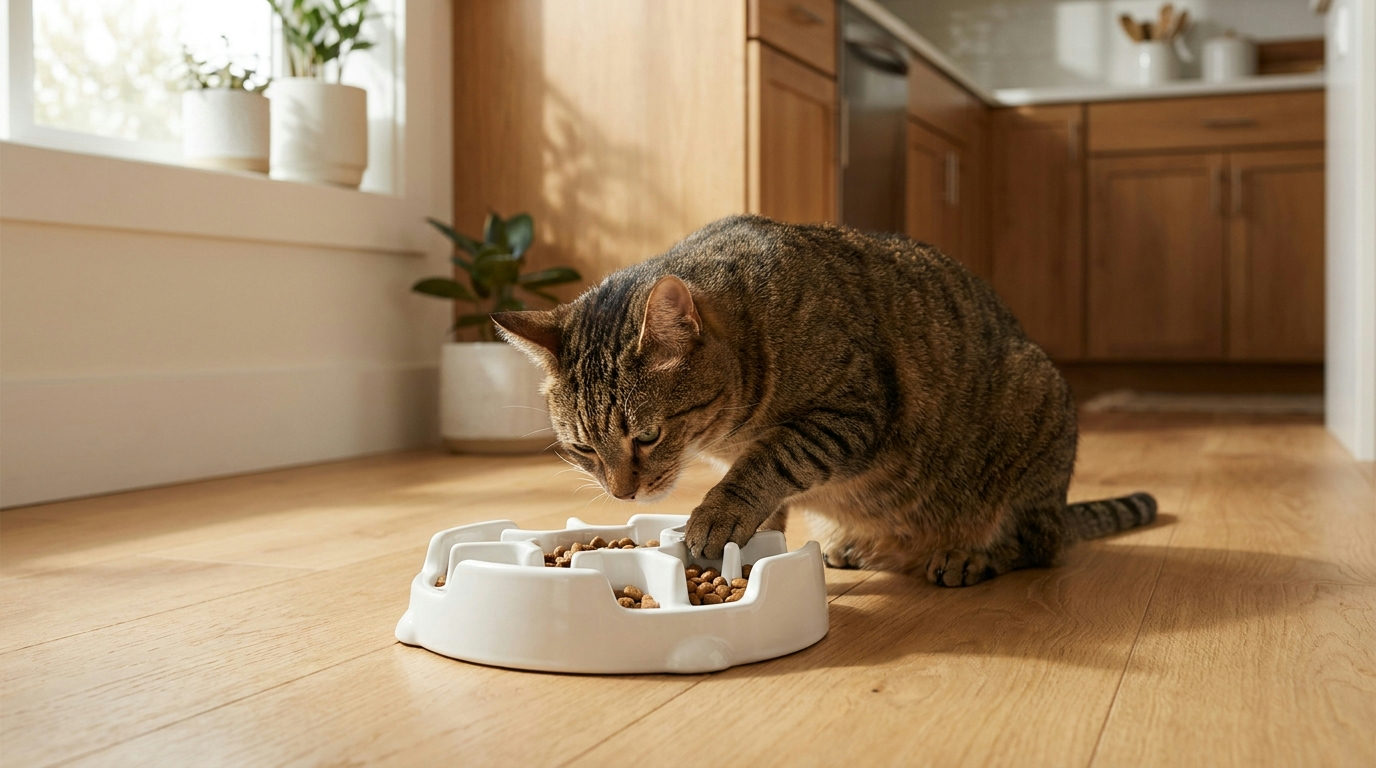
Some cats gulp their meals, especially in multi-cat homes where they feel they must compete. Swallowing large amounts quickly, along with air, can lead to food coming straight back up. This is sometimes called “scarf and barf.”
Practical ways to slow things down include:
- Using a puzzle feeder or slow-feed bowl.
- Spreading wet food thinly across a flat plate.
- Splitting the daily amount into three or four smaller meals.
- Feeding cats in separate rooms so no one feels rushed.
If you are unsure how much each meal should be, our guide to measuring cat food portions explains how to split a daily amount accurately.
Sudden food changes
A cat’s digestive system often does best with consistency. Switching foods overnight can upset the stomach and lead to vomiting or loose stool. Instead, most vets suggest a gradual transition over roughly 7 to 10 days, mixing a little more of the new food each day.
Large meals after long gaps
Similarly, a cat that goes a long time without food may eat a big meal too quickly. Some cats also vomit a little yellow bile when their stomach is empty for a long stretch. A steadier routine can help, and our cat feeding schedule guide covers options.
Food temperature and texture
Food served straight from the fridge may be less appealing and, for some cats, harder on the stomach. Letting wet food come to room temperature is a simple change to try.
Hairballs
Hairballs can trigger vomiting, particularly in long-haired cats. Even so, frequent hairballs are not “normal” either, and they are worth mentioning to your vet. Regular brushing may help reduce the amount of hair swallowed.
Possible food sensitivities
In some cats, an ingredient may not agree with them. However, identifying this properly requires a vet-guided elimination diet, not guesswork. Rotating through many foods at home can actually make the picture harder to read.
Red Flags: When to See the Vet Now
Some signs mean you should not wait and watch. Contact your vet or an emergency clinic promptly if your cat shows any of the following:
- Vomiting several times in one day, or repeatedly over 24 hours.
- Blood in the vomit, or material that looks like coffee grounds.
- Repeated retching with nothing coming up.
- Lethargy, hiding, weakness, or collapse.
- Refusing food, especially for more than a day.
- Signs of belly pain, such as a hunched posture or crying when touched.
- Diarrhea alongside vomiting, or signs of dehydration (tacky gums, sunken eyes).
- Suspected swallowing of string, thread, hair ties, or toys.
- Possible access to toxins, such as lilies, medications, or household chemicals.
- Vomiting in a kitten, a senior cat, or a cat with a known health condition.
In addition, ongoing vomiting that happens weekly or more, even if your cat seems fine otherwise, deserves a vet visit. The Cornell Feline Health Center notes that chronic vomiting in cats can be linked to a range of conditions, so a proper workup is the best route to answers.
What to Track Before Your Appointment
Vets often say the owner’s observations are among the most useful clues. Before your visit, try to keep a simple log for a week or so. Note:
- Timing: how long after eating it happens.
- Type: whole food, partly digested food, liquid, foam, or hair.
- Warning signs: heaving and lip licking, or no warning at all.
- Frequency: how many times per day or week.
- Food details: brand type (wet or dry), recent changes, treats, and table scraps.
- Other changes: appetite, thirst, weight, litter box habits, and energy.
A photo of the vomit on your phone, although unpleasant, can also help your vet see what you saw.
A worked example of a useful log entry
Here is what a clear note might look like: “Tuesday, 7:10 a.m. Ate breakfast fast at 7:00. Whole, undigested kibble came up with no heaving. Normal energy afterward. Switched to a new dry food three days ago.” In just a few lines, that tells your vet about timing, appearance, warning signs, and a recent diet change.
Questions to Ask Your Vet
Going in with questions helps you leave with a plan. Consider asking:
- Does this sound more like vomiting or regurgitation?
- Are tests needed, such as bloodwork, a fecal test, or imaging?
- Could the current food, or the way I feed it, be playing a role?
- Would a different texture, meal size, or feeding schedule be worth trying?
- Is a diet trial appropriate, and if so, how long should it last?
- What signs mean I should call you back sooner?
- Is it safe to give any treats while we work this out?
Simple Feeding Adjustments to Discuss
Once your vet has ruled out urgent problems, they may suggest some feeding changes. These are general ideas that may help some cats; your vet can tell you which make sense for yours.
| Observation | Adjustment to discuss with your vet |
|---|---|
| Food comes up minutes after a fast meal | Slow feeder, smaller and more frequent meals |
| Vomiting started after a food switch | Return to the old food, then transition slowly |
| Yellow bile on an empty stomach | More evenly spaced meals, possibly a small late meal |
| Frequent hairballs | Regular brushing and a vet check for underlying causes |
| Ongoing vomiting with no clear pattern | Full vet workup before any diet change |
Above all, avoid withholding food for long periods on your own. Cats can become seriously unwell if they stop eating, so any fasting plan should come from your vet.
Frequently Asked Questions
Is it normal for a cat to vomit once in a while?
An occasional single episode in an otherwise healthy, eating, active cat may not be an emergency. Still, regular vomiting is not considered normal, and a pattern is worth discussing with your vet.
Should I switch foods if my cat keeps throwing up?
Not without a plan. Frequent switching can make vomiting worse and makes it harder to identify a cause. Talk to your vet first, and if a change is recommended, transition gradually.
Can I give my cat home remedies for vomiting?
It is best not to. Some human medicines are dangerous to cats. Your vet can recommend safe options if any are needed.
The Bottom Line
A cat throwing up food can have simple causes, such as eating too fast or a sudden diet switch. Nevertheless, it can also be a sign of something that needs medical care. Watch closely, keep notes, make gentle feeding adjustments, and above all, talk to your vet, especially if you see any red flags.
This article is for general information only and is not veterinary advice. It is not a substitute for advice from a licensed veterinarian who knows your cat.


