
Urinary problems are among the most common reasons cats visit the vet. While diet is not a cure, a well-planned cat urinary health diet may help support a healthy urinary tract. This guide explains the basics.
Disclosure: Cat Nutrition Guide may earn a commission from qualifying purchases made through links on this page, at no extra cost to you.
Important: A cat straining to urinate, especially a male cat, can be a medical emergency. If your cat strains with little or no urine, see a vet immediately.
How Diet Affects the Urinary Tract
Food influences urine in several ways. First, it affects how much water a cat takes in. Second, it shapes urine pH. Third, mineral levels such as magnesium and phosphorus affect whether crystals may form. Together, these factors matter for urinary comfort.
Key Parts of a Cat Urinary Health Diet
More Moisture
Cats evolved to get much of their water from prey. As a result, many do not drink much on their own. More moisture leads to more dilute urine, which may support urinary health. Wet food is one of the easiest ways to add water. See our cat hydration tips for more ideas.
Balanced Minerals
Urinary support foods usually control magnesium, phosphorus, and calcium. This may help reduce the chance of certain crystals forming. However, the right balance depends on the crystal type, so your vet’s diagnosis matters.
Healthy Weight
Overweight cats may face a higher risk of urinary problems. Therefore, managing weight is part of the picture. Our cat weight loss diet guide can help.
Over-the-Counter vs. Prescription Foods
Many pet stores sell “urinary health” formulas. These may suit healthy cats as a general option. By contrast, prescription urinary diets are designed for cats with diagnosed conditions. They should only be used under a vet’s care, since the wrong diet could cause other issues.
So, if your cat has had urinary problems, ask your vet which food fits their needs. The Cornell Feline Health Center also shares helpful background on feline lower urinary tract disease.
Everyday Habits That Help
- Offer fresh water in several spots around the home.
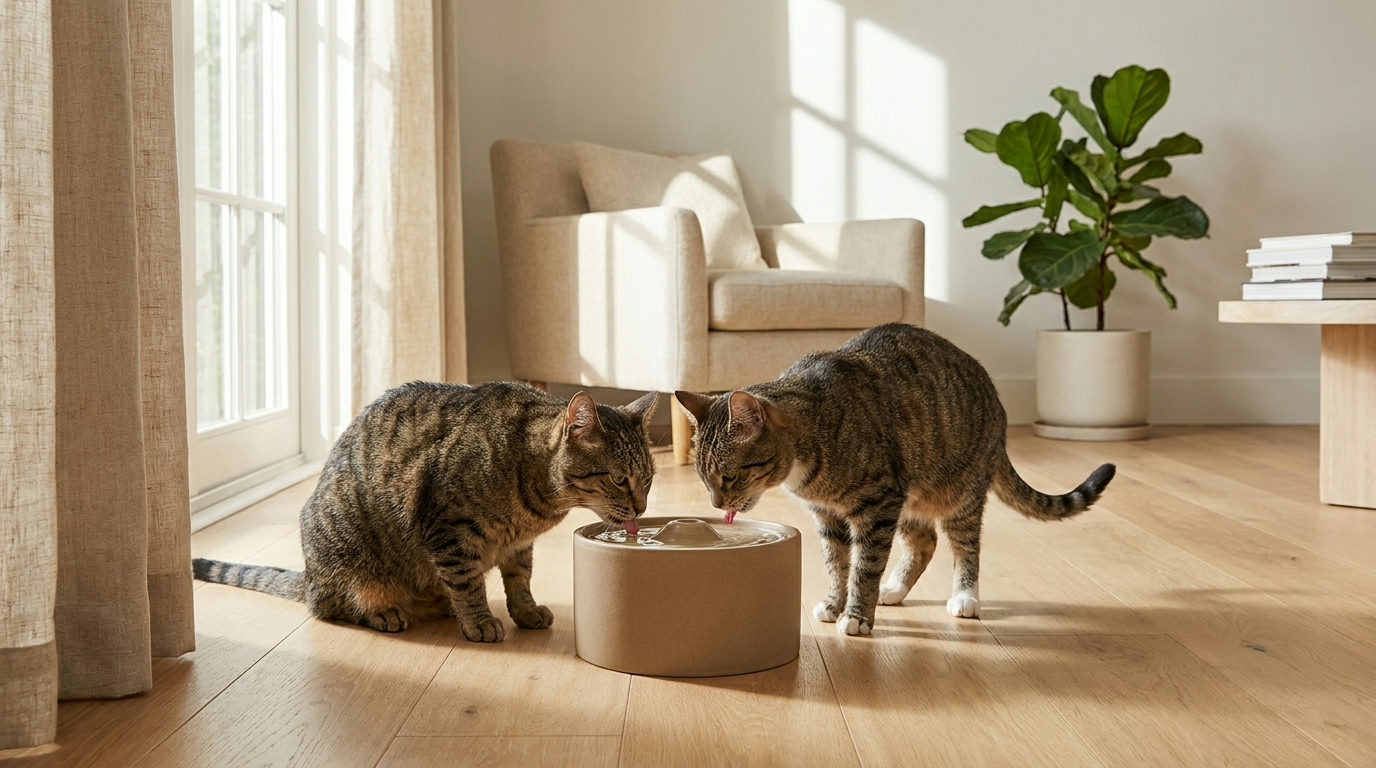
- Try a water fountain if your cat likes moving water.
- Keep litter boxes clean, since some cats avoid dirty boxes.
- Reduce stress with routine, hiding spots, and play.
Stress is thought to play a role in some urinary issues. For this reason, a calm home can be just as important as food.
Warning Signs to Watch For
- Straining or frequent trips to the litter box
- Blood in the urine
- Crying while urinating
- Urinating outside the box
- Licking the genital area often
Final Thoughts
In summary, a cat urinary health diet focuses on moisture, balanced minerals, and healthy weight. Combine it with clean boxes, fresh water, and low stress. Above all, work with your vet, especially if your cat has shown urinary signs before.
This article is for general information only and is not a substitute for advice from a licensed veterinarian. Always consult your vet about your cat’s specific needs.


