
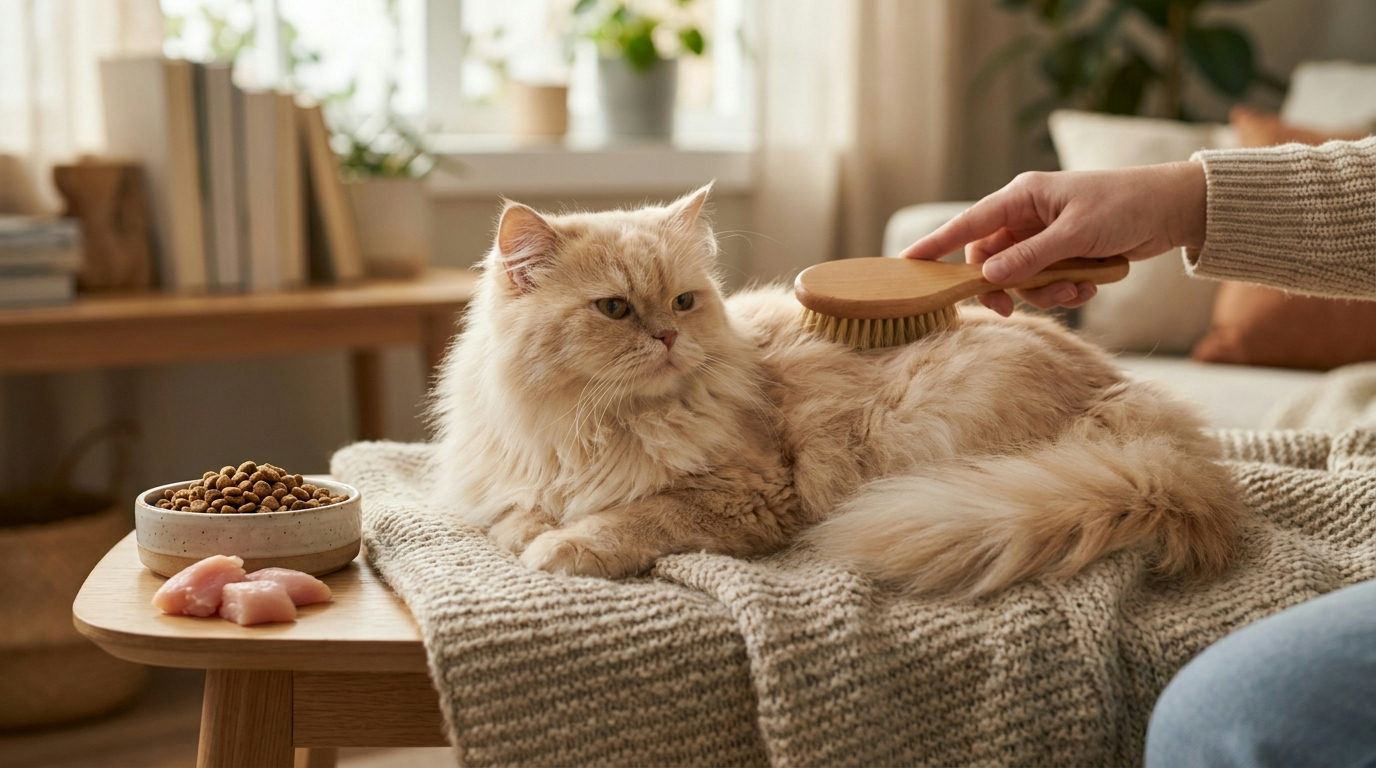
Hairballs are a normal part of life for many cats. However, frequent hairballs can be uncomfortable. A thoughtful cat hairball diet, along with good grooming, may help hair pass more smoothly through the gut. This guide explains how.
Disclosure: Cat Nutrition Guide may earn a commission from qualifying purchases made through links on this page, at no extra cost to you.
Why Cats Get Hairballs
Cats groom themselves with rough tongues that catch loose hair. Most of that hair passes through the digestive tract. Sometimes, though, it builds up in the stomach and comes back up as a hairball.
Long-haired breeds and heavy groomers tend to have more hairballs. Also, seasonal shedding can bring a spike. That said, frequent hairballs, or retching with nothing coming up, can signal another issue. So, check with your vet if hairballs happen more than occasionally.
How a Cat Hairball Diet Works
Diet may help in a few ways. First, fiber can help move hair through the intestines. Second, good hydration keeps digestion running smoothly. Third, healthy fats may support skin and coat, which could reduce shedding.
Fiber
Hairball formulas usually contain added fiber, such as cellulose, beet pulp, or psyllium. These ingredients may help carry hair along with the stool. For more detail, read our guide to fiber for cat digestion.
Moisture
Water helps keep things moving. Therefore, adding wet food may support hydration and digestion. Our cat hydration tips share easy ways to help your cat drink more.
Omega-3 and Omega-6 Fats
Essential fatty acids may support a healthy coat. A healthier coat may shed less loose hair, although results vary. See our article on omega 3 for cats for more.
Choosing a Cat Hairball Diet Formula
If you try a hairball-control food, look for a “complete and balanced” statement. Then, check the fiber level in the guaranteed analysis. Change foods slowly over about a week to avoid stomach upset.
Keep in mind that more fiber is not always better. Very high fiber can affect how well other nutrients are absorbed. Consequently, it is wise to ask your vet which option suits your cat.
Other Ways to Reduce Hairballs
- Brush often: Regular brushing removes loose hair before your cat swallows it.
- Encourage play: Active cats may groom less out of boredom.
- Consider hairball gels: Some vets suggest lubricant products for occasional use.
- Offer cat grass: Some cats enjoy nibbling on it, though its effect on hairballs is not well proven.
When to See a Vet
Call your vet if your cat has repeated retching, vomiting, constipation, appetite loss, or a swollen belly. In rare cases, hair can cause a blockage. The Cornell Feline Health Center offers more information on digestive health.
Final Thoughts
In short, a cat hairball diet with the right fiber and moisture may help reduce hairballs. Combine it with regular brushing and plenty of water for the best results. Above all, see your vet if hairballs become frequent or your cat seems unwell.
This article is for general information only and is not a substitute for advice from a licensed veterinarian. Always consult your vet about your cat’s specific needs.


