
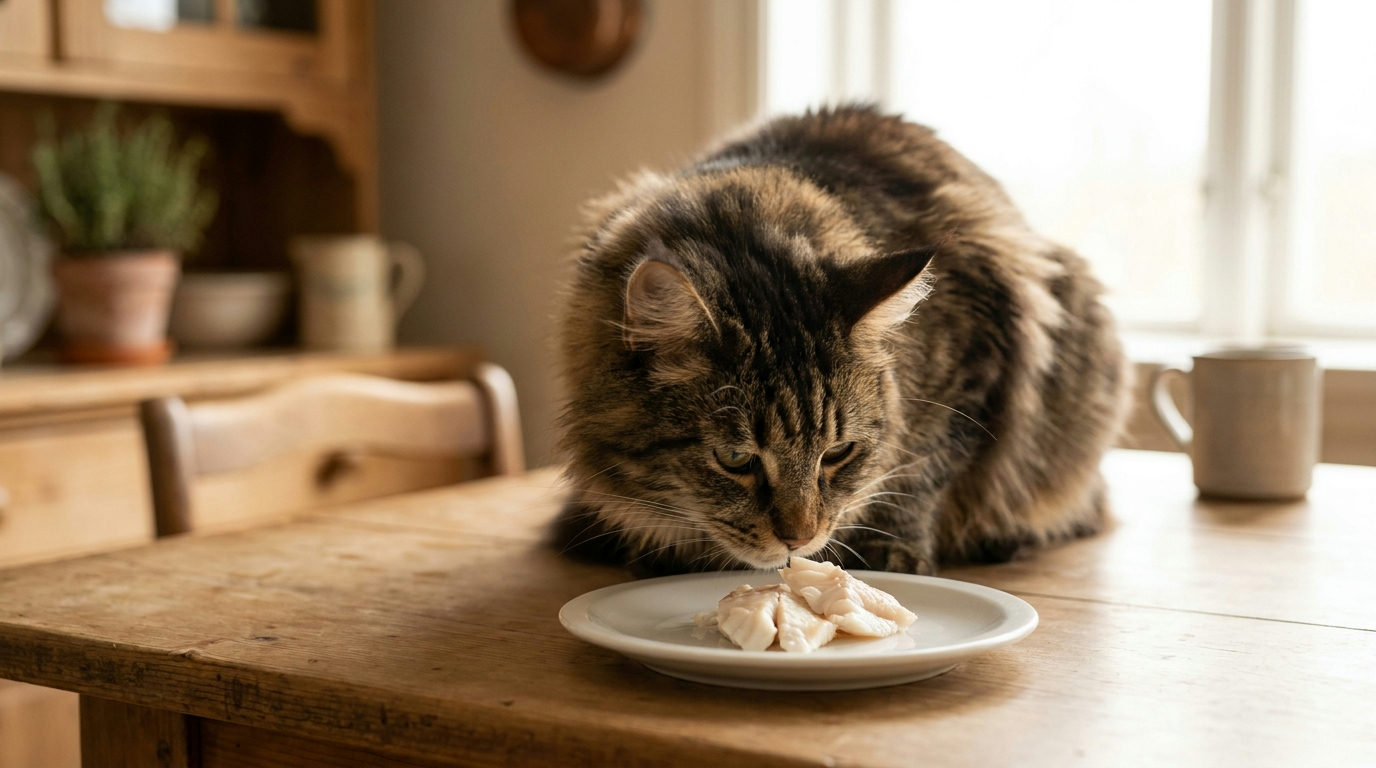
Fish in cat diets is one of those topics where the popular image and the practical reality don’t quite match. Cats in cartoons love fish, and plenty of real cats do too. Yet wild cats evolved mostly on small land prey, not seafood. So, is fish good for cats? It can be a useful protein in a complete and balanced food, but raw fish, human-style tuna, and an all-fish menu each come with risks worth understanding. This guide breaks down the benefits, the concerns, and a sensible way to think about how often fish shows up in your cat’s bowl.
Disclosure: Cat Nutrition Guide may earn a commission from qualifying purchases made through links on this page, at no extra cost to you.
What Fish Can Offer a Cat
Fish is an animal protein, and cats are obligate carnivores that rely on animal-based nutrition. When fish is used as an ingredient in a properly formulated commercial food, it can contribute to a cat’s overall protein intake alongside other ingredients.
Fish also naturally contains omega-3 fatty acids, specifically EPA and DHA. These fats may support skin and coat health, and vets sometimes recommend omega-3 supplements for particular situations. However, that’s a decision for your vet, since dose and product quality matter.
In addition, many cats find fish very appealing. That can be helpful for a cat with a poor appetite, for example during recovery, if your vet suggests a more tempting food. For more on protein choices in general, see our guide to top protein sources for your cat’s diet.
The Main Risks of Fish in Cat Diets
None of the risks below mean fish is off-limits. Instead, they explain why the form of fish and the overall balance of the diet matter so much.
1. Raw fish and thiamine
Some raw fish contain an enzyme called thiaminase, which breaks down thiamine (vitamin B1). Cats need thiamine from their diet, and a lasting shortage can cause serious neurological problems. The Tufts Cummings School veterinary nutrition team has written about thiamine concerns in cat diets.
Cooking deactivates thiaminase, which is one reason commercial foods are processed the way they are. Raw fish fed regularly, on the other hand, may put a cat at risk. Raw fish can also carry bacteria and parasites. For these reasons, it’s best to avoid feeding raw fish unless your vet specifically advises otherwise.
2. Mercury and other contaminants
Large, long-lived predatory fish, such as tuna, are generally known to accumulate more mercury than smaller fish. That’s mainly discussed as a concern for people, but cats are much smaller, so it’s sensible to be cautious.
That doesn’t mean a lick of tuna is dangerous. Rather, it’s a good reason not to make tuna a daily staple, and a fair question to raise with your vet if your cat eats a lot of it.
3. Human tuna isn’t a complete meal
Canned tuna made for people is not formulated for cats. On its own, it’s missing nutrients cats need, and a cat that fills up on it may not eat its regular food. Some versions are packed in brine, which adds salt. Flavored versions may also contain onion or garlic, which are unsafe for cats. Our guide to dangerous ingredients in cat food covers more of these.
4. The “fish addict” problem
Some cats become fixated on fish and refuse anything else. International Cat Care discusses how cats can develop strong food preferences, and fish-heavy diets are a common example. This becomes a real issue if your cat later needs a different diet for a health reason, such as a kidney or urinary diet. A cat that will eat only fish can be very hard to switch.
5. Food sensitivities
Fish is among the protein sources that some cats may react to. If your cat has itchy skin or ongoing digestive upset, your vet may suggest a food trial. Don’t try to diagnose a food allergy on your own, though, because many other conditions look similar.
Fish in Cat Diets: Quick Comparison
| Type of fish | Generally reasonable? | Notes |
|---|---|---|
| Fish in a complete and balanced cat food | Yes, for most cats | Rotate with other proteins to avoid fixation |
| Plain cooked fish, small amount, boneless | Occasional treat | No seasoning, oil, onion, or garlic |
| Canned tuna for people | Rarely, tiny amounts | Not balanced; choose water-packed, unflavored |
| Raw fish | Best avoided | Thiaminase, bacteria, and parasite concerns |
| Fish oil supplements | Only if your vet recommends | Dose and product matter |
How Often Should Cats Eat Fish?
There’s no single official number for this, so be wary of anyone who gives you one with total confidence. Instead, a few principles can guide you:
- Fish as part of a complete food: fine for most cats, ideally rotated with poultry or meat-based recipes so your cat stays flexible.
- Fish as a treat: keep it occasional and small, and count it toward your cat’s treat allowance.
- Fish as the whole diet: not advisable, because of the fixation, contaminant, and balance concerns above.
A worked example
Picture a cat that eats a salmon-based wet food every single meal. The food itself may be complete and balanced. Even so, the owner might decide to rotate in a chicken or turkey recipe a few days a week. That way, the cat stays used to different flavors and textures. If a vet ever needs to prescribe a special diet, the cat is more likely to accept it.
Meanwhile, the owner keeps tuna as a rare topper, a teaspoon of water-packed, unflavored tuna on a special occasion, rather than a daily habit.
How to Serve Fish Safely as a Treat
- Cook it thoroughly. Steamed, baked, or poached fish works well.
- Skip all seasoning, butter, oil, onion, and garlic.
- Remove every bone, including small pin bones.
- Offer a small portion and count it as a treat.
- Watch for any vomiting, diarrhea, or itching afterward.
Fish and Special Health Situations
If your cat has a medical condition, check with your vet before adding fish or fish oil. For instance, some cats on prescription diets need to eat only that food. Others may be on medications where extra supplements need a vet’s review. Older cats with kidney concerns may also have specific dietary needs that your vet can explain.
When to See Your Vet
Call your vet promptly if your cat shows any of the following, especially if fish has been a big part of the diet:
- Wobbliness, an unusual head posture, or seizures
- Refusing all food except one type, especially if weight is dropping
- Ongoing vomiting or diarrhea
- Persistent itching, overgrooming, or skin sores
- Sudden lethargy or weakness
Neurological signs, like the first item, need urgent attention.
Questions to ask your vet
- Is it okay for my cat to eat a fish-based food every day?
- Should I rotate proteins, and how?
- Would an omega-3 supplement help my cat, and which dose?
- Could my cat’s skin or stomach issues be food-related?
- How can I help a fish-fixated cat accept other foods?
The Bottom Line
Fish in cat diets can be a reasonable part of a complete and balanced food, and an occasional cooked treat is fine for most cats. The problems come with raw fish, human tuna as a staple, and all-fish menus that leave cats unbalanced or fixated. Keep fish as one option among several, cook any fish you share, and check with your vet about supplements or special diets.
This article is for general information only and is not veterinary advice. It is not a substitute for advice from a licensed veterinarian who knows your cat.


