
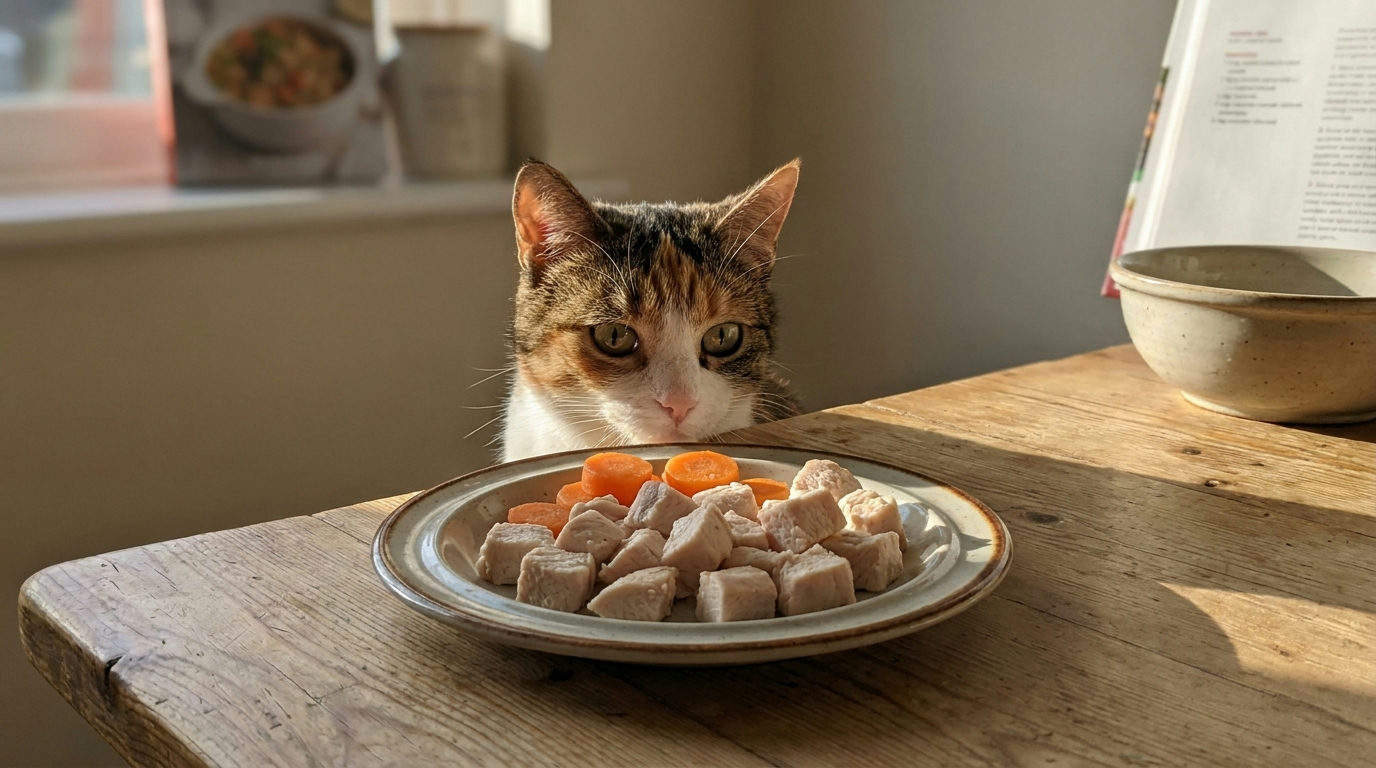
Cats often beg at the table, and it is tempting to share. The good news is that there are some human foods cats can eat safely. The key is choosing the right ones and keeping portions small.
Disclosure: Cat Nutrition Guide may earn a commission from qualifying purchases made through links on this page, at no extra cost to you.
Before you share, remember one rule. Treats of any kind should make up no more than about 10 percent of your cat’s daily calories. Their main food should supply the rest.
Lean Cooked Meats
Cats are carnivores, so plain cooked meat is a natural choice. Good options include chicken, turkey, and lean beef. However, always cook the meat fully and remove skin, bones, and fat. Also, skip seasoning, since garlic and onion are harmful to cats.
Cooked Fish
Small amounts of plain cooked salmon or white fish can be a tasty treat. Fish offers protein and omega-3 fatty acids. On the other hand, too much fish can unbalance the diet. So, keep fish as an occasional extra rather than a daily meal.
Eggs
Fully cooked eggs, whether scrambled or boiled, are a good source of protein. By contrast, raw eggs may carry bacteria. In addition, raw egg whites can interfere with a B vitamin. Therefore, always cook eggs first and serve them plain.
Vegetables Some Cats Enjoy
Cats do not need vegetables, but a few are safe as treats. For example, many cats will nibble on:
- Steamed carrots, cut into small pieces
- Plain cooked pumpkin, which adds fiber
- Steamed green beans or peas
- Cucumber slices
Plain pumpkin may support regular digestion thanks to its fiber. Read more in our guide to fiber for cat digestion.
Fruits in Moderation
Cats cannot taste sweetness, so fruit is rarely a favorite. Still, small pieces of blueberries, seedless watermelon, or peeled apple are safe for most cats. However, always avoid grapes and raisins.
Human Foods Cats Can Eat vs. Foods to Avoid
Some foods are never safe. These include onions, garlic, chocolate, alcohol, caffeine, grapes, and raisins. Our full list of foods toxic to cats covers the details. The ASPCA also keeps a helpful reference.
Tips for Sharing Human Foods Cats Can Eat
- Offer tiny, bite-sized pieces.
- Introduce one new food at a time.
- Watch for vomiting, diarrhea, or itching afterward.
- Avoid salty, fried, or heavily processed foods.
- Never replace a complete cat food with table scraps.
Also, keep in mind that cats with health conditions may need a special diet. For those cats, ask your vet before offering any extras. You can learn more about how treats affect your cat’s diet here.
Final Thoughts
In short, there are several human foods cats can eat, such as plain cooked meat, fish, eggs, and a few vegetables. Keep portions small, skip seasonings, and avoid known toxic foods. That way, sharing a snack stays a safe and happy moment.
This article is for general information only and is not a substitute for advice from a licensed veterinarian. Always consult your vet about your cat’s specific needs.


