
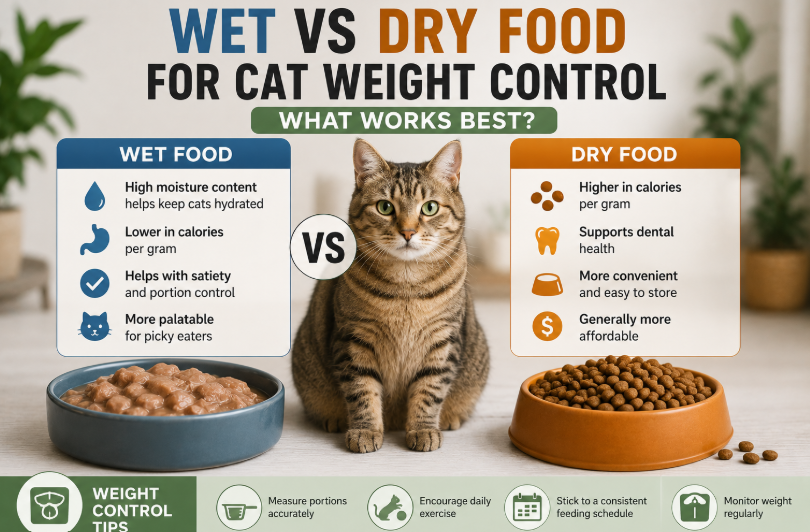
Managing a cat’s weight can be challenging, especially when so many feeding options are available. One of the most common questions owners ask is whether wet vs dry food makes a bigger difference when trying to help a cat reach or maintain a healthy weight. While both types of food can support feline health, they affect calorie intake, hydration, satiety, and feeding habits in different ways. Understanding these differences can help owners choose the most effective approach for long-term weight control.
Obesity is one of the most common health concerns affecting domestic cats today. Excess body weight increases the risk of diabetes, arthritis, heart disease, and reduced mobility. Therefore, finding a feeding strategy that promotes healthy weight management is extremely important.
Many owners assume one type of food is automatically better than the other. However, weight management is influenced by several factors, including calorie intake, portion sizes, activity levels, and overall diet quality. As a result, the answer is often more nuanced than a simple preference for wet or dry food.
By examining how each option affects feline health, owners can make more informed decisions that support their cat’s individual needs.
Understanding the Differences Between Wet and Dry Food
To evaluate wet vs dry food, it helps to understand the basic differences between these two feeding options. Although both can provide complete and balanced nutrition, they differ significantly in moisture content and calorie density.
Wet food typically contains around 70 to 80 percent water. This high moisture content makes it softer, more aromatic, and often more appealing to cats. Because water contributes volume without adding calories, wet food generally contains fewer calories per ounce than dry food.
Dry food contains much less moisture, usually around 10 percent. As a result, nutrients become more concentrated, making dry food more calorie-dense. Smaller portions often contain the same number of calories as larger servings of wet food.
Storage and convenience also differ. Dry food is easier to store and can remain available for longer periods without spoiling. Wet food requires refrigeration after opening and is generally consumed more quickly.
While these differences may seem simple, they can significantly influence feeding behavior and weight management outcomes.
How Calorie Density Affects Weight Control
One of the most important aspects of the wet vs dry food debate involves calorie density. Understanding this concept helps explain why some cats gain weight more easily on certain diets.
Because dry food contains less water, calories are concentrated into smaller portions. Consequently, cats can consume large numbers of calories without eating large amounts of food. This can make portion control more challenging, especially when owners estimate serving sizes rather than measuring them carefully.
Wet food contains more water and fewer calories per ounce. Therefore, cats often consume a larger volume of food while taking in fewer calories. This increased volume may help some cats feel more satisfied after meals.
Portion awareness becomes especially important when feeding dry food. Even small overestimations can lead to excess calorie intake over time. As a result, precise measurement is essential.
However, calorie density alone does not determine success. A cat can gain weight on wet food if portions are excessive, just as a cat can maintain a healthy weight on dry food when portions are controlled appropriately.
Ultimately, calorie balance remains the foundation of successful weight management.
The Role of Satiety and Hunger
When comparing wet vs dry food, feelings of fullness often play a major role. Cats that feel satisfied after meals may be less likely to beg for food or overeat.
Wet food often provides greater satiety because of its high moisture content. The increased volume fills the stomach more effectively while contributing fewer calories. Consequently, some cats appear more satisfied after eating wet food compared to dry food.
Additionally, wet food often requires more chewing and may encourage slower eating. This can provide extra time for satiety signals to develop.
Dry food, on the other hand, is highly concentrated. Cats may consume calories quickly without experiencing the same level of fullness. This effect can be particularly noticeable in cats that eat rapidly.
However, individual responses vary. Some cats feel perfectly satisfied on carefully portioned dry food diets. Others seem more content when wet food forms a larger portion of their daily intake.
Understanding your cat’s behavior can help determine which feeding strategy provides the best balance between satisfaction and calorie control.
Hydration Benefits and Their Impact
Hydration is another important factor in the wet vs dry food discussion. While hydration itself does not directly cause weight loss, it can influence overall health and wellness.
Cats naturally have a low thirst drive because their ancestors obtained much of their moisture from prey. Consequently, many domestic cats consume less water than ideal when relying primarily on dry food.
Wet food provides substantial moisture with every meal. This additional hydration may support urinary tract health, kidney function, and overall well-being. Better hydration can also contribute to a feeling of fullness after meals.
Dry food-fed cats can remain healthy if they drink adequate water. However, some cats simply do not consume enough fluids voluntarily. In these situations, wet food may offer meaningful benefits beyond calorie management.
Hydration becomes particularly important for older cats and those with certain medical conditions. Therefore, moisture content should be considered alongside calorie considerations when choosing a feeding plan.
A healthy cat benefits from both proper nutrition and adequate water intake throughout life.
Portion Control Matters More Than Food Type
Although discussions about wet vs dry food often focus on product differences, portion control frequently has a greater impact on weight outcomes than food type alone.
Even the highest-quality wet food can contribute to weight gain when served in excessive amounts. Similarly, many cats maintain ideal body condition on dry food when portions are measured accurately.
Owners often underestimate how much food they provide. Free-feeding dry food is a common contributor to obesity because cats may consume calories throughout the day without restriction.
Scheduled meals offer greater control and make it easier to monitor intake. Whether feeding wet food, dry food, or a combination of both, measuring portions accurately helps maintain consistency.
Monitoring body weight regularly also supports effective weight management. Small adjustments can be made before significant weight changes occur.
By focusing on portion control first, owners often achieve better results regardless of the specific food type they choose.
Can Mixed Feeding Offer the Best of Both Worlds?
Many cat owners discover that combining food types provides an effective solution. In the ongoing wet vs dry food conversation, mixed feeding often delivers benefits from both approaches.
A combination feeding plan may include wet food for hydration and satiety while incorporating dry food for convenience and variety. This strategy can create a balanced routine that accommodates different preferences and lifestyles.
Mixed feeding may also help cats adapt to different textures and flavors. Consequently, dietary flexibility can become an advantage if future nutritional changes are necessary.
Owners still need to monitor total calorie intake carefully. Combining foods without adjusting portions can lead to accidental overfeeding. Therefore, calorie calculations should account for all food sources.
Many veterinarians support mixed feeding because it offers nutritional diversity while preserving flexibility. However, the ideal balance varies between individual cats.
Evaluating your cat’s weight, appetite, activity level, and overall health helps determine whether a mixed approach is appropriate.
Choosing the Right Option for Different Cats
The ideal answer to the wet vs dry food question often depends on the individual cat. Factors such as age, activity level, medical history, and personal preference all influence dietary decisions.
Overweight cats frequently benefit from wet food because of its lower calorie density and higher moisture content. The increased volume may help improve satiety while supporting calorie reduction.
Highly active cats may thrive on either option as long as calorie intake matches energy expenditure. Likewise, growing kittens require nutrient-dense diets that support development regardless of food format.
Senior cats sometimes prefer wet food because it is easier to chew and provides additional hydration. Cats with dental issues may also find softer foods more comfortable.
Medical conditions can influence recommendations as well. Certain urinary, kidney, or metabolic conditions may benefit from increased moisture intake. Veterinary guidance becomes especially valuable in these situations.
No single feeding method works perfectly for every cat. Personalized evaluation generally produces the best long-term results.
Common Myths About Wet and Dry Food
Several misconceptions influence opinions about wet vs dry food. Understanding these myths helps owners make more informed choices.
One common belief is that wet food automatically causes weight loss. In reality, calorie intake determines weight change. Wet food can support weight management, but portion control remains essential.
Another myth suggests that dry food always causes obesity. While free-feeding can contribute to weight gain, carefully measured dry food can support healthy body weight successfully.
Some owners assume dry food cleans teeth effectively. Although certain dental diets may offer benefits, regular dental care remains important regardless of food type.
Others believe wet food lacks nutritional completeness. However, many wet foods provide balanced nutrition when formulated appropriately.
Separating facts from myths allows owners to focus on practical strategies rather than assumptions. Balanced decision-making supports better health outcomes over time.
Creating a Sustainable Weight Management Plan
Successful weight control requires consistency. While the wet vs dry food discussion is important, sustainable habits ultimately determine long-term success.
Regular weigh-ins help track progress and identify trends early. Monitoring body condition provides additional insight beyond scale readings alone.
Exercise should complement nutritional efforts. Interactive play sessions, climbing opportunities, and environmental enrichment help increase calorie expenditure and support overall wellness.
Feeding schedules also matter. Predictable mealtimes help regulate intake and make appetite changes easier to recognize. Furthermore, scheduled feeding reduces opportunities for unnecessary snacking.
Patience remains essential. Healthy weight changes occur gradually, and sustainable results require time. Rapid adjustments often prove difficult to maintain.
A successful plan combines appropriate nutrition, portion control, activity, and ongoing monitoring. Together, these elements create a strong foundation for long-term health.
Conclusion
The question of wet vs dry food does not have a universal answer because every cat has unique needs. Wet food offers advantages related to hydration, satiety, and lower calorie density, while dry food provides convenience, affordability, and nutritional completeness when used appropriately. For many cats, either option can support healthy weight management when portions are controlled and calorie intake remains balanced.
Rather than focusing solely on food type, owners should consider overall nutrition, feeding habits, activity levels, and body condition. In many cases, a combination approach provides the benefits of both wet and dry food. By tailoring feeding strategies to the individual cat and monitoring results consistently, owners can create effective plans that support healthy weight and long-term wellness.
FAQ
1. Is wet food better for overweight cats?
Wet food may help some overweight cats because it contains more moisture and fewer calories per ounce.
2. Can cats maintain a healthy weight on dry food?
Yes. Many cats maintain ideal body condition when dry food portions are measured accurately.
3. Does wet food help cats feel fuller?
Often yes. The higher moisture content increases food volume and may improve satiety.
4. Should I mix both feeding options together?
Many owners successfully combine both types, provided total calorie intake remains appropriate.
5. How can I tell if my cat’s feeding plan is working?
Monitor body weight, body condition, energy levels, and overall health regularly to evaluate progress.


