
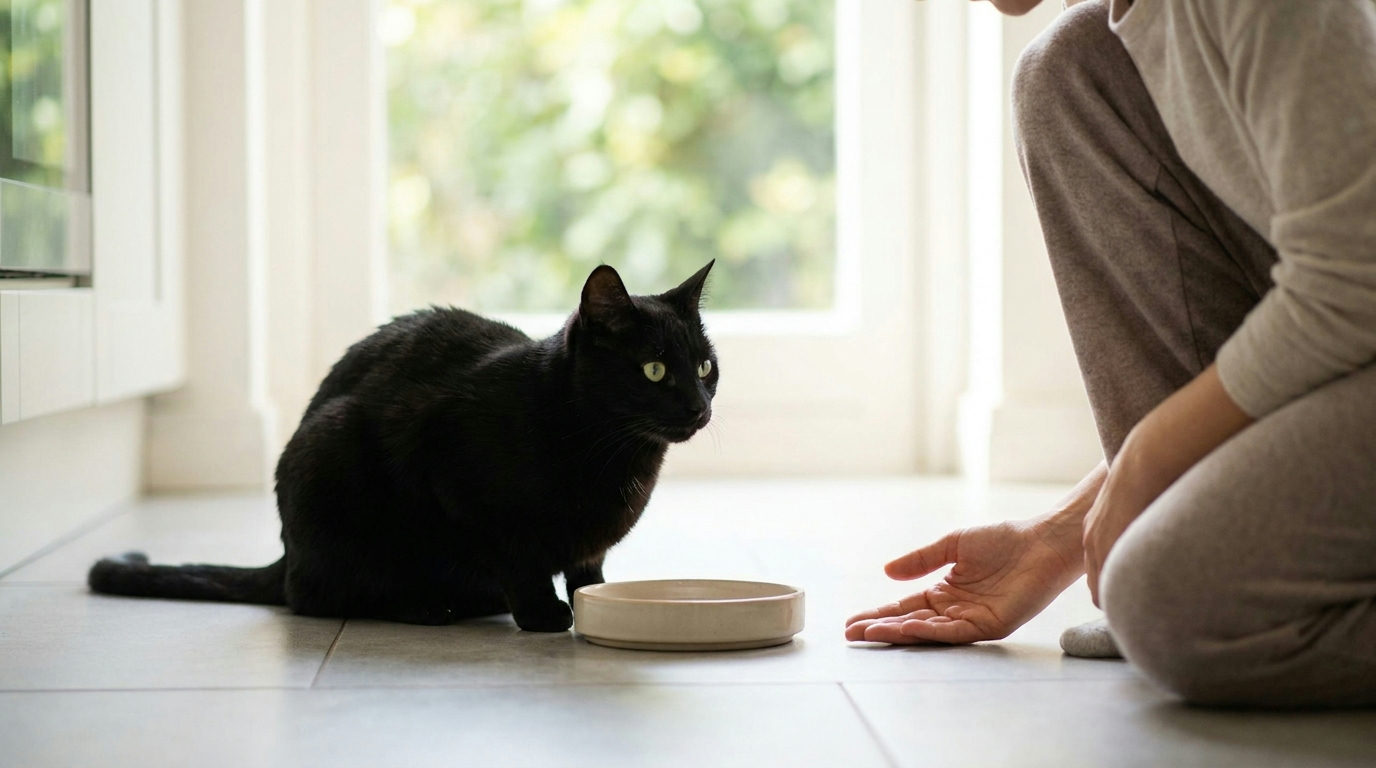
If your cat stopped eating, it is natural to hope it will pass on its own. With many pets, skipping a meal is not a big deal. Cats are different, however. A cat that goes without food, even for a fairly short time, can become seriously unwell. This guide explains why a loss of appetite in cats deserves quick attention, what you can safely do at home, and when to call your vet right away.
Disclosure: Cat Nutrition Guide may earn a commission from qualifying purchases made through links on this page, at no extra cost to you.
Why a Cat Stopped Eating Is Never a Wait-and-See Problem
A missed meal can be the first visible sign of an illness, pain, or stress. Cats are good at hiding discomfort, so a change in appetite is often one of the few clues an owner gets. On top of that, not eating can cause its own problems, separate from whatever started it.
The biggest of these is a liver condition called hepatic lipidosis, often known as fatty liver disease. Veterinary sources, including the Cornell Feline Health Center, describe it as a serious condition that can develop when a cat stops eating.
Hepatic Lipidosis in Plain Language
When a cat does not eat, its body starts breaking down stored fat for energy. That fat is sent to the liver to be processed. In cats, the liver can become overwhelmed by this sudden flood of fat. As a result, fat builds up inside liver cells, and the liver stops working properly.
Here is what owners generally need to know:
- It can develop after a cat has gone without food for a period of days.
- Overweight cats are generally considered to be at higher risk.
- It often starts because of another problem that made the cat stop eating in the first place.
- It is a medical emergency that needs veterinary treatment.
With prompt veterinary care, many cats can recover. However, treatment can be intensive, so it is far better to act early than to wait.
Common Reasons a Cat Stops Eating
Loss of appetite is a symptom, not a diagnosis. Possible causes are wide-ranging, and only a vet can work out which applies. They may include:
- Dental pain: sore gums, broken teeth, or mouth inflammation.
- Digestive upset: nausea, vomiting, constipation, or a blockage.
- Illness: problems involving the kidneys, liver, pancreas, or infections.
- Stress: a house move, a new pet, visitors, or changes in routine.
- Food issues: a sudden food change, stale food, or a dirty bowl.
- Pain elsewhere: injuries or joint discomfort can reduce appetite too.
The VCA Animal Hospitals Know Your Pet library offers owner-friendly overviews of many of these conditions, which can help you prepare for a vet conversation.
When to Call the Vet
As a general guide, many vets advise calling if an adult cat has eaten little or nothing for about 24 hours. Contact your vet straight away, or go to an emergency clinic, if any of the following apply:
- Your cat is a kitten, a senior, or has a known health condition.
- Your cat is overweight and has stopped eating.
- There is vomiting, diarrhea, or straining in the litter box.
- Your cat is hiding, very quiet, weak, or unusually sleepy.
- You notice yellowing of the gums, skin, or whites of the eyes.
- Your cat is drooling, pawing at its mouth, or seems to want food but turns away.
- A male cat is straining to urinate or producing little or no urine. This can be life-threatening.
- Your cat may have swallowed string, a toy, or a toxic plant or substance.
If you are unsure, call. Your vet would much rather hear from you early than see a cat that has gone days without food.
Never Starve a Cat Onto a New Food
This point deserves its own section. Some owners, trying to switch a fussy cat to a new diet, decide to offer only the new food and “wait until they get hungry enough.” With dogs, that approach sometimes works. With cats, it can be dangerous.
A cat that refuses an unfamiliar food may simply keep refusing it. Meanwhile, the risk of hepatic lipidosis grows. Instead, change foods gradually:
- Start by mixing a small amount of the new food into the old food.
- Over about 7 to 10 days, slowly increase the new food and decrease the old.
- If your cat starts eating less, go back a step and slow down.
- If your cat refuses food entirely, offer the old food and call your vet.
This applies to prescription diets too. If your cat will not eat a diet your vet prescribed, let them know. There may be alternatives.
What You Can Safely Do While You Arrange a Vet Visit
These steps may help encourage a cat to eat. They are not a substitute for veterinary care if your cat has stopped eating.
- Offer your cat’s usual food, freshly opened.
- Warm wet food slightly to body temperature to boost its smell. Stir and test it first so there are no hot spots.
- Use a shallow, wide dish, as some cats dislike deep bowls.
- Feed in a quiet, calm spot away from other pets and noise.
- Make sure fresh water is always available.
Avoid giving any human medications, as some are toxic to cats. In addition, do not force-feed your cat unless your vet has shown you how and advised it.
A worked example
Picture this: a slightly overweight eight-year-old cat skipped breakfast and dinner yesterday after visitors stayed overnight. This morning, she sniffed her food and walked away. Even though stress seems like an obvious cause, she is overweight and has gone roughly a day without eating. That combination is a good reason to call the vet today rather than waiting to see if she eats tomorrow.
What to Tell Your Vet
To help your vet, note the following before you call:
- When your cat last ate a normal amount.
- Whether your cat is drinking, urinating, and passing stool normally.
- Any vomiting, diarrhea, or other symptoms.
- Recent changes at home, in food, or in routine.
- Any medications or supplements your cat takes.
- Your cat’s approximate weight and any recent weight change.
Questions to Ask Your Vet
- What could be causing my cat’s loss of appetite?
- Which tests do you recommend, and why?
- Is my cat at risk of hepatic lipidosis?
- Is an appetite stimulant or other support appropriate?
- What should I feed while my cat recovers, and how much?
- What signs mean I should come back right away?
After Recovery: Keeping an Eye on Appetite
Once your cat is eating again, it helps to know what “normal” looks like. Measuring meals makes it easier to notice when your cat leaves food behind. Weighing your cat regularly at home or at the clinic can also reveal gradual weight loss. If your cat has lost weight during an illness, our guide to underweight cats explains how to work with your vet on gentle regain.
Frequently Asked Questions
Is it OK if my cat only eats treats?
Treats alone are not a balanced diet. If your cat will only eat treats, that is a sign something may be wrong, and your vet should know.
My cat is drinking but not eating. Is that better?
Drinking is good, but it does not reduce the risks of not eating. Call your vet.
Can stress alone make a cat stop eating?
It can. Even so, stress-related appetite loss still carries the same risks, so it should not be ignored.
How long can a cat safely go without food?
There is no single safe number that applies to every cat. Age, body weight, and health all play a part. That is why the general advice is to call your vet at around a day of little or no eating, and sooner for higher-risk cats.
What might treatment involve?
It depends on the cause and how unwell your cat is. Your vet may run tests, give fluids, treat nausea or pain, and provide nutritional support. In some cases, this support includes a temporary feeding tube so the cat gets food while it recovers.
The Bottom Line
If your cat stopped eating, time matters. Cats can develop serious liver problems after going without food, so a loss of appetite is always worth a call to your vet. Never try to starve a cat onto a new food, change diets slowly, and get help early, especially for kittens, seniors, and overweight cats.
This article is for general information only and is not veterinary advice. It is not a substitute for advice from a licensed veterinarian who knows your cat.


