
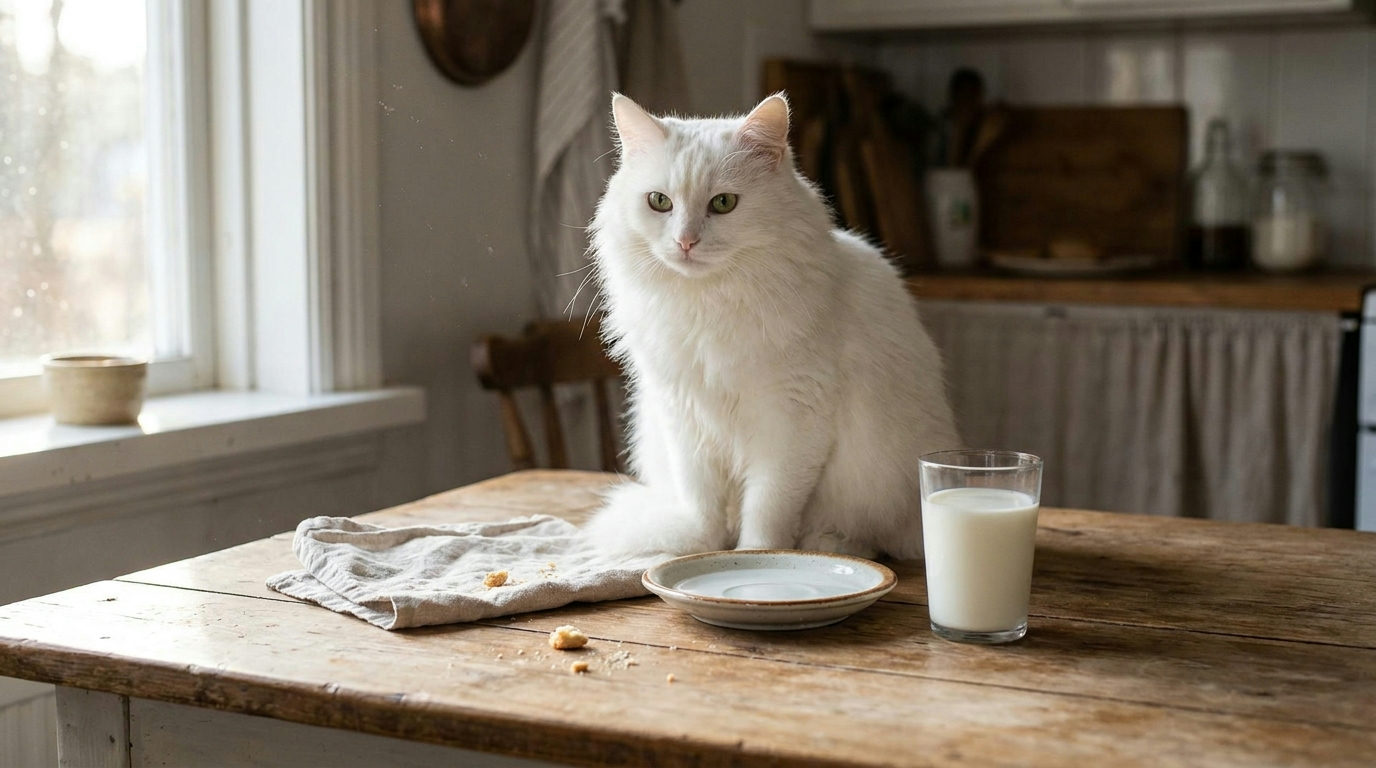
Cartoons often show cats happily lapping up a saucer of milk. But can cats drink milk safely? For many adult cats, the answer is no, or only in tiny amounts. This guide explains why and suggests safer options.
Disclosure: Cat Nutrition Guide may earn a commission from qualifying purchases made through links on this page, at no extra cost to you.
Why Milk Can Upset a Cat’s Stomach
Milk contains a sugar called lactose. To digest it, the body needs an enzyme called lactase. Kittens make plenty of lactase while nursing. However, many cats make much less once they are weaned.
As a result, lactose may pass undigested into the gut. There, it can draw in water and ferment. This may lead to gas, bloating, or diarrhea. In other words, many adult cats are lactose intolerant to some degree.
Can Cats Drink Milk at All?
Some cats tolerate a small splash with no issues. Others react to even a little. Because you cannot tell in advance, it is safest to skip it. In addition, milk adds calories and fat without adding nutrients your cat needs.
For perspective, a small amount of milk can make up a surprising share of a cat’s daily calories. So, even for cats that tolerate it, milk is best treated as a rare treat. Our article on how treats affect your cat’s diet explains the 10 percent rule.
What About Kittens?
Kittens need their mother’s milk, not cow’s milk. Cow’s milk does not match the nutrient profile of a mother cat’s milk. Consequently, it can cause digestive upset and fail to meet a kitten’s needs. For orphaned kittens, use a kitten milk replacer and follow your vet’s advice. See our kitten feeding guide for more.
Cream, Cheese, and Yogurt
Cream has less lactose but much more fat. Hard cheeses and plain yogurt are also lower in lactose. Even so, they are rich foods that can upset sensitive stomachs. Therefore, if you offer any dairy, keep it to a very small taste.
Safer Alternatives to Milk
- Fresh water: The best drink for cats, every day.
- Lactose-free cat milk: Pet stores sell milk made for cats. Use it as a treat only.
- Low-sodium broth: Plain broth without onion or garlic may tempt some cats to drink more.
- Wet food: Adds moisture to the diet.
For ideas on getting your cat to drink more, read our cat hydration tips.
Signs of Dairy Trouble
Watch for loose stools, vomiting, gas, or a tender belly within 8 to 12 hours after dairy. If signs are severe or last more than a day, call your vet. The ASPCA also lists milk among foods to limit for pets.
Final Thoughts
So, can cats drink milk? Most adult cats are better off without it. Many struggle to digest lactose, and milk adds empty calories. Stick to fresh water, and if you want a treat, choose a lactose-free cat milk in small amounts.
This article is for general information only and is not a substitute for advice from a licensed veterinarian.


