
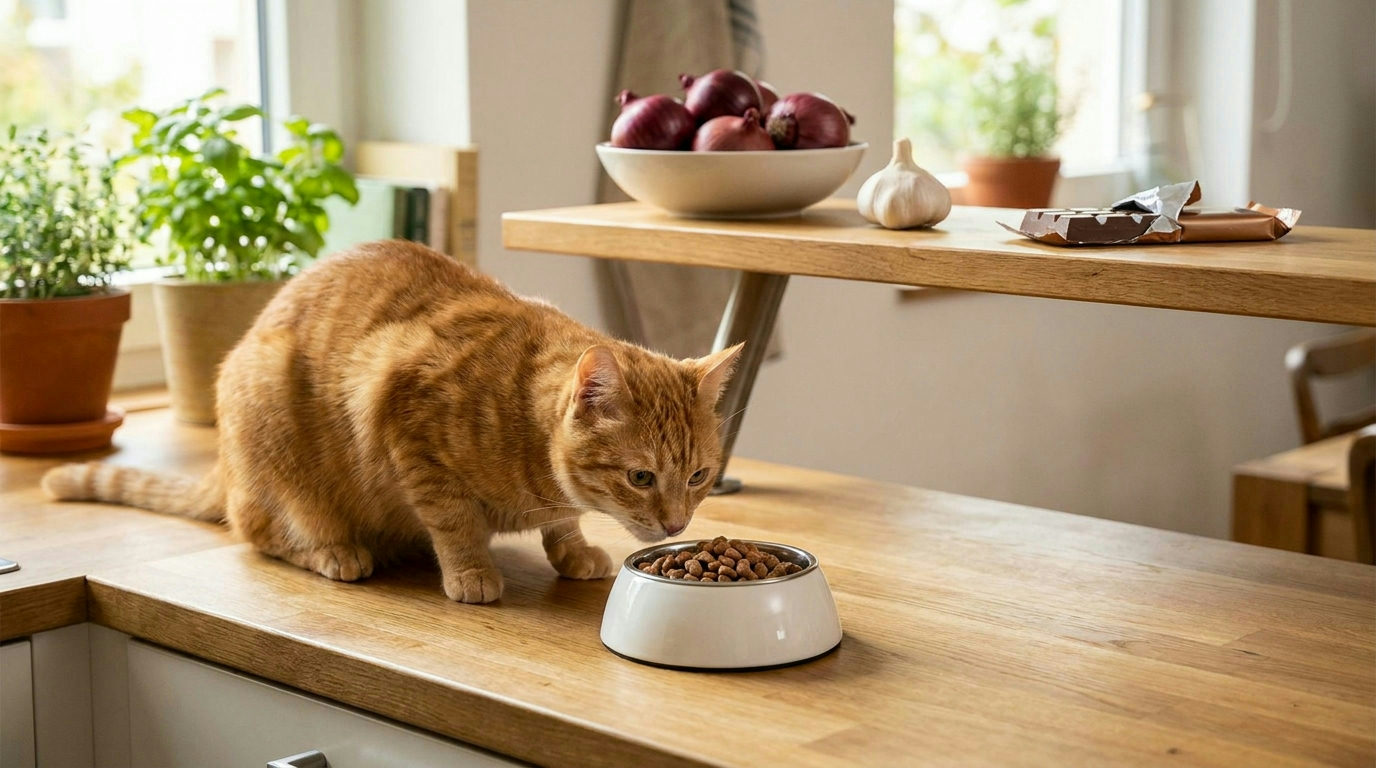
Many everyday kitchen staples are foods toxic to cats. A small bite that seems harmless to us can cause real trouble for a cat. This guide covers the most common dangers, the warning signs to watch for, and what to do in an emergency, so you can keep your kitchen safer.
Disclosure: Cat Nutrition Guide may earn a commission from qualifying purchases made through links on this page, at no extra cost to you.
If you think your cat has eaten something harmful, contact your vet, an emergency clinic, or an animal poison control line right away. Do not wait for symptoms to appear, and do not try to make your cat vomit unless a vet tells you to.
Why Cats React Differently to Food
Cats process some compounds very differently from people and even from dogs. For example, their livers are less able to break down certain substances. As a result, even small amounts can build up in the body. In addition, cats are small, so a modest dose goes further.
Cats are also picky and often less likely than dogs to gulp down strange foods. However, curious kittens, bored indoor cats, and cats that lick sauces or grooming residue can still be exposed. So, prevention matters in every home.
Common Foods Toxic to Cats
The list below is not complete. However, it covers items most often found in homes. The ASPCA Animal Poison Control Center keeps a longer list of people foods to avoid feeding pets.
Onions, Garlic, Chives, and Leeks
These plants belong to the allium family. They can damage red blood cells in cats, which may lead to a type of anemia. Moreover, they are harmful whether raw, cooked, dried, or powdered. Cats are considered especially sensitive to them.
The tricky part is that alliums hide in many foods. For example, soups, gravies, sauces, seasoned meats, and some baby foods list onion or garlic powder. Therefore, avoid sharing any seasoned leftovers.
Chocolate and Caffeine
Chocolate contains theobromine and caffeine. Both belong to a group of compounds called methylxanthines, which can affect the heart and nervous system. Dark and baking chocolate are the most dangerous because they hold the highest amounts. Similarly, coffee grounds, tea bags, energy drinks, and caffeine pills should stay out of reach.
Grapes and Raisins
Grapes and raisins have been linked to kidney problems in dogs. Evidence in cats is more limited. Still, the ASPCA advises against feeding them to pets, and most vets agree it is safest to keep them away from cats entirely.
Alcohol
Even a small amount of alcohol can be dangerous for a cat because of their size. Beer, wine, spirits, and foods made with alcohol all count. In addition, raw bread dough can produce alcohol as the yeast ferments inside the stomach.
Raw Yeast Dough
Beyond producing alcohol, raw yeast dough can expand in the warm stomach. This may cause bloating and discomfort. So, keep rising dough covered and out of reach.
Xylitol
Xylitol is a sweetener used in sugar-free gum, candy, baked goods, toothpaste, and some peanut butters. Its effects are best known in dogs, where it can cause a sharp drop in blood sugar. Nevertheless, it is sensible to keep xylitol products away from cats too.
Bones, Fat Trimmings, and Raw Meat
Cooked bones can splinter and injure the mouth or gut. Fat trimmings may upset the stomach. Meanwhile, raw meat and raw eggs may carry bacteria such as Salmonella. All of these belong in a sealed bin, not a cat’s bowl.
What About Milk and Tuna?
Milk is not toxic, but many adult cats struggle to digest lactose. Consequently, it may cause loose stools or gas. Our article on whether cats can drink milk explains why.
Likewise, tuna is not toxic in small amounts. However, a diet heavy in human-grade tuna can lead to nutrient imbalances, since plain tuna is not a complete diet for cats. For safer snack ideas, see our list of human foods cats can eat.
Don’t Forget Toxic Plants
This article focuses on food, but plants deserve a quick mention. True lilies and daylilies are extremely dangerous to cats, and even small exposures to the petals, leaves, or pollen can be serious. The ASPCA Animal Poison Control Center keeps a searchable list of toxic and non-toxic plants. If you bring flowers home, check them first.
Warning Signs to Watch For
Signs of food poisoning in cats can vary depending on what was eaten. Common ones include:
- Vomiting or diarrhea
- Drooling or pawing at the mouth
- Loss of appetite
- Weakness, wobbling, or trouble walking
- Fast breathing or a racing heart
- Pale gums or unusual tiredness
- Tremors or seizures
Some signs appear within hours. Others, such as those from onion or garlic, may take days to show. Therefore, call your vet as soon as you suspect exposure, even if your cat seems fine.
What to Do in an Emergency
- Remove your cat from the area and take away any remaining food.
- Note what was eaten, roughly how much, and when.
- Keep the packaging or a photo of the label.
- Call your vet, an emergency clinic, or an animal poison control service.
- Follow their instructions exactly.
In the United States, the ASPCA Animal Poison Control Center offers a 24-hour hotline. A consultation fee may apply. Having the details above ready will help the team advise you quickly.
How to Keep Foods Toxic to Cats Out of Reach
- Store food in closed cabinets or sealed containers.
- Clear counters and plates promptly after meals.
- Use a lidded trash can that your cat cannot open.
- Keep coffee, tea bags, and chocolate in high cupboards.
- Remind guests, especially children, not to share snacks with your cat.
- Check ingredient lists before offering any “people food.”
Above all, feed a complete and balanced cat food. A well-fed cat may be less tempted to raid the counter. Learn more about a balanced diet for cats, and see how treats affect your cat’s diet.
Common Questions
Is a tiny lick of chocolate dangerous?
Risk depends on the type and amount of chocolate and the size of your cat. Because it is hard to judge at home, call your vet or a poison control line for advice.
Can cats eat food cooked with a little garlic?
It is best to avoid it. Cats are sensitive to alliums, and effects can build with repeated small exposures.
Are “natural” foods always safe?
No. Many natural foods, including onions, grapes, and some plants, are harmful to cats. Natural does not mean safe for pets.
Should I keep anything at home just in case?
Keep your vet’s number, the nearest emergency clinic’s number, and a poison control number somewhere easy to find, such as on the fridge or saved in your phone. In an emergency, you will not want to search for them.
Final Thoughts
To sum up, many common foods toxic to cats hide in ordinary meals and snacks. Onions, garlic, chocolate, caffeine, alcohol, grapes, raw dough, and xylitol top the list. Knowing the main risks helps you prevent accidents. If something does go wrong, fast action and a call to your vet make the biggest difference.
This article is for general information only and is not veterinary advice. It is not a substitute for care from a licensed veterinarian. If you suspect poisoning, contact your vet or an animal poison control service immediately.


