
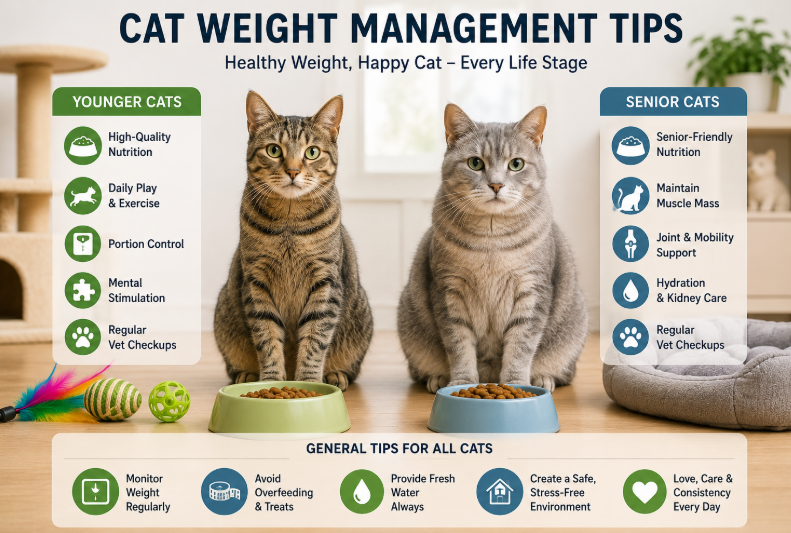
Keeping cats at a healthy weight is one of the most important responsibilities pet owners face today. Cat Weight Management Tips are especially important because both younger and senior cats have unique nutritional and activity needs. While kittens and younger cats often burn energy quickly, older cats may struggle with slower metabolism, reduced mobility, and changing health conditions. Consequently, weight management requires different strategies throughout every stage of a cat’s life.
Indoor lifestyles have contributed significantly to rising feline obesity rates. Many cats spend long hours resting indoors with limited exercise opportunities. Combined with overfeeding or unhealthy treats, this inactivity can lead to gradual weight gain that owners may not notice immediately.
Excess weight affects much more than appearance. Obesity increases risks for diabetes, joint problems, heart disease, and reduced mobility. On the other hand, underweight senior cats may lose muscle mass and experience weakened immune function. Therefore, balanced weight management focuses on overall wellness rather than numbers alone.
Veterinarians increasingly emphasize preventative health strategies because maintaining healthy weight supports longer and more active lives. Understanding how age influences metabolism, nutrition, and exercise helps owners make smarter daily decisions for their feline companions.
Why Weight Management Changes With Age
Cats experience major physical and behavioral changes as they age. Young cats generally have higher energy levels and faster metabolism. They often spend more time climbing, running, and playing throughout the day. Consequently, younger cats usually require more calories to support healthy growth and activity.
Senior cats, however, often become less active over time. Joint stiffness, reduced mobility, and slower metabolism may contribute to weight gain or muscle loss depending on the individual cat. Therefore, feeding routines and exercise habits must adapt gradually with age.
Hormonal changes after spaying or neutering also affect body weight. Many cats experience increased appetite combined with lower calorie needs after these procedures. As a result, owners may need to adjust portions carefully to prevent obesity.
Cat Weight Management Tips should always consider body condition rather than age alone. Some senior cats remain highly active, while certain younger cats become overweight because of inactivity and overfeeding.
Health conditions also influence weight significantly. Dental disease, thyroid disorders, diabetes, and kidney problems can affect appetite, metabolism, and nutrient absorption. Consequently, regular veterinary checkups remain essential for monitoring healthy body condition.
Environmental factors matter too. Indoor cats generally burn fewer calories than outdoor cats because they have less space and fewer opportunities for natural movement. Therefore, indoor lifestyles often require more structured feeding and exercise routines.
The Dangers of Obesity in Cats
Feline obesity has become increasingly common, especially among indoor cats. Excess body fat places strain on nearly every organ system and may shorten lifespan significantly. Consequently, maintaining healthy body condition remains one of the most effective preventative health measures owners can take.
Diabetes represents one of the biggest obesity-related risks in cats. Overweight cats often develop insulin resistance, making blood sugar regulation more difficult. As a result, diabetic cats may require lifelong medical treatment and dietary management.
Joint health suffers as well. Extra weight increases pressure on hips, knees, and the spine. Senior cats especially may struggle with arthritis and mobility issues when carrying excess body fat.
Heart and respiratory systems also work harder in overweight cats. Many obese cats tire easily during activity and become less playful over time. Consequently, inactivity may increase even further, creating a difficult cycle.
Cat Weight Management Tips become especially important because obesity often develops gradually. Owners seeing their cats daily may not notice slow changes in body shape or mobility until health problems appear.
Overweight cats may also struggle with grooming properly. Difficulty reaching certain areas often leads to matted fur, skin irritation, and poor coat condition. In addition, obesity sometimes increases stress and reduces overall quality of life.
Preventing obesity early is usually much easier than reversing it later. Therefore, balanced feeding and regular activity should begin during kittenhood and continue throughout adulthood.
How Nutrition Supports Healthy Weight
Nutrition plays the most important role in feline weight management. Cats require balanced diets rich in animal protein and essential nutrients to maintain healthy body composition and energy levels. Poor-quality food often contains excessive fillers or calories that contribute to unhealthy weight gain.
Portion control is essential for both younger and senior cats. Many owners unintentionally overfeed by estimating portions visually instead of measuring accurately. Consequently, calorie intake gradually exceeds daily energy needs.
Scheduled feeding often works better than free feeding in most households. Structured meal times help owners monitor appetite while reducing overeating behaviors. In addition, scheduled feeding creates more predictable routines that many cats prefer naturally.
Cat Weight Management Tips should also include careful treat management. Treats may seem harmless, yet they can add significant calories quickly. Therefore, owners should offer treats in moderation while prioritizing healthier options whenever possible.
Wet food often supports weight control better than dry food alone because it contains higher moisture levels and may increase fullness. Hydration also benefits urinary and kidney health, especially in senior cats.
Older cats sometimes require specialized diets formulated for aging bodies and changing metabolism. Meanwhile, younger cats generally need more calories and nutrients to support growth and activity. Consequently, age-appropriate nutrition remains extremely important.
Veterinary guidance helps owners choose suitable diets based on body condition, health status, and activity levels rather than relying only on marketing labels.
Why Exercise Matters for Younger Cats
Younger cats naturally have higher energy levels and stronger curiosity. Without enough activity, however, even young cats may gain unhealthy weight surprisingly quickly. Therefore, exercise should become part of daily routines from an early age.
Interactive play supports both physical and emotional health. Toys that mimic prey movement encourage running, jumping, stalking, and climbing behaviors naturally. Consequently, cats burn calories while satisfying important hunting instincts.
Laser pointers, feather toys, climbing trees, and puzzle feeders all help encourage movement indoors. Multiple short play sessions throughout the day often work better than one long session because cats naturally prefer bursts of activity.
Cat Weight Management Tips for younger cats should focus heavily on enrichment. Bored cats often overeat or sleep excessively instead of staying active. Therefore, mentally stimulating environments support healthier body weight naturally.
Vertical spaces also increase movement opportunities. Shelves, cat trees, and window perches encourage climbing and exploration while supporting muscle development.
Some owners underestimate the importance of play once cats reach adulthood. However, maintaining active habits early helps prevent future obesity and behavioral problems later in life.
Interactive exercise also strengthens the bond between cats and owners. Cats receiving regular engagement often appear happier, more confident, and emotionally balanced overall.
Helping Senior Cats Maintain Healthy Weight
Senior cats face different weight challenges than younger cats. While some older cats become overweight because of inactivity, others lose weight unexpectedly due to health problems or reduced appetite. Consequently, senior feline nutrition requires careful monitoring.
Muscle loss becomes more common with aging. Even senior cats maintaining normal body weight may lose important muscle mass gradually. Therefore, body condition assessment matters more than weight numbers alone.
Gentle exercise still benefits older cats significantly. Short play sessions, climbing steps, and easy-access vertical spaces help maintain mobility and joint flexibility. Consequently, movement remains important even when energy decreases.
Cat Weight Management Tips for senior cats should include comfortable feeding setups. Elevated food bowls or easy-access feeding stations sometimes improve comfort for cats with arthritis or mobility limitations.
Dental health also affects weight in older cats. Painful teeth or gum disease may reduce appetite and make eating uncomfortable. Therefore, regular veterinary dental evaluations remain extremely important.
Senior cats often benefit from quieter feeding environments too. Stress or competition from younger pets may discourage proper eating habits. Separate feeding areas can help older cats feel more relaxed during meals.
Hydration deserves extra attention as cats age. Kidney function changes gradually in many senior cats, making moisture-rich diets and fresh water access especially valuable for long-term health.
Recognizing Healthy Body Condition
Understanding healthy feline body condition helps owners identify problems before they become serious. Many people rely only on body weight, yet muscle tone and fat distribution matter just as much.
A healthy cat usually has a visible waistline when viewed from above. Owners should also feel ribs beneath a thin layer of fat without pressing too hard. Consequently, body condition scoring often provides better insight than numbers alone.
Overweight cats typically develop rounded body shapes, visible abdominal fat, and reduced waist definition. Meanwhile, underweight cats may display visible ribs, spine prominence, and muscle loss.
Cat Weight Management Tips become more effective when owners monitor body condition regularly rather than waiting for obvious changes. Small adjustments in food portions or exercise routines often prevent larger health problems later.
Behavior changes sometimes signal weight-related issues too. Reduced jumping, lower energy, excessive sleeping, or grooming difficulties may indicate unhealthy weight gain.
Veterinary visits remain essential for accurate assessment. Professionals can identify subtle body condition changes and recommend individualized feeding or activity plans based on health status and age.
Consistent monitoring allows owners to respond earlier and maintain healthier long-term wellness more effectively.
How Environment Influences Weight
Indoor environments strongly influence feline weight and activity levels. Cats living in boring or cramped environments often move less and eat more simply because they lack stimulation. Consequently, environmental design plays a major role in healthy weight management.
Interactive toys, climbing spaces, scratching posts, and window perches encourage movement naturally. Cats with stimulating environments generally stay more curious and active throughout the day.
Food puzzles also help prevent overeating. Instead of consuming meals quickly, cats work mentally and physically for food portions. Therefore, feeding becomes both enrichment and exercise simultaneously.
Cat Weight Management Tips should include reducing stress as well. Anxious or bored cats sometimes overeat for comfort. Consequently, emotionally balanced environments support healthier eating habits naturally.
Multi-cat households may create additional challenges involving food competition or inactivity. Separate feeding areas and individualized playtime often improve both emotional comfort and physical activity.
Routine matters too. Cats usually thrive with predictable feeding schedules, regular interaction, and consistent daily habits. Stable routines help reduce stress-related behaviors while supporting healthier metabolism.
Simple environmental improvements often create noticeable changes in energy and body condition over time.
Conclusion
Maintaining healthy body weight is one of the most important parts of feline wellness throughout every life stage. Cat Weight Management Tips help younger cats stay active and balanced while supporting healthier aging for senior cats.
Proper nutrition, portion control, regular exercise, enrichment, and consistent routines all contribute to healthier body condition naturally. Without these habits, cats may face increased risks for obesity, diabetes, arthritis, and reduced quality of life.
Younger cats benefit greatly from active play and mentally stimulating environments. Meanwhile, senior cats require careful monitoring, gentle exercise, and age-appropriate nutrition to maintain muscle and mobility.
Weight management should always focus on overall health rather than appearance alone. Small daily habits often create the biggest long-term improvements in energy, movement, and emotional well-being.
Owners who monitor body condition consistently and adapt care routines as cats age usually support healthier and longer lives for their feline companions. With proper attention and preventative care, both younger and senior cats can enjoy active, comfortable, and balanced lifestyles for many years.
FAQ
1. How often should cats be weighed?
Most cats benefit from regular weight monitoring during veterinary visits or monthly home checks.
2. Are indoor cats more likely to gain weight?
Yes. Indoor cats often burn fewer calories because they have limited space and activity opportunities.
3. What foods help senior cats stay healthy?
High-quality protein, moisture-rich meals, and balanced senior diets support healthier aging and body condition.
4. Can playtime really help control feline weight?
Yes. Interactive play increases movement, burns calories, and supports emotional well-being naturally.
5. Why do some older cats lose weight unexpectedly?
Dental disease, thyroid problems, kidney disease, and reduced appetite commonly affect senior feline weight.


