
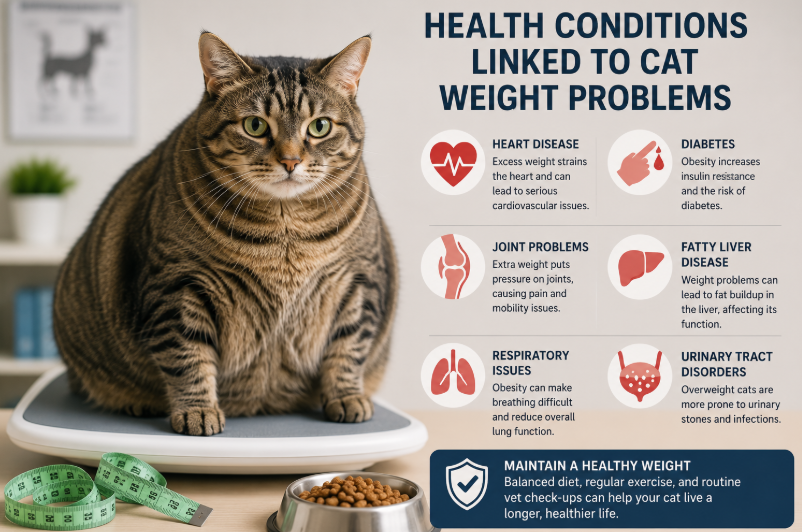
Maintaining a healthy weight is one of the most important aspects of feline wellness. Many owners focus on food quality and exercise, yet they may not realize how closely cat weight health conditions are connected. Excess weight and unhealthy weight loss can both contribute to serious medical concerns that affect a cat’s quality of life, mobility, and longevity. Understanding these relationships allows owners to recognize potential risks early and take proactive steps to support long-term health.
Weight changes often occur gradually. Because cats are covered in fur, small fluctuations may go unnoticed until a noticeable problem develops. Unfortunately, by the time obvious changes appear, underlying health concerns may already be affecting the body.
A healthy body weight supports proper organ function, comfortable movement, balanced metabolism, and strong overall wellness. Conversely, obesity and unexplained weight loss can place stress on multiple body systems. Therefore, monitoring weight should be a routine part of responsible cat care.
The good news is that many weight-related health issues can be prevented or managed through proper nutrition, exercise, routine veterinary care, and early intervention. Understanding the connection between weight and health is the first step toward helping cats live healthier lives.
Why Weight Matters More Than Many Owners Realize
The relationship between cat weight health conditions begins with the body’s basic functions. Every organ system relies on maintaining a healthy balance between calorie intake, energy expenditure, and body composition.
When cats carry excess weight, additional stress is placed on the heart, joints, and metabolic systems. Over time, these demands may contribute to chronic health concerns that affect daily comfort and long-term wellness.
Weight loss can be equally concerning. While many owners focus primarily on obesity, unintended weight loss often signals an underlying medical issue. Consequently, both extremes deserve attention.
Healthy body condition supports mobility, immune function, digestion, and energy levels. Additionally, maintaining an appropriate weight helps reduce the risk of numerous chronic diseases.
Because weight influences so many aspects of health, routine monitoring provides valuable insight into overall well-being. Even small changes can reveal important information about nutritional status or potential medical concerns.
Understanding the significance of weight management encourages owners to take a more proactive approach to feline health.
Obesity and Its Impact on Overall Health
Among all cat weight health conditions, obesity remains one of the most common. Excess body fat affects much more than appearance. It influences nearly every major body system.
Obese cats often experience reduced mobility. Everyday activities such as jumping, climbing, and grooming may become more difficult. Consequently, overall activity levels often decline further, creating a cycle of weight gain and inactivity.
Excess weight also increases strain on the cardiovascular system. The heart must work harder to support a larger body mass, which can affect overall health over time.
Additionally, obesity contributes to chronic inflammation throughout the body. This inflammatory state may increase the likelihood of various health complications and reduce overall comfort.
Quality of life often suffers as weight increases. Cats may become less playful, less active, and less willing to engage in normal behaviors.
Recognizing obesity as a genuine medical concern rather than a cosmetic issue is an important step toward better health management.
Diabetes and Excess Body Weight
One of the most significant cat weight health conditions associated with obesity is diabetes mellitus. Excess body fat can influence how the body responds to insulin, increasing the risk of metabolic dysfunction.
Insulin helps regulate blood sugar levels. When the body’s response to insulin becomes less effective, glucose regulation may become impaired. Consequently, diabetes can develop.
Common symptoms include increased thirst, frequent urination, increased appetite, and weight changes. However, signs may initially appear subtle, making early detection challenging.
Weight management plays an important role in both prevention and treatment. Many overweight cats experience significant health improvements when excess weight is reduced gradually and safely.
Proper nutrition, portion control, and increased physical activity often support better metabolic health. Additionally, regular veterinary monitoring helps identify concerns before they become severe.
Because diabetes can significantly affect quality of life, maintaining a healthy weight remains one of the most effective preventive measures available.
Joint Problems and Reduced Mobility
Mobility issues represent another important category of cat weight health conditions. Excess weight places additional pressure on joints, muscles, and connective tissues.
Cats are naturally agile animals. They rely on strength, flexibility, and coordination to perform daily activities. However, carrying extra weight can make movement more challenging and uncomfortable.
Joint stress may contribute to arthritis symptoms or worsen existing mobility concerns. As discomfort increases, activity levels often decline. Consequently, reduced exercise may lead to further weight gain.
Owners sometimes interpret decreased activity as a normal part of aging. While age-related changes occur naturally, weight-related mobility issues may also contribute significantly.
Providing opportunities for gentle exercise can help support mobility while promoting calorie expenditure. Additionally, maintaining an appropriate weight reduces strain on the musculoskeletal system.
Supporting healthy movement helps preserve independence, comfort, and quality of life throughout the aging process.
Heart and Respiratory Concerns
The connection between cat weight health conditions and cardiovascular health deserves careful attention. Excess body weight can influence how efficiently the heart and lungs function.
Carrying additional body mass increases the workload placed on the heart. Over time, this added demand may contribute to cardiovascular stress and reduced endurance.
Obese cats may also experience difficulty regulating body temperature and physical exertion. Consequently, they often tire more quickly during activity.
Respiratory efficiency can be affected as well. Increased body fat may place pressure on the chest and make breathing more laborious, particularly during exercise or periods of stress.
While not every overweight cat develops cardiovascular concerns, maintaining a healthy weight helps reduce unnecessary strain on these vital systems.
Regular veterinary examinations provide opportunities to monitor heart and respiratory health while supporting preventive care efforts.
Liver Disease and Rapid Weight Changes
Some cat weight health conditions involve the liver, particularly when weight changes occur rapidly. One important example is hepatic lipidosis, commonly known as fatty liver disease.
This condition often develops when overweight cats stop eating or experience sudden calorie restriction. As the body mobilizes fat stores rapidly, the liver may become overwhelmed.
Symptoms can include loss of appetite, lethargy, vomiting, and noticeable weight loss. Because hepatic lipidosis can become serious quickly, prompt veterinary attention is essential.
Safe weight management focuses on gradual changes rather than aggressive calorie restriction. Rapid weight loss can create significant health risks even when the goal is reducing obesity.
Careful monitoring during weight reduction programs helps ensure progress remains safe and sustainable. Veterinary guidance is particularly valuable when addressing obesity in cats.
Understanding the risks associated with rapid weight changes highlights the importance of balanced and responsible weight management strategies.
Kidney Disease and Unexplained Weight Loss
While obesity receives considerable attention, unintended weight loss is also among important cat weight health conditions that owners should recognize.
Chronic kidney disease is one example. As kidney function declines, cats may lose weight despite maintaining normal eating habits. Appetite changes, increased thirst, and increased urination often accompany this condition.
Because kidney disease becomes more common with age, senior cats require especially close monitoring. Routine veterinary evaluations can help detect changes early.
Weight loss may occur gradually, making regular weigh-ins particularly valuable. Small declines often become noticeable only when tracked consistently over time.
Nutritional management frequently plays a key role in supporting cats with kidney disease. Appropriate diets can help maintain body condition and support overall health.
Any unexplained weight loss deserves professional evaluation because it may indicate underlying medical concerns requiring treatment.
Hyperthyroidism and Metabolic Changes
Hyperthyroidism is another condition frequently discussed when examining cat weight health conditions. This disorder affects metabolism and commonly occurs in older cats.
The thyroid gland helps regulate metabolic processes. When hormone production becomes excessive, the body’s energy demands increase significantly. Consequently, affected cats often lose weight despite having strong appetites.
Additional symptoms may include increased activity, restlessness, excessive vocalization, and increased thirst. However, early signs can sometimes be overlooked.
Because hyperthyroidism influences multiple body systems, timely diagnosis and treatment are important. Managing the condition often helps stabilize weight and improve overall well-being.
Routine veterinary examinations remain one of the best tools for detecting age-related conditions such as hyperthyroidism before complications become severe.
Monitoring weight trends helps identify potential problems and encourages earlier intervention.
Digestive Disorders and Nutritional Challenges
Digestive health plays a major role in many cat weight health conditions. The digestive system is responsible for breaking down food and absorbing nutrients necessary for maintaining healthy body weight.
Conditions affecting digestion may interfere with nutrient absorption, leading to weight loss even when food intake appears normal. Consequently, owners should not assume that appetite alone reflects nutritional status.
Digestive issues can also influence body condition through vomiting, diarrhea, or reduced appetite. Over time, these challenges may affect overall health significantly.
Monitoring stool quality, appetite, and body condition provides valuable information about digestive wellness. Additionally, maintaining a consistent feeding routine often supports digestive stability.
Veterinary evaluation is essential when digestive symptoms persist because numerous conditions can affect gastrointestinal function.
Healthy digestion supports efficient nutrient utilization and contributes to maintaining appropriate body weight.
The Importance of Early Detection
Many cat weight health conditions become easier to manage when identified early. Unfortunately, gradual changes often go unnoticed until symptoms become more advanced.
Regular weight checks provide one of the simplest and most effective monitoring tools available. Tracking body weight consistently helps identify trends before they become significant problems.
Body condition scoring offers additional insight. Evaluating fat coverage and muscle mass provides a more complete picture than weight alone.
Routine veterinary visits support early detection by identifying subtle changes that owners may miss. Bloodwork, physical examinations, and health screenings often reveal issues before obvious symptoms appear.
Observation at home remains important as well. Changes in appetite, activity level, grooming habits, or behavior may provide valuable clues regarding overall health.
Early awareness allows for more effective intervention and often improves long-term outcomes.
Supporting Healthy Weight Throughout Life
Preventing many cat weight health conditions begins with maintaining healthy body weight from an early age. Consistent nutrition, regular activity, and routine monitoring provide a strong foundation for lifelong wellness.
Portion control remains important because overfeeding is a common contributor to obesity. Measuring food accurately helps maintain appropriate calorie intake.
Daily exercise supports healthy metabolism and encourages physical fitness. Interactive play sessions offer both physical and mental benefits.
Hydration also contributes to overall wellness and supports numerous bodily functions. Therefore, fresh water should always be available.
Most importantly, weight management should be viewed as an ongoing process rather than a temporary goal. Small adjustments made consistently often produce the best long-term results.
Healthy habits developed early can reduce the risk of many weight-related medical concerns later in life.
Conclusion
Understanding the connection between cat weight health conditions and overall wellness helps owners make informed decisions about nutrition, exercise, and preventive care. Both obesity and unintended weight loss can contribute to serious health concerns, including diabetes, arthritis, heart problems, kidney disease, digestive disorders, and metabolic conditions. Because weight influences nearly every aspect of health, regular monitoring remains an essential part of responsible cat ownership.
Maintaining a healthy body condition through balanced nutrition, consistent activity, and routine veterinary care supports long-term wellness and quality of life. Early detection of weight changes often allows for more effective intervention and better outcomes. By paying close attention to body weight and overall health, owners can help their cats enjoy healthier, more comfortable lives for many years to come.
FAQ
1. Can obesity shorten a cat’s lifespan?
Yes. Excess weight increases the risk of several chronic diseases that may negatively affect longevity and quality of life.
2. Why is sudden weight loss dangerous for cats?
Rapid weight loss may indicate serious medical issues and can contribute to liver-related complications in some cases.
3. How often should I weigh my cat?
Monthly weight checks are often helpful for monitoring trends and identifying changes early.
4. What health problems are commonly linked to obesity?
Diabetes, arthritis, mobility issues, cardiovascular strain, and reduced quality of life are among the most common concerns.
5. When should I contact a veterinarian about weight changes?
Any unexplained weight gain or weight loss should be discussed with a veterinarian, especially if other symptoms are present.


