
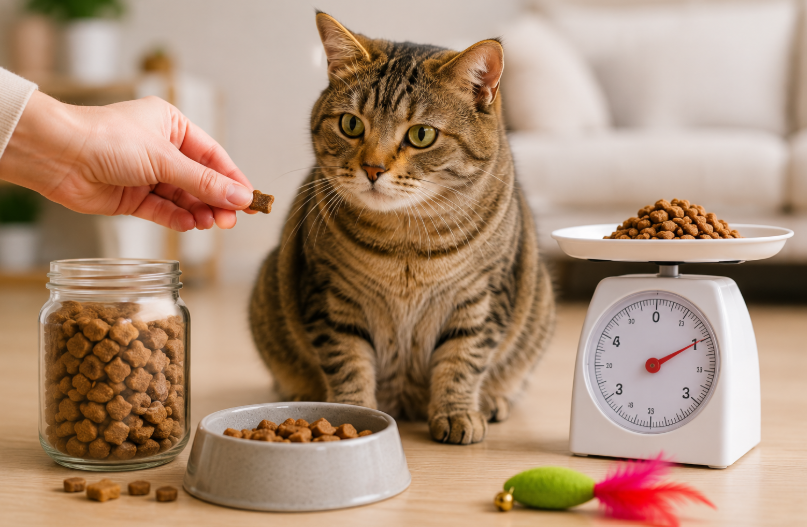
Giving treats is one of the most enjoyable parts of caring for a cat. Many owners use treats to reward good behavior, strengthen bonds, provide training motivation, or simply show affection. However, understanding the connection between cat treats and weight is essential for maintaining long-term feline health. While treats can be a valuable part of a cat’s routine, excessive or poorly managed treat consumption can contribute to weight gain and related health concerns.
Cats often respond enthusiastically to treats because they are highly palatable and rewarding. Unfortunately, those same qualities can make it easy to overfeed them. A few extra calories each day may seem insignificant, yet they can accumulate over time and gradually lead to unwanted weight gain.
Obesity remains one of the most common health problems affecting domestic cats. Excess body fat increases the risk of diabetes, arthritis, heart disease, and reduced mobility. Therefore, understanding how treats influence calorie intake is an important part of responsible pet ownership.
The good news is that treats do not have to be eliminated entirely. With thoughtful planning and moderation, owners can continue rewarding their cats while supporting healthy weight management.
Why Treats Affect Weight More Than Many Owners Realize
The relationship between cat treats and weight often surprises owners because treats usually appear small and harmless. However, cats have relatively low daily calorie requirements compared to humans. As a result, even a few extra calories can represent a significant portion of their daily energy needs.
For example, a small treat may seem insignificant to a person, but it can account for a meaningful percentage of a cat’s recommended daily intake. When multiple treats are given throughout the day, calorie totals can increase quickly.
Many households also have multiple family members offering treats independently. Consequently, owners may underestimate how many treats a cat actually receives. Without realizing it, daily calorie intake can exceed healthy limits.
Treats are often fed in addition to regular meals rather than incorporated into an overall feeding plan. This practice further increases the likelihood of excess calorie consumption.
Understanding portion sizes and calorie content helps owners recognize how quickly treat-related calories can add up. Awareness is the first step toward creating healthier feeding habits that support long-term wellness.
The Hidden Calories in Popular Treats
One of the biggest challenges involving cat treats and weight is that many owners do not consider the calorie content of treats. Packaging often highlights flavor and enjoyment while drawing less attention to calorie density.
Some treats contain concentrated sources of fat, flavor enhancers, and other ingredients designed to maximize palatability. While these characteristics make treats appealing, they can also increase calorie content significantly.
Soft treats, crunchy treats, dental treats, and creamy lickable products all vary in nutritional composition. Therefore, reading product labels becomes an important part of weight management.
Serving recommendations provide useful guidance, yet many owners exceed suggested amounts. This is especially common when treats are used frequently for training, affection, or entertainment.
Calorie awareness allows owners to make informed decisions. Instead of focusing solely on the number of treats given, it is often more useful to evaluate total calorie contribution.
By understanding nutritional information, owners can continue offering rewards while minimizing the risk of unwanted weight gain.
How Treat Habits Develop Over Time
The connection between cat treats and weight is often influenced by behavior patterns that develop gradually. Many cats quickly learn to associate certain actions with treat rewards.
Cats are highly observant and often recognize routines. They may begin waiting near treat containers, following owners into kitchens, or vocalizing when they expect rewards. These behaviors can encourage owners to offer treats more frequently.
Some owners mistakenly interpret every meow or request for attention as hunger. Consequently, treats become a default response even when the cat is not truly hungry.
Over time, these habits can create a cycle of frequent rewarding. The cat learns that persistent behavior results in treats, while the owner enjoys the positive interaction. Unfortunately, calorie intake may increase significantly without either party recognizing the long-term consequences.
Breaking unhealthy patterns does not require eliminating rewards altogether. Instead, owners can replace some food-based rewards with play, affection, grooming, or interactive activities.
Recognizing how habits form helps create healthier relationships with treats and supports better weight management.
Healthy Treat Limits for Cats
Managing cat treats and weight effectively requires setting reasonable limits. Treats should complement a balanced diet rather than become a major source of daily calories.
Many veterinary professionals recommend limiting treats to a small percentage of total daily calorie intake. This guideline helps ensure that treats do not displace essential nutrients provided by complete and balanced meals.
Consistency is particularly important. Treat portions should remain predictable rather than fluctuating dramatically from day to day. Measuring treats can help prevent accidental overfeeding.
Owners should also consider all sources of extra calories. Table scraps, flavored supplements, and certain food toppers may contribute additional calories that affect weight management.
Households with multiple caregivers benefit from communication regarding treat allowances. A simple tracking system can prevent duplicate rewards throughout the day.
Healthy limits allow cats to enjoy treats while maintaining appropriate calorie balance. Moderation supports both enjoyment and long-term health.
Choosing Better Treat Options
The discussion surrounding cat treats and weight is not only about quantity. The quality of treats also matters. Some options provide better nutritional value and lower calorie content than others.
Protein-rich treats often align more closely with feline nutritional needs. Because cats are obligate carnivores, animal-based proteins generally support healthy diets more effectively than treats filled with unnecessary fillers.
Single-ingredient treats can be appealing because they often contain fewer additives and simpler ingredient lists. Freeze-dried meat treats are one example frequently chosen by owners seeking minimally processed options.
Calorie content should still be reviewed regardless of ingredient quality. Even healthy treats can contribute to weight gain if portions become excessive.
Dental treats, functional treats, and specialized rewards may offer additional benefits. However, they should still be incorporated thoughtfully into overall calorie management plans.
The goal is not perfection but balance. Selecting higher-quality treats can improve nutritional value while maintaining the enjoyment cats expect from rewards.
Using Treats for Training Without Overfeeding
Training is one area where cat treats and weight concerns commonly arise. Food rewards can be highly effective for teaching behaviors, yet frequent reinforcement may increase calorie intake.
Fortunately, training does not require large treats. Small pieces often work just as effectively because cats respond more to the reward experience than to portion size.
Breaking treats into smaller pieces extends their usefulness while reducing calorie consumption. Many owners discover that cats remain equally motivated by tiny rewards.
Short training sessions also help control treat intake. Instead of prolonged sessions involving numerous rewards, brief focused interactions often produce better learning outcomes.
Alternating food rewards with praise, petting, or play can further reduce calorie exposure. Not every successful behavior requires a treat.
By using treats strategically, owners can support learning while maintaining healthy weight management goals. Effective training and responsible feeding can easily coexist.
Weight Management Strategies for Treat-Loving Cats
Some cats seem particularly enthusiastic about treats. In these situations, managing cat treats and weight requires additional planning and consistency.
Portion adjustments can help maintain calorie balance. If treats are provided regularly, meal sizes may need slight modifications to accommodate the extra calories. Veterinary guidance can help determine appropriate adjustments.
Interactive feeding toys offer another solution. Rather than delivering treats instantly, puzzle feeders encourage movement and mental engagement. Consequently, cats expend energy while earning rewards.
Increasing daily activity levels can also help offset occasional treat calories. Interactive play sessions support calorie expenditure while providing enrichment and entertainment.
Monitoring body condition regularly helps identify trends early. Small changes are easier to address than significant weight gain that develops over time.
Successful weight management depends on balancing rewards with overall nutritional needs. With proper planning, even treat-loving cats can maintain healthy body condition.
Common Mistakes Owners Should Avoid
Several common mistakes contribute to challenges involving cat treats and weight. Understanding these issues helps owners make better decisions.
One frequent mistake is using treats as a substitute for attention. Cats often seek interaction rather than food, yet owners may automatically respond with rewards.
Another issue involves ignoring calorie content. Treats are sometimes viewed as separate from the overall diet when they should be considered part of total daily intake.
Free access to treats can also create problems. Leaving treat containers accessible increases the likelihood of excessive feeding by multiple family members.
Using large treats when smaller portions would suffice represents another common concern. Cats often value the reward itself more than its size.
Finally, failing to monitor weight regularly can allow gradual weight gain to go unnoticed. Routine weight checks help identify problems before they become significant.
Avoiding these mistakes supports healthier habits and better long-term outcomes.
Creating a Balanced Treat Plan
A sustainable approach to cat treats and weight focuses on balance rather than restriction. Treats can remain part of a healthy lifestyle when integrated thoughtfully into daily routines.
Start by identifying how often treats are currently offered. This assessment provides a realistic understanding of existing habits. From there, owners can establish consistent guidelines.
Choose treats carefully, monitor portions, and consider total calorie intake. Combining these practices creates a foundation for responsible feeding.
Regular exercise complements nutritional management. Active cats often maintain healthier body condition and experience fewer weight-related concerns.
Veterinary evaluations provide additional support. Professionals can assess body condition, review feeding habits, and recommend adjustments when necessary.
Most importantly, remember that treats are only one form of reward. Affection, play, and positive interaction can be equally meaningful for many cats.
A balanced approach allows owners to preserve the enjoyment of treats while protecting long-term health.
Conclusion
Understanding the relationship between cat treats and weight is an important part of responsible feline care. While treats provide enjoyment, strengthen bonds, and support training, they can also contribute to excess calorie intake when not managed carefully. Because cats have relatively low daily calorie requirements, even small amounts of extra food can influence body weight over time.
Fortunately, owners do not need to eliminate treats completely. By choosing quality options, controlling portions, monitoring calorie intake, and incorporating alternative rewards, treats can remain a healthy part of a cat’s routine. When combined with regular exercise, balanced nutrition, and routine weight monitoring, thoughtful treat management supports better health, improved mobility, and a higher quality of life. Small adjustments today can help ensure that rewarding your cat remains both enjoyable and beneficial for years to come.
FAQ
1. How many treats can a cat have each day?
The amount varies depending on calorie needs, but treats should make up only a small portion of total daily intake.
2. Can treats cause weight gain in cats?
Yes. Excessive treat consumption can increase calorie intake and contribute to gradual weight gain.
3. Are some rewards healthier than others?
Protein-rich and lower-calorie options are often better choices than highly processed or calorie-dense treats.
4. Should meal portions change when treats are given?
In some cases, slight meal adjustments may help maintain overall calorie balance, especially when treats are provided regularly.
5. What can I use instead of food rewards?
Play sessions, affection, grooming, and interactive activities can all serve as effective alternatives to treats.


