
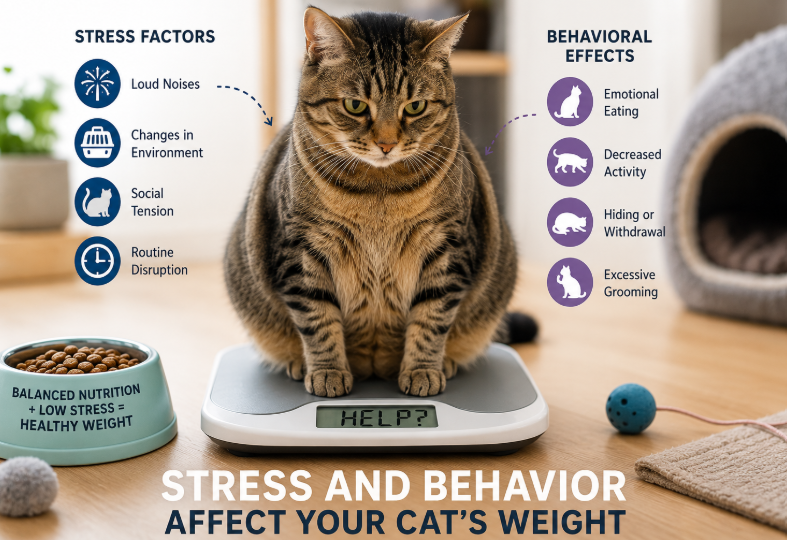
Many cat owners focus on diet and exercise when trying to maintain a healthy pet. However, cat stress and weight are closely connected in ways that are often overlooked. A cat’s emotional well-being can influence eating habits, activity levels, metabolism, and overall health. As a result, stress may contribute to both weight gain and weight loss, depending on how an individual cat responds to challenging situations.
Cats are creatures of habit. They thrive on routine, predictable environments, and familiar surroundings. When something disrupts that sense of security, stress can develop. While some changes may seem minor to humans, they can have a significant impact on a cat. A new pet, moving to a different home, loud noises, changes in feeding schedules, or even rearranged furniture can affect behavior and appetite.
Because stress influences so many aspects of daily life, it is important to understand how emotional health affects physical health. By recognizing stress-related behaviors early, cat owners can take steps to prevent unwanted weight changes and support long-term wellness.
Many people assume stress only affects mood. In reality, the connection between mental and physical health is powerful. Therefore, understanding this relationship can help owners create a more comfortable and supportive environment for their feline companions.
Understanding How Stress Affects the Feline Body
Stress triggers a series of biological responses designed to help animals react to challenges. In short-term situations, these responses can be helpful. However, when stress continues for extended periods, it may begin affecting overall health.
The relationship between cat stress and weight starts with hormonal changes. When a cat experiences stress, the body releases hormones that influence appetite, digestion, and energy use. These changes can alter normal eating patterns and affect how calories are processed.
Some cats lose interest in food when they feel anxious. They may skip meals, eat less frequently, or become selective about what they consume. Over time, reduced calorie intake can lead to noticeable weight loss. In severe cases, prolonged lack of eating can become a serious medical concern.
Other cats respond differently. Instead of eating less, they may seek comfort through food. These cats often eat more than usual, especially if food is easily available. Consequently, chronic stress may contribute to gradual weight gain and obesity.
Physical activity also changes under stress. Some cats become restless and hyperactive, while others withdraw and spend more time sleeping or hiding. Both responses can influence energy expenditure and body weight.
Because every cat reacts differently, understanding individual behavior is essential when monitoring health.
Common Sources of Stress in Cats
Identifying stress triggers is one of the most important steps in protecting feline well-being. While every cat has unique sensitivities, certain situations commonly create emotional strain.
Changes in the household often influence cat stress and weight patterns. Moving to a new home is a major adjustment because it introduces unfamiliar sights, sounds, and scents. Even after the move is complete, some cats require weeks or months to feel fully comfortable.
The arrival of a new pet can also be challenging. Cats are territorial by nature, so sharing space with another animal may create anxiety. Similarly, introducing a new family member can temporarily disrupt established routines.
Environmental noise is another frequent trigger. Construction work, loud music, fireworks, and household appliances may create ongoing stress for sensitive cats. Furthermore, inconsistent schedules can contribute to uncertainty and discomfort.
Resource competition affects many multi-cat households. Limited access to food bowls, litter boxes, resting areas, or water stations can increase tension. Consequently, some cats may avoid eating or become defensive around feeding areas.
Medical conditions should not be overlooked. Pain and illness often create emotional stress that influences appetite and behavior. Therefore, sudden changes in eating habits should always be evaluated carefully.
Recognizing these potential stressors allows owners to address issues before they significantly impact health.
When Stress Leads to Weight Loss
Weight loss is often one of the first visible signs of chronic stress. Cats that feel anxious may become less interested in food, even when high-quality meals are available.
The connection between cat stress and weight becomes especially noticeable when eating habits change suddenly. A cat that previously enjoyed mealtime may begin walking away from the bowl or eating only small portions. In some cases, appetite decreases gradually, making changes harder to detect.
Stress-related weight loss frequently occurs alongside behavioral changes. Cats may hide more often, avoid social interactions, or spend increased time in isolated areas. Additionally, grooming habits may change. Some cats groom excessively, while others neglect coat care altogether.
Digestive issues can further complicate the situation. Stress sometimes contributes to vomiting, diarrhea, or digestive discomfort. As a result, maintaining a healthy body weight becomes more difficult.
Owners should monitor eating patterns closely. Even modest reductions in food intake can become significant if they continue for several weeks. Because cats are sensitive to prolonged fasting, veterinary guidance is recommended whenever appetite changes persist.
Early intervention often prevents more serious complications and helps restore healthy routines.
How Anxiety Can Contribute to Weight Gain
Although weight loss receives significant attention, stress can also contribute to obesity. Some cats use food as a coping mechanism when faced with ongoing anxiety.
The relationship between cat stress and weight may involve emotional eating behaviors similar to those observed in people. Cats experiencing boredom, loneliness, or environmental stress sometimes seek comfort through frequent eating.
Indoor cats are particularly vulnerable when mental stimulation is limited. Without adequate enrichment, some cats spend much of the day sleeping, grooming, and eating. Consequently, calorie intake may exceed energy expenditure.
Food can become a predictable source of comfort during uncertain situations. If owners respond to stress-related behaviors by offering treats frequently, overeating may become reinforced over time.
Stress-related weight gain often develops gradually. Therefore, owners may not notice the change until obesity becomes obvious. Excess weight increases the risk of diabetes, arthritis, heart disease, and other health complications.
Providing alternative forms of enrichment can help break this cycle. Interactive play, puzzle feeders, climbing structures, and environmental stimulation offer healthier outlets for stress management.
Behavioral Changes That Signal Stress
Understanding behavioral warning signs is essential for maintaining feline health. Many stress-related behaviors appear before significant weight changes occur.
When monitoring cat stress and weight, pay close attention to daily habits. Increased hiding is one of the most common indicators. Cats often seek secluded spaces when they feel overwhelmed or insecure.
Changes in vocalization may also occur. Some cats become unusually quiet, while others meow excessively. Likewise, litter box habits can shift during stressful periods. Avoidance, inappropriate elimination, or increased frequency may signal emotional distress.
Aggression sometimes develops as well. Cats experiencing anxiety may become defensive, irritable, or less tolerant of handling. Conversely, some cats become unusually clingy and seek constant reassurance.
Sleeping patterns often change. A stressed cat may sleep more than usual or struggle to relax. Reduced interest in play and social interaction can also indicate emotional discomfort.
Because behavior and physical health are interconnected, these warning signs should never be ignored. Addressing concerns early often prevents more serious issues from developing.
Creating a Low-Stress Environment
Reducing stress begins with understanding what helps cats feel secure. Consistency is one of the most powerful tools available to owners.
Supporting healthy cat stress and weight management starts with predictable routines. Feeding schedules, play sessions, and household activities should remain as consistent as possible. Routine creates stability and helps cats feel more confident in their environment.
Providing adequate resources is equally important. Each cat should have access to food, water, litter boxes, resting areas, and hiding spaces. In multi-cat homes, multiple resource stations reduce competition and tension.
Environmental enrichment plays a major role in emotional well-being. Cats benefit from opportunities to climb, scratch, explore, and observe their surroundings. Window perches, cat trees, and interactive toys encourage natural behaviors and reduce boredom.
Safe retreat spaces are especially valuable. Cats need areas where they can rest undisturbed when they feel overwhelmed. Quiet rooms, covered beds, and elevated platforms often provide comfort.
Positive interaction also matters. Gentle play sessions, regular affection, and respectful handling strengthen trust and help reduce anxiety. However, cats should always be allowed to choose when they engage socially.
Small environmental improvements often produce significant benefits over time.
The Role of Nutrition in Managing Stress
Nutrition supports both physical and emotional health. While food alone cannot eliminate stress, proper nutrition helps the body cope more effectively with challenges.
Maintaining balance between cat stress and weight often requires consistent feeding practices. Sudden dietary changes can create additional stress, so transitions should occur gradually whenever possible.
High-quality protein supports muscle maintenance and overall health. Adequate hydration is also important because stress sometimes affects drinking habits. Wet food may help increase moisture intake for cats that consume limited water.
Meal routines provide structure and predictability. Feeding at consistent times each day can help reduce anxiety and create a sense of security.
Puzzle feeders offer additional benefits by combining nutrition with mental stimulation. These tools encourage natural hunting behaviors and transform mealtime into an engaging activity.
For cats experiencing significant stress-related weight changes, veterinary guidance is essential. Specialized nutritional strategies may be necessary depending on the underlying cause and health status.
Conclusion
The connection between cat stress and weight is stronger than many owners realize. Emotional well-being influences appetite, activity levels, metabolism, and overall health. As a result, stress can contribute to both weight loss and weight gain depending on how a cat responds to environmental challenges.
Recognizing behavioral changes early is one of the best ways to protect your cat’s health. Increased hiding, altered eating habits, reduced activity, or unusual vocalization may all signal emotional distress. By creating a stable environment, providing enrichment, maintaining consistent routines, and monitoring physical condition, owners can reduce stress and support healthy weight management.
A happy cat is often a healthier cat. When emotional needs are met alongside nutritional and physical needs, cats are more likely to maintain a healthy weight and enjoy a better quality of life for years to come.
FAQ
1. Can anxiety cause a cat to lose weight?
Yes. Stress and anxiety may reduce appetite, causing some cats to eat less and gradually lose weight.
2. Why do some cats gain weight during stressful periods?
Certain cats seek comfort through food and become less active, which can lead to gradual weight gain.
3. What are the most common signs of feline stress?
Common signs include hiding, appetite changes, excessive grooming, altered sleep patterns, and reduced social interaction.
4. How can I make my cat feel more secure at home?
Maintain consistent routines, provide safe hiding places, offer enrichment activities, and ensure easy access to resources.
5. When should I contact a veterinarian about appetite changes?
Seek veterinary advice if appetite changes last more than a few days or if noticeable weight loss or gain occurs.


