
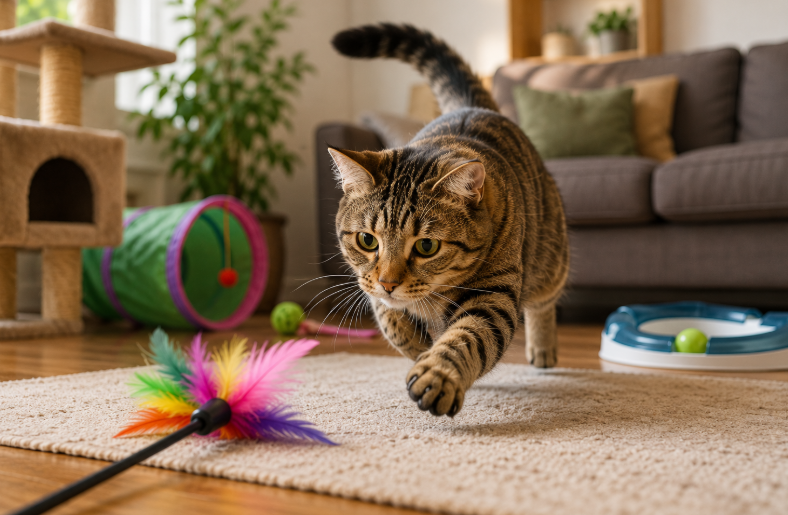
Helping cats stay active is one of the most important parts of long-term feline health. Many indoor cats gain weight slowly because they spend most of the day sleeping, eating, and lounging. Although extra weight may seem harmless at first, obesity can increase the risk of diabetes, joint pain, heart issues, and reduced mobility. Fortunately, increasing activity for overweight cats does not require expensive equipment or difficult routines. Simple daily changes often create impressive results over time.
Cats naturally enjoy movement when activities stimulate their hunting instincts. However, modern indoor lifestyles limit many opportunities for exercise. Because food is always available and physical challenges are rare, many cats burn fewer calories than they consume. As a result, weight gain becomes increasingly common in both young and senior cats.
Owners sometimes assume lazy behavior is normal, yet many overweight cats simply lack motivation or proper stimulation. Therefore, creating engaging movement opportunities can improve both physical and emotional wellness. More importantly, active cats often appear happier, more alert, and more social with their families.
Why Extra Weight Is Dangerous For Cats
Excess body fat places strain on nearly every system in a cat’s body. Over time, obesity affects mobility, breathing, digestion, and overall energy levels. Cats carrying extra weight may struggle to jump, groom themselves properly, or play comfortably.
Joint stress becomes a major concern because cats rely heavily on flexibility and agility. Additionally, overweight cats face a higher risk of arthritis as they age. Since cats naturally hide discomfort, owners may not notice pain immediately.
Poor fitness can also affect emotional health. Many overweight cats become less playful because movement feels uncomfortable. Consequently, inactivity creates a cycle where cats continue gaining more weight.
Increasing activity for overweight cats helps interrupt that cycle gradually. Even short play sessions encourage calorie burning, muscle maintenance, and mental stimulation. Furthermore, regular movement supports better circulation and digestion.
Common signs of unhealthy weight include:
- Difficulty jumping
- Heavy breathing after activity
- Reduced grooming
- Low energy levels
- Visible belly fat
- Trouble climbing stairs
- Less interest in play
- Increased sleeping habits
Although weight loss should happen slowly, consistent exercise and balanced feeding often improve overall wellness significantly.
Start With Short Daily Play Sessions
Many cats lose interest when exercise feels too intense or repetitive. Therefore, short and enjoyable activities work much better than long workouts. A few five-to-ten-minute play sessions each day can increase activity for overweight cats without causing stress or exhaustion.
Interactive toys usually produce the best results because they mimic natural prey movement. Wand toys encourage chasing, pouncing, and jumping. Additionally, laser pointers can motivate hesitant cats to move more, although owners should end sessions with a physical toy reward.
Movement should feel fun rather than forced. If a cat becomes tired quickly, allow short breaks before continuing. Gradual progress prevents frustration and builds confidence over time.
Rotating toys also helps maintain excitement. Cats often ignore the same toy after repeated exposure. However, switching between feather toys, rolling balls, and puzzle feeders keeps activities fresh and engaging.
Owners should pay attention to personality differences too. Some cats prefer chasing games, while others enjoy climbing or stalking activities. Understanding individual preferences increases participation naturally.
Use Food To Encourage More Movement
Food can become a powerful tool for encouraging exercise. Instead of placing meals in one location every day, owners can create movement opportunities during feeding time. Small adjustments often increase activity for overweight cats without making exercise feel unnatural.
Puzzle feeders are especially effective because they combine mental stimulation with physical movement. Cats must work to access their food, which slows eating while encouraging problem-solving behavior.
Another simple strategy involves dividing meals into smaller portions placed around the house. Cats naturally move between feeding stations, which increases daily activity levels. Additionally, elevated feeding areas may encourage climbing and stretching.
Treat tossing games also work well for playful cats. Tossing healthy treats short distances encourages running and chasing behaviors. However, portion control remains important because excessive treats can slow weight loss progress.
Scheduled feeding routines help prevent overeating too. Free-feeding often encourages boredom eating, especially in indoor cats. Measured meals create better calorie control while supporting healthier habits.
Hydration matters alongside nutrition. Wet food often contains fewer calories per serving than dry food while adding moisture to the diet. Many veterinarians recommend mixed feeding approaches for overweight cats.
Create A More Active Home Environment
Indoor spaces strongly influence feline behavior. Cats living in boring environments often become inactive because little encourages exploration or movement. Fortunately, small changes around the home can dramatically increase daily exercise.
Vertical spaces are especially valuable. Cats instinctively enjoy climbing and observing from elevated areas. Cat trees, wall shelves, and window perches encourage natural movement throughout the day.
Window views provide mental stimulation as well. Watching birds, insects, and outdoor activity keeps cats curious and engaged. Adding a bird feeder outside a favorite window can create hours of entertainment.
Owners trying to improve activity for overweight cats should also reduce obstacles to movement. Clear pathways, accessible climbing spaces, and interactive zones make exercise feel easier and safer.
Cardboard boxes and tunnels create low-cost enrichment opportunities too. Many cats enjoy hiding, stalking, and exploring enclosed spaces. Rearranging these items occasionally maintains curiosity and excitement.
Some cats respond well to catnip or silvervine during play sessions. These natural stimulants may temporarily increase movement and playfulness. However, reactions vary between cats, so moderation works best.
How Routine Encourages Better Fitness
Consistency plays a major role in feline wellness. Cats thrive on predictable routines because structure creates comfort and security. Therefore, regular exercise schedules often improve participation and long-term success.
Daily play sessions at the same time each day help cats anticipate activity. Many cats become more energetic once routines develop consistently. Additionally, scheduled interaction strengthens emotional bonds between owners and pets.
Morning and evening sessions usually work best because cats naturally feel more active during those hours. Short bursts of play before meals can mimic natural hunting patterns as well.
Owners should remain patient during the early stages. Some overweight cats resist activity at first because movement feels physically difficult. However, gentle encouragement and positive reinforcement gradually build endurance.
Tracking progress can provide motivation too. Small improvements in mobility, jumping ability, or energy levels often appear before major weight changes occur.
Avoid Common Exercise Mistakes
Although exercise is beneficial, pushing cats too hard may create stress or injury. Weight loss should always happen gradually because rapid changes can become dangerous for felines.
Long sessions often overwhelm sedentary cats. Instead, several short activities spread throughout the day produce better results. Owners should also avoid forcing movement physically because that may increase anxiety or discomfort.
Another common mistake involves relying only on food restriction. While portion control matters, activity for overweight cats remains equally important for muscle maintenance and emotional health.
Laser pointer sessions require careful handling too. Cats may become frustrated if they never catch anything physically. Therefore, ending games with a toy or treat reward creates satisfaction and reduces stress.
Owners should also monitor signs of exhaustion carefully. Heavy panting, limping, or extreme fatigue indicate the need for rest. Veterinary guidance becomes important if mobility problems appear severe.
The Emotional Benefits Of More Movement
Exercise affects more than physical health. Active cats often become more confident, curious, and emotionally balanced. Play helps reduce boredom, frustration, and stress while stimulating natural instincts.
Many overweight cats spend excessive time sleeping because inactivity reduces mental stimulation. However, engaging activities awaken curiosity and encourage exploration. As a result, owners often notice improved mood and social interaction.
Play sessions strengthen trust between cats and humans too. Positive interaction creates emotional comfort and deeper companionship. Additionally, mentally stimulated cats may display fewer destructive behaviors.
Activity for overweight cats also improves sleep quality. Cats that engage in regular exercise often rest more peacefully afterward. Balanced energy levels support healthier routines overall.
In multi-cat households, individual exercise sessions may prevent competition or intimidation. Some overweight cats avoid activity because dominant pets control shared spaces or toys. Personalized interaction helps shy cats feel safer during play.
How Age Affects Feline Activity Levels
Age changes the way cats move and exercise. Kittens naturally stay active for long periods, while adult and senior cats often require more encouragement. Nevertheless, movement remains essential at every life stage.
Older cats may experience stiffness or arthritis, making exercise more challenging. Therefore, low-impact activities become especially important for seniors. Gentle climbing, stretching, and short chasing games often work best.
Soft surfaces help protect aging joints during movement. Additionally, heated beds and supportive resting areas may improve comfort after exercise sessions.
Owners increasing activity for overweight cats should adjust routines based on age and physical ability. Younger cats usually tolerate more intense sessions, while seniors benefit from slower pacing and extra rest periods.
Veterinary checkups become increasingly important for older cats because underlying health conditions sometimes affect mobility. Pain management may significantly improve willingness to move and play.
Nutrition And Exercise Must Work Together
Exercise alone rarely solves feline obesity completely. Nutrition and movement must work together for healthy, sustainable weight management. Balanced diets provide the energy cats need while preventing excessive calorie intake.
Portion control remains critical because even healthy foods contribute to weight gain when served excessively. Measuring meals accurately helps owners avoid accidental overfeeding.
Protein-rich diets support muscle maintenance during weight loss. Additionally, high-quality nutrition helps cats feel fuller and more satisfied between meals.
Owners focused on activity for overweight cats should avoid crash diets or severe calorie restriction. Rapid weight loss can lead to serious liver complications in cats. Instead, slow and steady progress supports safer results.
Fresh water access also supports metabolism and digestion. Many cats drink more willingly from fountains or wide bowls placed throughout the home.
Conclusion
Creating more activity for overweight cats can improve both physical and emotional health in meaningful ways. While weight gain develops gradually, small daily habits often reverse unhealthy patterns successfully over time. Short play sessions, interactive feeding methods, climbing opportunities, and structured routines all encourage healthier movement naturally.
Cats do not need intense exercise programs to become more active. Instead, consistent and enjoyable activities help build confidence, mobility, and energy levels slowly. In addition, movement strengthens muscles, supports joint health, and reduces boredom-related behaviors.
Owners play the most important role in feline fitness because indoor cats rely completely on their environment for stimulation. By creating opportunities for exploration and play, families can help cats maintain healthier weights and happier lives. Even simple changes today may lead to stronger mobility, better mood, and improved long-term wellness in the future.
FAQ
1. How often should overweight cats exercise daily?
Most cats benefit from several short play sessions lasting five to fifteen minutes each day.
2. What toys encourage movement best for indoor cats?
Wand toys, puzzle feeders, rolling balls, and tunnels usually increase interest in exercise and exploration.
3. Can older cats still lose weight safely?
Yes. Senior cats can lose weight gradually with proper nutrition, gentle movement, and veterinary supervision.
4. Why do indoor cats gain weight more easily?
Indoor cats often have less space, fewer challenges, and reduced opportunities for natural hunting behavior.
5. Should I change my cat’s food during weight loss?
Many overweight cats benefit from portion-controlled, protein-rich diets designed to support healthy weight management.


