
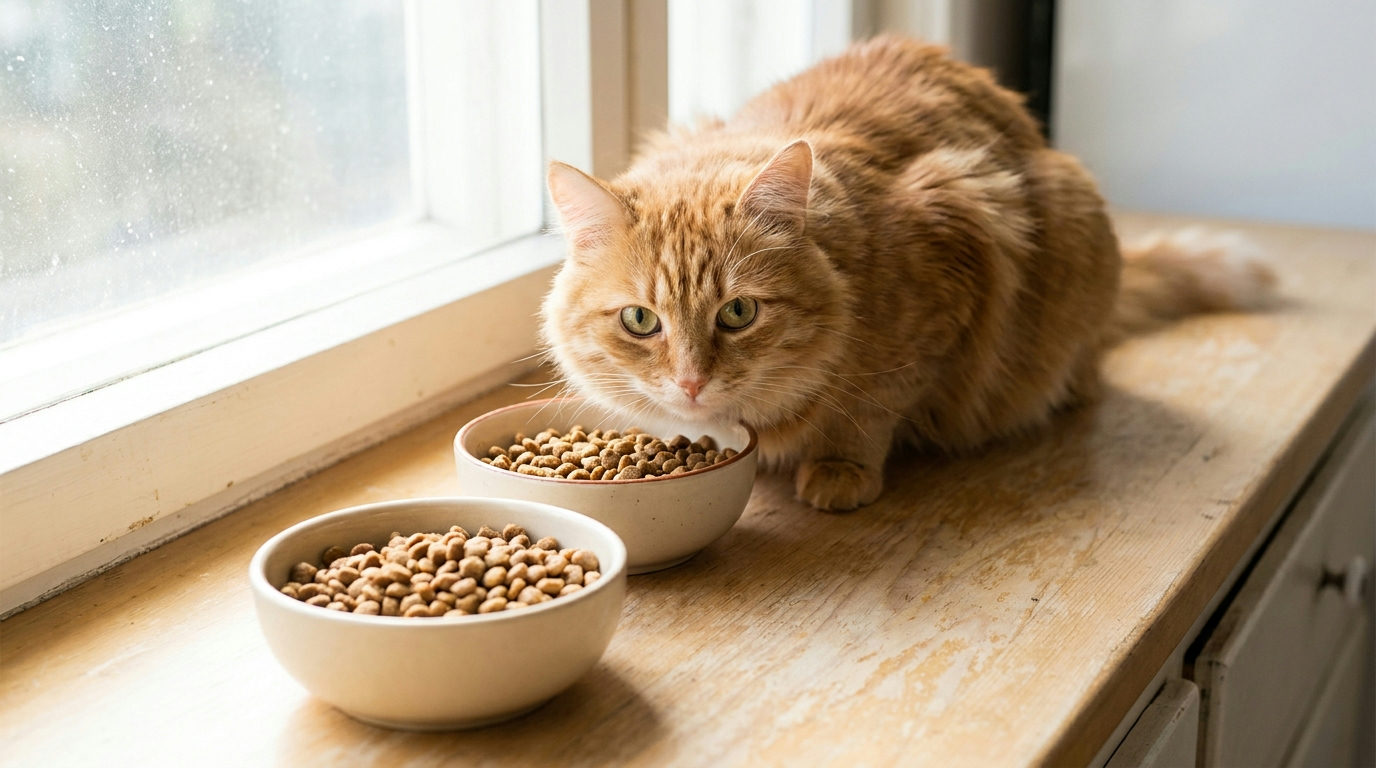
Grain free cat food fills pet store shelves, and many owners assume it must be healthier. The truth is more nuanced. This guide explains what grain free cat food actually is, who it may help, and what to consider before you switch.
Disclosure: Cat Nutrition Guide may earn a commission from qualifying purchases made through links on this page, at no extra cost to you.
What Does Grain Free Cat Food Mean?
Grain free simply means the recipe leaves out grains such as corn, wheat, rice, barley, and oats. However, it does not mean carb free. Instead, many recipes swap grains for other starches, such as peas, lentils, potatoes, or tapioca.
So, a grain free label tells you what is missing. It does not tell you how much protein, fat, or carbohydrate the food contains. For that, you need to check the guaranteed analysis. Our guide to understanding cat food labels can help.
Do Cats Need Grains?
Cats are obligate carnivores. In other words, their bodies are built to thrive on animal protein and fat. They do not have a specific need for grains.
That said, cats can digest cooked grains reasonably well. In many recipes, grains add energy and help shape kibble. Therefore, grains are not automatically harmful. What matters most is whether the overall diet is complete and balanced. You can read more about feline macronutrient requirements here.
Possible Benefits for Some Cats
For some cats, a grain free diet may be a reasonable choice. For example:
- A cat with a confirmed grain sensitivity may do better without it.
- Some grain free recipes contain more meat, which fits a cat’s natural diet.
- Owners who prefer fewer fillers may like the shorter ingredient lists.
Still, true grain allergies in cats appear to be uncommon. Proteins such as beef, fish, or chicken are more often reported as triggers. For more, see our article on cat food allergy symptoms.
Drawbacks to Consider
On the other hand, there are a few points to weigh. First, these recipes often cost more. Second, some contain just as many carbohydrates as grain-inclusive foods. Third, the label can create a health halo that distracts from the full nutrient picture.
In dogs, the FDA has investigated a possible link between some grain free diets and heart disease. Research on cats is limited, and no clear link has been shown so far. Even so, this is a good reminder to choose foods from makers that follow strong quality standards.
How to Choose a Quality Recipe
If you decide to try grain free, look for these signs of quality:
- A “complete and balanced” statement based on AAFCO nutrient profiles
- A named animal protein as the first ingredient
- Moderate carbohydrates rather than heavy legume content
- A manufacturer that employs a qualified nutritionist
In addition, the WSAVA nutrition guidelines offer useful questions to ask any pet food company.
Switching Foods Safely
Change foods slowly. Over seven to ten days, mix more of the new food with less of the old. Meanwhile, watch for stomach upset or changes in appetite. If problems appear, slow down or talk with your vet.
Final Thoughts on Grain Free Cat Food
Overall, grain free cat food is not better or worse by default. It can suit some cats, especially those with a diagnosed sensitivity. However, overall quality and balance matter far more than the grain label. So, check the full ingredient list and ask your vet before you switch.
This article is for general information only and is not a substitute for advice from a licensed veterinarian. Always consult your vet about your cat’s specific needs.


