
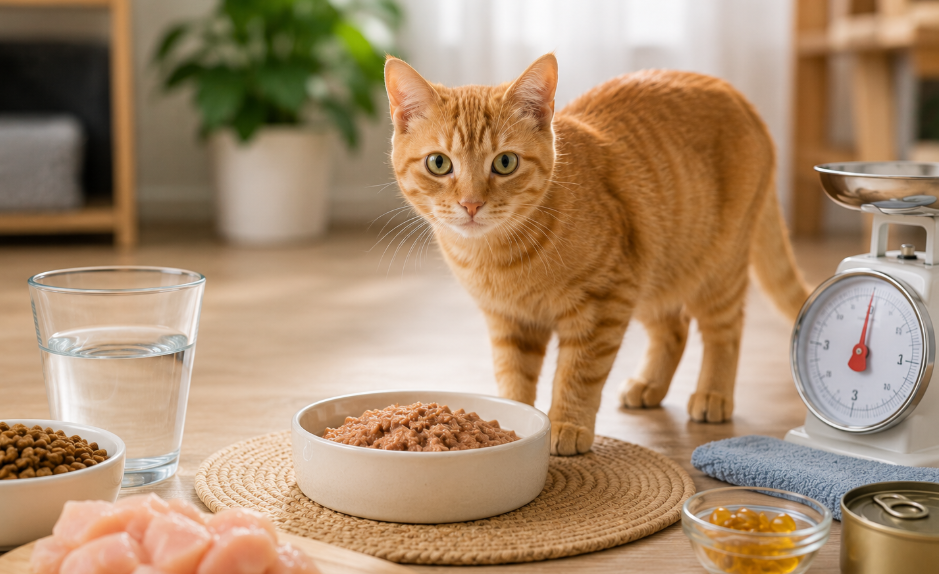
Helping an underweight cat regain healthy body condition requires patience, proper nutrition, and careful planning. A balanced high calorie diet cats need should focus on steady weight gain without causing digestive stress or unhealthy fat accumulation. While many owners assume feeding extra food alone solves the problem, healthy weight recovery often requires a more thoughtful approach.
Cats may become underweight for many different reasons. Illness, stress, aging, poor nutrition, dental problems, parasites, or recovery after surgery can all contribute to weight loss. In some cases, naturally picky eating habits make maintaining healthy body condition more difficult as well.
Weight loss in cats should never be ignored because it may signal deeper health concerns. Thin cats often experience lower energy, weaker immune function, and reduced muscle mass over time. Therefore, improving nutrition safely becomes very important for long-term wellness.
Fortunately, most underweight cats can regain strength gradually with balanced feeding habits, moisture-rich foods, and proper calorie support. In addition, creating calm feeding environments and monitoring progress carefully often improves appetite and digestion naturally.
Understanding how to build a healthy high calorie diet cats benefit from helps owners support safer weight gain while protecting overall health and comfort.
Why Cats Become Underweight
Several factors may cause unhealthy weight loss in cats. Identifying the reason behind weight reduction often helps owners choose the safest and most effective nutritional strategy.
Illness remains one of the most common causes. Digestive disorders, kidney disease, infections, diabetes, and thyroid conditions may all interfere with appetite or nutrient absorption. Because cats naturally hide discomfort, gradual weight loss sometimes becomes the first visible warning sign.
Dental pain frequently affects eating habits too. Cats experiencing sore teeth or inflamed gums may avoid food because chewing feels uncomfortable. In these cases, softer foods often improve intake more effectively.
Stress also influences appetite significantly. Changes in environment, loud households, new pets, or anxiety may reduce eating behavior in sensitive cats. Some stressed cats simply stop eating enough calories consistently.
Older cats sometimes struggle to maintain weight as well. Aging may reduce digestion efficiency, appetite strength, or muscle maintenance over time.
Parasites occasionally contribute to weight loss too. Worms and other internal parasites may interfere with nutrient absorption and overall body condition.
Picky eating habits can create problems in some households. Cats that refuse balanced meals regularly may fail to consume enough calories for healthy maintenance.
Recognizing these causes helps owners create a safer high calorie diet cats can tolerate comfortably while addressing underlying concerns appropriately.
Why Rapid Weight Gain Can Be Dangerous
Although helping thin cats gain weight feels urgent, rapid weight gain may create serious health risks. Cats require gradual nutritional changes because their digestive systems remain sensitive to sudden calorie increases.
Overfeeding too quickly sometimes causes vomiting, diarrhea, or severe digestive discomfort. Large meals may overwhelm the stomach and reduce food acceptance even further.
Sudden dietary changes can also create stress for picky cats. Introducing too many new foods at once often increases food refusal instead of improving appetite.
Cats recovering from illness need especially careful management. Their bodies may struggle to process large calorie loads efficiently during recovery stages.
Muscle recovery matters more than simple fat gain. Balanced nutrition should support lean muscle development alongside healthy body condition improvement.
Some underweight cats also face liver complications if eating patterns change too dramatically after long periods of reduced intake. Because of this, gradual progress remains far safer than aggressive feeding.
Small, frequent meals usually work much better than oversized portions. Slow calorie increases allow the body to adapt comfortably while improving digestion and appetite naturally.
Building a controlled high calorie diet cats tolerate gradually helps create healthier and more sustainable weight recovery.
Choosing the Best Foods for Weight Gain
Food quality matters greatly when helping cats regain weight. High-calorie feeding should focus on balanced nutrition rather than empty calories or unhealthy fat sources.
Protein remains extremely important. Cats are obligate carnivores, which means they rely heavily on animal protein for muscle repair, immune support, and energy. High-quality protein helps rebuild lean body mass during recovery.
Healthy fats provide concentrated calories as well. Fat supports weight gain more efficiently because it contains higher energy density than protein or carbohydrates. In addition, fats improve food flavor, which often encourages better appetite.
Wet food frequently works best for underweight cats. Moisture-rich meals support hydration while usually feeling easier to chew and digest. Many cats also find canned food more appealing because of its stronger aroma and softer texture.
Kitten food sometimes benefits underweight adult cats temporarily because it contains elevated calories and nutrients designed for growth. However, long-term use should follow veterinary guidance.
Recovery diets recommended by veterinarians may also help during illness or post-surgery recovery. These formulas often contain highly digestible nutrients and concentrated calories.
Owners should avoid relying heavily on treats alone. Balanced meals remain much healthier than excessive snack feeding.
Selecting proper nutrition creates the foundation for a safe high calorie diet cats can use to regain healthy body condition gradually.
How Meal Frequency Supports Weight Gain
Meal timing plays a major role in healthy weight recovery. Many underweight cats tolerate smaller meals throughout the day far better than large portions served infrequently.
Frequent feeding reduces stomach strain while increasing overall calorie intake gradually. In addition, smaller meals often feel less intimidating for cats with low appetite or digestive sensitivity.
Most underweight cats benefit from three to six meals daily depending on their condition. Consistent feeding schedules also help regulate appetite and digestion more effectively.
Warming wet food slightly may improve food aroma and increase interest in eating. Many cats respond positively to stronger food scents, especially during illness recovery or aging.
Quiet feeding environments matter too. Stress sometimes reduces appetite significantly, so calm spaces without loud noise or competition usually improve food intake.
Food variety may help some picky eaters as well. Rotating approved flavors or textures occasionally can maintain interest without creating digestive upset.
Automatic feeders sometimes support overnight feeding schedules for cats needing extra calories. These devices allow small meals to remain available consistently throughout the day.
Using structured meal timing strengthens any high calorie diet cats follow while improving digestion and appetite stability.
Hydration and Its Role in Healthy Weight Recovery
Hydration strongly affects appetite, digestion, and nutrient absorption. Underweight cats often benefit from increased moisture intake because dehydration may worsen weakness and reduce eating behavior.
Wet food naturally supports hydration while providing calories simultaneously. Since many cats drink limited amounts of water independently, moisture-rich meals often improve overall wellness more effectively than dry food alone.
Water intake supports digestion too. Proper hydration helps nutrients move efficiently through the digestive system while reducing constipation risk during increased feeding.
Cats recovering from illness may require extra hydration support because vomiting, diarrhea, or fever can quickly reduce fluid levels.
Fresh water should always remain easily accessible. Some cats drink more willingly from fountains because moving water feels fresher and more appealing.
Adding small amounts of warm water or low-sodium broth to wet food sometimes improves both moisture intake and food aroma. However, broth ingredients must remain cat-safe without onions or garlic.
Hydration also supports kidney and urinary tract function during recovery periods. Thin or aging cats especially benefit from improved moisture intake over time.
Maintaining proper hydration strengthens the high calorie diet cats need while improving digestion, appetite, and overall comfort.
Supporting Muscle Gain Instead of Excess Fat
Healthy weight gain should focus on rebuilding muscle alongside improving body condition. Simply increasing body fat without maintaining muscle strength may not improve long-term health effectively.
Protein-rich diets help support lean tissue recovery. Since cats naturally rely heavily on protein metabolism, balanced amino acid intake becomes especially important during weight restoration.
Light activity also supports muscle maintenance. Gentle play sessions, climbing opportunities, and interactive movement help stimulate appetite while improving muscle tone gradually.
Veterinary guidance sometimes becomes necessary for severe muscle loss. Certain illnesses may require specialized nutrition plans to rebuild body condition safely.
Body condition scoring helps monitor progress more accurately than weight alone. Owners should observe gradual filling around the spine, hips, and ribs without excessive abdominal fat gain.
Rapid fat accumulation may place strain on joints and internal organs. Therefore, slow and steady progress usually creates healthier long-term outcomes.
Older cats often lose muscle more easily than younger cats. High-quality protein and consistent calorie intake become especially valuable for senior pets recovering from weight loss.
Focusing on balanced recovery allows the high calorie diet cats receive to support strength and energy rather than unhealthy fat storage alone.
Common Feeding Mistakes to Avoid
Many owners accidentally slow recovery by making feeding mistakes despite having good intentions. Fortunately, most problems become easy to correct once identified.
One common issue involves offering excessive treats instead of balanced meals. While treats may encourage eating temporarily, they often lack complete nutrition necessary for healthy recovery.
Sudden food changes frequently create digestive upset too. Introducing multiple new foods rapidly may cause vomiting or diarrhea that worsens weight loss further.
Overfeeding large meals can also backfire. Cats with sensitive stomachs often tolerate smaller portions much more comfortably throughout the day.
Ignoring underlying medical conditions remains another serious mistake. Persistent weight loss sometimes signals illness requiring veterinary care rather than dietary changes alone.
Some owners rely too heavily on dry food because it contains concentrated calories. However, moisture-rich diets often improve appetite and hydration more effectively during recovery.
Stressful feeding environments may reduce intake as well. Loud noise, pet competition, or irregular schedules sometimes discourage eating.
Avoiding these mistakes helps strengthen the high calorie diet cats follow while supporting safer and more comfortable recovery overall.
Monitoring Progress Safely
Tracking progress carefully helps ensure healthy weight gain without creating additional complications. Gradual improvement usually provides the safest and most sustainable results.
Weekly weigh-ins offer valuable insight into recovery trends. Small increases over time typically indicate healthier progress than dramatic short-term gains.
Energy levels often improve alongside healthy weight restoration. Cats may become more playful, active, and social as nutrition improves.
Coat quality may also change positively. Improved nutrition often creates shinier fur and healthier skin during recovery periods.
Owners should monitor appetite consistency too. Sudden refusal to eat, vomiting, or digestive changes may indicate the need for veterinary evaluation or diet adjustments.
Body condition matters more than scale numbers alone. Ribs should gradually feel less prominent while maintaining healthy mobility and muscle tone.
Veterinary checkups remain important during recovery, especially if illness contributed to weight loss initially. Professional monitoring helps ensure nutrition plans remain safe and effective.
Careful observation supports a healthier high calorie diet cats can follow without unnecessary risks or setbacks.
Long-Term Nutrition After Weight Recovery
Once healthy body condition returns, maintaining balanced nutrition becomes the next priority. Cats that regain weight successfully still require consistent routines to avoid future weight loss or excessive gain.
Meal schedules should remain structured. Predictable feeding helps support stable appetite and digestion long term.
Balanced portions matter too. After recovery, calorie intake may need slight adjustment to maintain healthy weight rather than continue gaining.
Hydration support should continue as well. Wet food, clean water stations, and moisture-rich diets often benefit cats throughout adulthood and aging.
Routine veterinary visits help monitor body condition and identify health concerns before serious weight changes develop again.
Stress reduction remains valuable too. Calm environments and stable routines support healthy eating behavior naturally.
Owners should continue observing appetite, energy, and coat condition regularly. Small changes often reveal early signs of nutritional imbalance or illness.
Maintaining proper nutrition after recovery ensures the high calorie diet cats used for weight gain transitions smoothly into healthy long-term wellness habits.
Conclusion
Helping underweight cats regain healthy body condition requires more than simply feeding larger portions. Safe recovery depends on balanced nutrition, gradual calorie increases, hydration support, and consistent routines that protect digestion and overall health.
High-quality protein, healthy fats, moisture-rich meals, and frequent smaller feedings often create the best results. In addition, calm feeding environments and regular progress monitoring help improve appetite and comfort naturally.
Patience remains extremely important throughout recovery. Healthy weight gain takes time, especially when illness, aging, or stress contributed to the original problem. However, small steady improvements usually create the safest and most lasting outcomes.
A carefully managed high calorie diet cats receive consistently can improve strength, energy, muscle condition, and overall wellness significantly. With proper care and attention, underweight cats often regain healthier body condition while enjoying better comfort and quality of life long term.
FAQ
1. What foods help underweight cats gain weight safely?
High-protein wet foods, kitten formulas, and veterinary recovery diets often support healthy weight gain.
2. How often should thin cats eat daily?
Most underweight cats benefit from several smaller meals throughout the day rather than large portions.
3. Is wet food better for weight recovery?
Wet food supports hydration and usually feels easier to digest, especially for sick or older cats.
4. Can stress cause cats to lose weight?
Yes, anxiety and environmental stress sometimes reduce appetite and contribute to unhealthy weight loss.
5. When should weight loss become a veterinary concern?
Persistent weight loss, low appetite, vomiting, or low energy should always receive veterinary evaluation.


